
Every answer here starts with a source, not an opinion
PetsAndBirds.org explains how to choose, feed, house, and protect pet birds, using what veterinary schools, the CDC, and federal agencies publish. We name the source beside every figure, and we say so when the research runs out.
- 7topic areas covered
- 10named sources
- 4people on the team
- 0birds we keep, sell, or breed
What we are
An independent guide to pet birds
For people in the United States who keep birds or are thinking about it, from a first budgie to a houseful of parrots, and for the cats and dogs that share those homes.
Veterinary schools, the CDC, and federal agencies publish solid information on birds. It’s spread across manuals, handouts, fact sheets, and laws, and much of it is written for vets rather than owners.
We gather it, check it, and organize it around the questions owners actually ask: which bird, how long it lives, what it costs, how to care for it, and how to keep it safe.
PetsAndBirds.org is operated by BD Save Birds Program.
What we are not
Not a breeder, a pet store, or a vet
We don’t keep, breed, or sell birds, and we don’t test products. You won’t find a first-person story about our own birds on this site, because there isn’t one to tell.
Gear guides come from manufacturer documentation and patterns in verified buyer feedback, and they say which is which.
And we’re not veterinarians. Birds hide illness until it’s serious, so that line gets its own section, which comes next.
Read this first
Where our guidance stops
A pet bird weighs a few ounces, so small mistakes hit hard. Three rules follow from that, and they apply to every page on the site.
We describe. We don’t diagnose.
A guide can explain what fluffed-up feathers or changed droppings might mean. It can’t tell you what’s wrong with your bird. Birds hide illness well, and by the time signs show, it’s often urgent.
A sick bird needs an avian vet, today.
We publish no doses.
Medications, supplements, and treatment for injuries are decisions for an avian vet. We explain what a treatment is for. We never give the amount, and we don’t walk you through treating an injury at home.
Doses come from your vet, not a web page.
Species are not interchangeable.
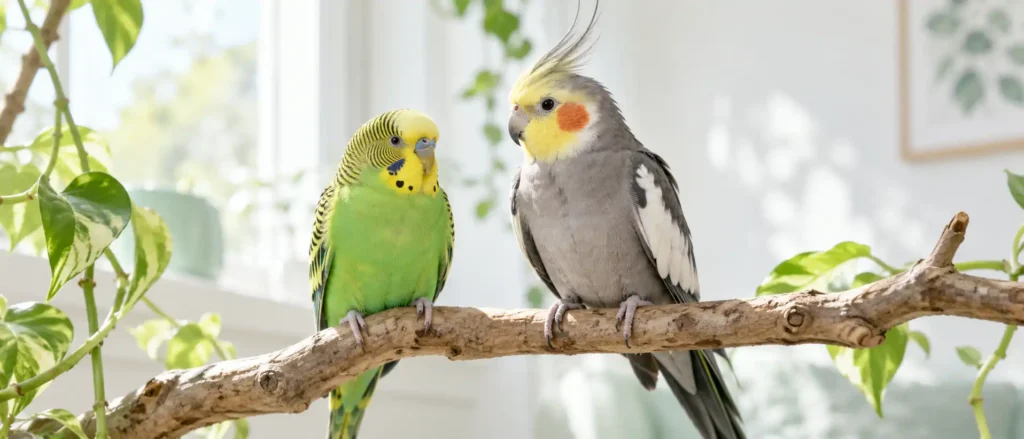
A budgie, a cockatiel, and a macaw differ in diet, cage size, noise, and lifespan by decades. A figure for one rarely fits another. And native wild birds aren’t pets at all under federal law.
Check the species on every figure.
The people
Who writes these guides
Four people research, write, check, and edit what you read here. Each covers a defined area, so the sourcing stays consistent within it.

Anik Ali
Editor
Reviews every guide before it publishes and keeps the sourcing standard the same across species, care, and safety guides.
Sakib Islam
Writer, species and care
Covers choosing a bird, lifespans, costs, diet, cages, and enrichment.
Tamim Islam
Writer, health and safe homes
Covers signs of illness, household hazards, and birds living with cats and dogs, always with the vet line in place.
Farhan Hossain
Research and fact checking
Opens every figure in the publication it cites before a guide goes live, and logs each correction.




Why one byline? Guides publish under a shared Editorial Team byline because most of them pass through more than one person. Research, drafting, checking, and editing are often split across the team, so crediting a single author would misrepresent who did the work.
Six steps, in order
How a guide gets made
Checking comes before publishing, never after. That’s why the order matters.
Start with a real question
We write for questions bird owners actually ask. If nobody is asking it, a page answering it helps nobody.
Gather the published research
Veterinary schools and the Merck Veterinary Manual come first, then the CDC, the US Fish and Wildlife Service, and other agencies. Where sources disagree, both figures get collected.
Name the species
Every figure is tied to the bird it describes. A budgie figure never stands in for a macaw.
Verify every figure
Each number is opened in its source and checked. If a claim can’t be traced, it comes out of the draft.
Mark the vet boundary
Anything that needs an avian vet is flagged as needing one, with the signs that can’t wait.
Publish and revisit
Sources are named in the sentence. Guides are revisited when research, laws, or recommendations change.
Our standards
What we commit to
These rules apply to every page on the site.
Every figure names its source.
Lifespans, costs, diets, and safety figures carry the organization that published them.
Ranges, not averages.
Where sources disagree, we show both figures and explain why they differ.
No invented experience.
No first-person bird stories, no made-up owner quotes, and no claimed testing.
Species named on every figure.
What’s right for a canary can be wrong for a cockatoo.
No diagnosis, no doses.
We describe conditions and treatments. Decisions belong to an avian vet.
No wild birds as pets.
We never encourage keeping native wild birds, which federal law protects.
No paid placement.
No company pays for coverage, a rating, or a spot in a list.
Corrections get made and noted.
A fix says what changed and which source it came from.
How we work
PetsAndBirds.org is an independent reference. We don’t keep, breed, or sell birds, and we don’t test products.
We read what veterinary schools, the CDC, and federal agencies publish, check every figure against its source, and explain it in plain language.
Where sources disagree, we show both figures. Where the research runs out, we say so. And we never diagnose: a sick bird needs an avian vet.
Sources we rely on
- Merck Veterinary ManualPet bird species, lifespans, housing, and diet
- UC Davis School of Veterinary MedicineSleep, foraging, and enrichment
- Iowa State University Veterinary Diagnostic LaboratoryDiet and cage basics
- Oregon State University ExtensionTrifluralin and Preen
- Centers for Disease Control and PreventionPsittacosis and hygiene around birds
- US Fish and Wildlife ServiceThe Migratory Bird Treaty Act
- Animal Medical Center of New YorkPet bird diet guidance
- VCA Animal HospitalsHousehold hazards and PTFE fumes
- ASPCAPet care costs and toxic foods
- American Federation of AvicultureAvian vets on cat bites and scratches
Corrections and contact
Found a figure that looks wrong?
Tell us the page, the figure, and the source you’re comparing against.
Corrections usually go up the same week.
Everything else
Questions about the site, permissions, or a broken page.
We aim to reply within three business days.
Bird in trouble?
Call an avian vet or emergency animal hospital now, not an inbox. For a possible poisoning, the ASPCA Animal Poison Control Center answers at (888) 426-4435. A fee may apply.
