
Pets and birds: how to choose, care for, and protect a pet bird
A pet bird can share your home for decades. Most of what goes wrong comes down to a few fixable things: diet, sleep, fumes, and other pets. These guides gather what veterinary schools and federal agencies publish and put it in plain language.
Built on the Merck Veterinary Manual, UC Davis, Iowa State, the CDC, and the US Fish and Wildlife Service. Every figure names its source.

Budgerigar (budgie)
Melopsittacus undulatus
- Native to
- Australia
- Average lifespan
- 5 to 10 years
- Voice
- Not usually loud
- Talking
- Can learn to talk
Suited to apartment living, per the Merck Veterinary Manual’s table of popular pet birds.
Start with your question
- Choose a birdSpecies, lifespans, and costs before you commit.
- Daily careDiet, cage setup, sleep, and time out of the cage.
- Bird healthSigns of illness, avian vets, and toxic foods.
- Birds and other petsLiving safely with cats and dogs.
- Safe home and yardFumes, cleaners, and lawn products.
- Gear and suppliesCages, perches, toys, and carriers.
Types of birds that are pets
Most pet birds belong to the parrot family, from the tiny budgie to the macaw. Canaries and finches are songbirds, and doves and pigeons make a quieter third group. Size matters more than looks: bigger parrots usually live longer, call louder, and need more of your time.
Best pet birds for beginners
These six are small, widely kept, and manageable as a first bird. Lifespans and notes come from the Merck Veterinary Manual.

Budgerigar
Melopsittacus undulatus
5 to 10 yearsNot usually loud and can learn to talk. Merck rates budgies suitable for apartment living.
Cockatiel
Nymphicus hollandicus
Up to 20 yearsVocal but relatively quiet next to macaws or cockatoos, with a lively personality.
Canary
Serinus canaria
Up to 15 yearsMales often sing. Canaries prefer to live alone or in a mated pair and suit most apartments.
Lovebird
Agapornis roseicollis (peach-faced)
Up to 20 yearsSweet voices and not usually loud, though they can be moody in breeding season.
Parrotlet
Forpus coelestis (Pacific)
Up to 20 yearsA “pocket parrot.” Relatively easy to tame when young and quiet compared with other parrots.
Green-cheeked conure
Pyrrhura molinae
Up to 25 yearsSmaller than a cockatiel and relatively quiet. Merck notes small conures are often described as charming.

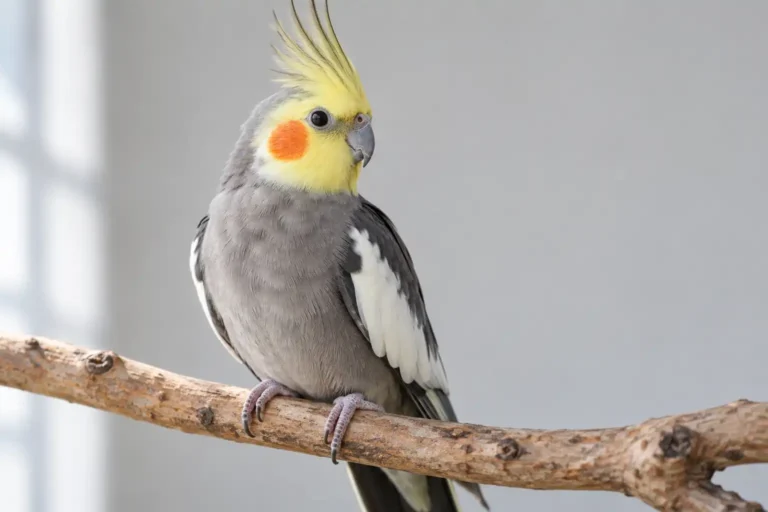
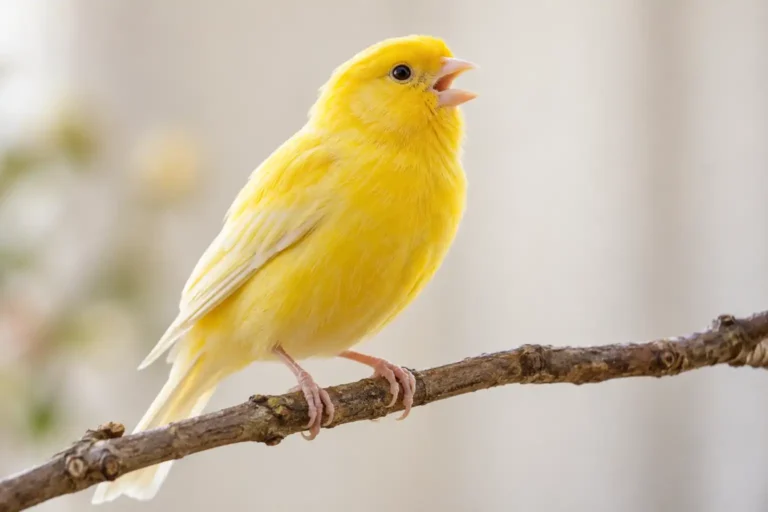
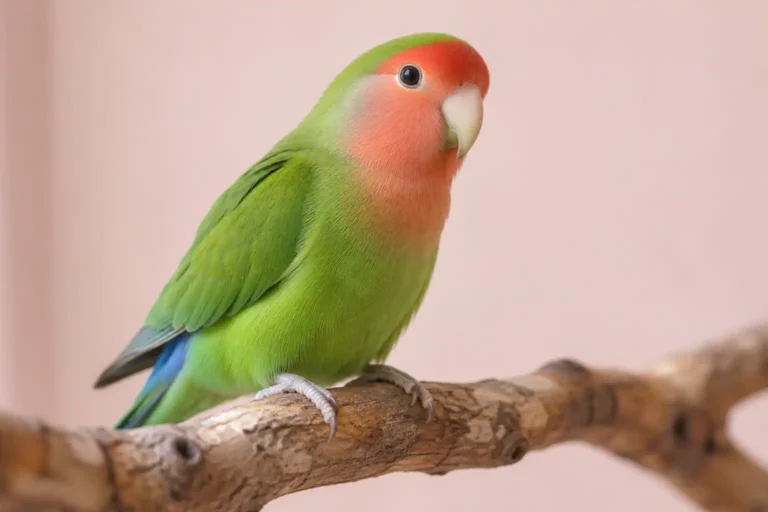


Finches and doves are gentle options too. Finches usually live in groups and rarely interact with people, and doves are quiet apart from their cooing, per Merck.
Larger parrots: for experienced owners
Big parrots are bright, social, and loud, and they need hours of attention every day. Merck flags cockatoos as not for inexperienced owners.
| Parrot | Average lifespan | What to expect |
|---|---|---|
| African gray | 30 to 50 years | Highly intelligent and an excellent mimic. Needs a lot of time, and behavior problems are common. |
| Amazon parrot | 40 to 50 years | Great talkers and singers, and loud. Often bonds closely to one person. |
| Cockatoo | 25 to 50 years | Very loud screams, heavy chewing, and a strong need for handling and attention. |
| Eclectus parrot | 20 to 50 years | Talking ability varies. Less prone to screaming than cockatoos and macaws. |
| Macaw | 30 to 60 years | The largest parrots. Very loud, and they need lots of exercise, time, and space. |
Source: Merck Veterinary Manual, Popular Pet Birds table.
How long do pet birds live?
Anywhere from about 5 years to 60, depending on the species. Budgies and finches live 5 to 10 years, cockatiels up to 20, and macaws 30 to 60, per the Merck Veterinary Manual.
How long does a parrot live?
It depends on the parrot, because a budgie is a parrot too. Small parrots live 5 to 20 years. Amazon parrots live 40 to 50 years and macaws 30 to 60. A large parrot can easily outlive the person who brings it home, so decide early who would take your bird if you couldn’t.
Why ranges differ between sources. Lifespan figures come from birds in homes with very different diets and care. Merck gives a range for some species and only an upper figure for others, and the chart shows which is which instead of guessing a lower bound.
Source: Merck Veterinary Manual, Popular Pet Birds table. Average lifespans in years.
How much is a bird?
A budgie costs about $20 to $60, a cockatiel about $80 to $250, and a large parrot $1,000 or more. Prices vary with the breeder, region, age, hand-taming, and color, so treat these as typical US asking prices in 2026, not quotes.
Typical asking prices from US breeders and stores, gathered from current price guides. Log scale. Rescues usually charge far less, and an adopted adult bird comes with a known personality.
How much does a parrot cost?
Small parrots such as budgies and cockatiels usually cost under $250. Mid-size conures often run a few hundred dollars. African grays and macaws usually cost $1,000 to $4,000, and a hyacinth macaw can top $10,000.
Rare color mutations, hand-raised babies, and birds already tame to handling sit at the top of each range.
The bird is the cheap part
For a small bird, the cage alone can cost more than the bird. Food, toys, and an avian vet then add up every year, and a large parrot multiplies every line.
First year
About $270
ASPCA’s pet care cost chart for a small bird, including a cage. The price of the bird itself isn’t included.
Every year after
About $200
The same ASPCA chart’s yearly estimate for a small bird’s food, toys, and supplies.
Plan for on top
Avian vet care
A checkup with a vet who treats birds, plus an emergency fund. Fees vary by area, so ask local avian clinics.
Source: ASPCA, Pet Care Costs. Treat these as a floor; larger birds cost more.
How to take care of a pet bird
Good bird care is mostly routine. Feed a balanced diet, keep the cage clean, give your bird time out of the cage, and protect its sleep. Here’s how that breaks down across a day, a week, and a year.
Every day
- Fresh water and fresh food in clean bowls.
- A pellet-based diet. The Animal Medical Center of New York suggests pellets make up 70 to 80 percent of what most pet birds eat, with vegetables daily and fruit in moderation.
- Supervised time out of the cage, plus time talking with your bird. UC Davis veterinarians call interaction with people one of the best forms of entertainment for a bird.
- 10 to 12 hours of quiet, dark sleep, uninterrupted, per UC Davis.
Every week
- Scrub perches, toys, and the cage tray.
- Swap a few toys in and out so the cage stays interesting.
- Weigh your bird on a gram scale. Birds weigh only ounces, so a small loss can be the first sign of illness.
- Wash your hands after handling your bird or cleaning its cage, as the CDC advises.
Every year
- A checkup with an avian veterinarian. The Association of Avian Veterinarians lists vets who treat birds.
- A diet review, especially for a bird that still picks out seeds.
- A check of toys and cage hardware for chipped paint or cheap metal. VCA Animal Hospitals notes lead and zinc have turned up in some imported bird toys.
Two setup rules worth getting right on day one. Buy the largest cage you can, so your bird can spread its wings, and know that an all-seed diet falls short on vitamins, minerals, and amino acids, per Iowa State University’s veterinary diagnostic lab. Switch diets slowly. Placing one side of the cage against a wall also helps a bird relax, per the Merck Veterinary Manual.
How to keep pet birds healthy and active
Wild parrots spend much of the day finding food. A pet bird gets its meal in seconds, which leaves a lot of empty time to fill. These six habits fill it well.
Call an avian vet the same day
Birds hide illness well, so signs often show late. The Animal Medical Center of New York lists collapse and sitting on the cage floor among signs that need a vet right away.
Don’t wait on fluffed-up feathers, a lost appetite, labored breathing, or droppings that suddenly change, either.
Make food a puzzle
Hide part of each meal in foraging toys or paper cups instead of one full bowl. UC Davis suggests making the switch gradually.
Get out of the cage daily
Climbing and flapping outside the cage builds strength. Bird-proof the room first: close windows and doors and turn off ceiling fans.
Keep a sleep schedule
Same bedtime, same wake time, and 10 to 12 hours of dark, per UC Davis. A separate dark room can rest a bird better than a cage cover.
Feed for health, not habit
The Merck Veterinary Manual calls an unbalanced diet the main cause of disease and early death in pet birds.
Know your bird’s normal
Learn its usual weight, appetite, voice, and droppings. A change from normal is often the first clue that something is wrong.
Give it company
Birds are social. If you’re out most of the day, ask an avian vet whether a same-species companion would suit your bird.
A bird-safe home, room by room
A bird’s lungs are far more sensitive than ours, so fumes that barely bother people can kill a bird. Most home hazards are easy to fix once you know where they are.
Kitchen
Overheated nonstick (PTFE) pans release fumes that can kill a bird, and VCA Animal Hospitals notes the bird doesn’t have to be in the same room. Cook with stainless steel or cast iron, or keep birds well away from the kitchen.
Never share avocado, chocolate, caffeine, or alcohol. The ASPCA singles out avocado as especially dangerous for birds.
Living room
Air fresheners, scented sprays, smoke, and fresh paint can all harm a bird’s airways, per VCA. Use them away from your bird, or not at all.
Before out-of-cage time, turn off ceiling fans and close windows and outside doors.
Bathroom
Pet birds don’t swim well, and hot water can burn them badly, per VCA. Keep toilet lids down and never leave a sink, tub, or pot of water uncovered.
Hairspray and other aerosols belong in a closed room, away from your bird.
Yard and garden
Lawn and garden products, open doors, and outdoor cats cause most yard problems for birds, wild and pet alike.
Weed preventers are a common question, so the Preen answer below covers how to use them around pets and birds.
Can I have a pet bird and a cat?
Yes, many homes do, but only with strict separation. A cat should never get the chance to touch your bird, even through the cage bars.
- Keep the bird in a room the cat can’t enter, or let it out only while the cat is shut away.
- Use a sturdy cage with a secure latch, placed where a cat can’t climb on top of it.
- Never leave them together unsupervised, however calm the cat seems.
- Give the cage a spot the cat can’t stare at all day. Being watched by a predator is stressful.
Dogs and birds
Dogs can live with birds too, but dogs with a strong chase instinct need extra care. The same rules apply: separate rooms, supervised time, and a cage a dog can’t knock over.
Keep your cat from hunting wild birds
The US Fish and Wildlife Service asks owners to keep cats indoors, especially when young birds are leaving the nest and learning to fly.
Any cat scratch or bite is an emergency
Cat saliva and claws carry Pasteurella multocida bacteria, which can kill a bird quickly. Board-certified avian vets writing for the American Federation of Aviculture treat any contact as an emergency and start antibiotics, even when no wound shows under the feathers.
Don’t wait for symptoms. Call an avian vet or emergency animal hospital the same day.
Is Preen safe for pets and birds?
Used as the label directs, mostly yes. The active ingredient in Preen Garden Weed Preventer, trifluralin, has low toxicity to birds and pets, per Oregon State University Extension. It is toxic to fish, though, so keep it away from ponds and bird baths.
How to use it around pets and birds
- Keep pets out while you spread it. The product label says to keep people and pets away from the treated area until the dust settles.
- Water it in. Preen says pets can go back into the treated area once it has dried after that first watering.
- Keep it out of water. Stay well clear of ponds, fountains, and bird baths, since trifluralin is toxic to fish.
- Store the bag sealed and off the floor, where dogs, cats, and pet birds can’t reach it.
Not every Preen product is the same. Preen Extended Control adds a second herbicide, isoxaben, and its label warns it’s harmful if swallowed or inhaled. Preen also sells a corn gluten meal product for vegetable gardens. Read the label on the bag you actually buy.
Keep indoor pet birds inside, with windows closed, while you spread any garden product.
Can you keep a wild bird as a pet?
No. The Migratory Bird Treaty Act makes it illegal to keep most native wild birds, or even their feathers, nests, or eggs, without a federal permit, per the US Fish and Wildlife Service.
Found a hurt or orphaned bird?
Call a licensed wildlife rehabilitator instead of raising it yourself. Your state wildlife agency can point you to one.
Some pet species are restricted
The Merck Veterinary Manual notes Quaker (monk) parakeets are illegal to own in 12 states, including California, Georgia, and Pennsylvania.
Check local rules first
State and city laws differ, and some apply to exotic birds as well as native ones. Check before you buy or adopt.
Latest Articles
Training and Behavior
How to Train a Cockatiel: Taming, Step Up, and Talking
Knowing how to train a cockatiel comes down to trust, timing, and small rewards. A tame cockatiel steps onto your…
November 6, 2026
Doves and Pigeons
How Long Do Doves Live? Wild Mourning Doves vs Pet Doves
How long do doves live? It depends on which dove you mean. The mourning dove cooing on your fence lives…
October 30, 2026
Cockatoos
How Long Do Cockatoos Live? 25 to 50 Years, Species by Species
How long do cockatoos live? Long enough to shape decades of your life. The figures change by species, and the…
October 30, 2026
Cockatiels
Do Cockatiels Talk? What Males, Females, and Research Show
Cockatiels whistle tunes and copy household sounds with ease. Words are a different matter. So, do cockatiels talk? Some do,…
October 30, 2026
Lifespans
How Long Do Budgies Live? 5 to 15 Years and What Decides It
How long do budgies live? Long enough that a budgerigar (budgie) brought home in 2026 could still be chirping in…
October 30, 2026
Doves and Pigeons
Do Pigeons Mate for Life? Pair Bonds, Nesting, and Lifespan
City pigeons, racing homers, and fancy breeds all belong to one species, the rock pigeon. That species has a strong…
October 30, 2026


Common questions about pets and birds
How long do birds live as pets?
From about 5 years to 60, depending on the species. Budgies and finches live 5 to 10 years, cockatiels up to 20, and macaws 30 to 60, per the Merck Veterinary Manual.
How long does a parrot live?
Small parrots like budgies live 5 to 10 years, and cockatiels up to 20. Large parrots live much longer: Amazons 40 to 50 years and macaws 30 to 60, per Merck.
How much does a parrot cost?
Budgies cost about $20 to $60 and cockatiels $80 to $250. African grays and macaws usually run $1,000 to $4,000. Over the years, the cage, food, and vet care cost more than the bird.
What are the best birds for pets?
For beginners: budgies, cockatiels, canaries, lovebirds, parrotlets, and small conures. They’re small and manageable. Cockatoos, macaws, and African grays suit experienced owners with plenty of time.
Can I have a pet bird and a cat?
Yes, with strict separation. Keep them in different rooms when the bird is out, and treat any scratch or bite as an emergency, because cat saliva carries Pasteurella bacteria that can kill a bird.
Is Preen safe for pets and birds?
Mostly, when used as directed. Oregon State University Extension rates its active ingredient, trifluralin, low in toxicity to birds and pets but toxic to fish. Keep pets out until it’s watered in and dry.
Can pet birds make people sick?
It’s uncommon, but yes. The CDC links psittacosis, a lung infection, mostly to pet parrots, and infected birds can look healthy. Wash your hands after handling birds or cleaning cages.
Do pet birds need a vet?
Yes. Birds hide illness, so problems often show late. Find a vet who treats birds before you need one, through the Association of Avian Veterinarians, and book a checkup soon after bringing a bird home.
How we work
We don’t keep birds, sell birds, or test products. We read what veterinary schools, the CDC, and federal agencies publish, and explain it in plain language.
Every figure names its source in the same sentence. Where sources disagree, we show both figures instead of averaging them. And we never diagnose: a sick bird needs an avian vet, not a web page.
Sources we rely on
- Merck Veterinary ManualPet bird species, lifespans, housing, and diet
- UC Davis School of Veterinary MedicineSleep, foraging, and enrichment
- Iowa State University Veterinary Diagnostic LaboratoryDiet and cage basics
- Oregon State University ExtensionTrifluralin and Preen
- Centers for Disease Control and PreventionPsittacosis and hygiene around birds
- US Fish and Wildlife ServiceThe Migratory Bird Treaty Act
- Animal Medical Center of New YorkPet bird diet guidance
- VCA Animal HospitalsHousehold hazards and PTFE fumes
- ASPCAPet care costs and toxic foods
- American Federation of AvicultureAvian vets on cat bites and scratches
Corrections and contact
Found a figure that looks wrong?
Tell us the page, the figure, and the source you’re comparing against.
Corrections usually go up the same week.
Everything else
Questions about the site, permissions, or a broken page.
We aim to reply within three business days.
Bird in trouble?
Call an avian vet or emergency animal hospital now, not an inbox. For a possible poisoning, the ASPCA Animal Poison Control Center answers at (888) 426-4435. A fee may apply.
To Get Updated
Thinking about a pet bird, or already sharing your home with one? Subscribe for clear guides on care, costs, health, and home safety, sent to your inbox.
Pets and Birds
Get clear, species-specific bird care advice in your inbox, with the source named on every figure. Subscribe today for new guides on diet, health, and home safety.
