Are Blue Macaws Extinct? Species and Population Facts
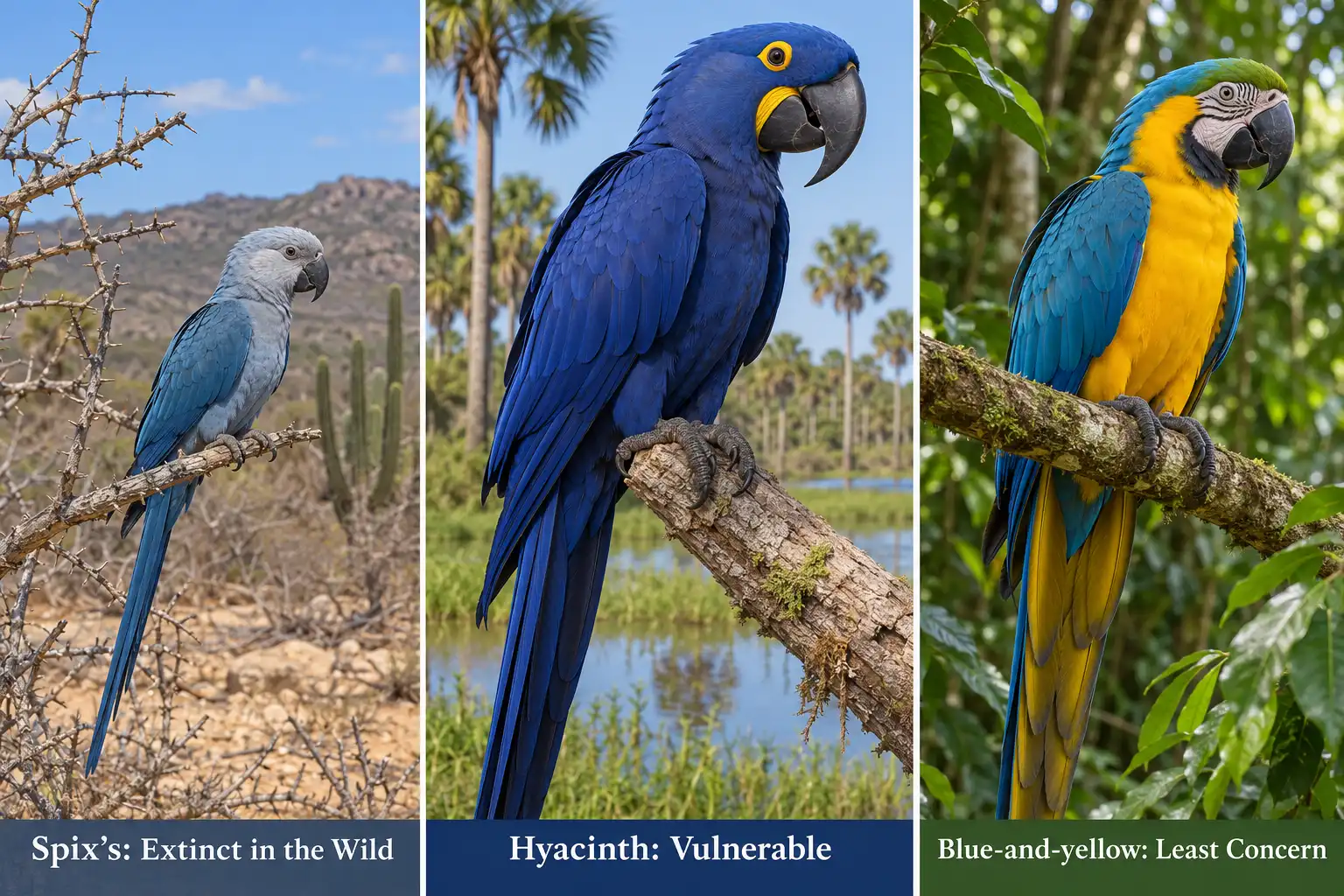
Are blue macaws extinct? Not as a group. Spix’s macaw, the blue bird from Rio, disappeared from its original wild habitat. Other blue macaws still live across South America. Their survival depends on which species you mean.
Blue macaws are not extinct as a group. Spix’s macaw remains classified as Extinct in the Wild despite releases in Brazil. Hyacinth, Lear’s, blue-throated, and blue-and-yellow macaws still have wild populations, although several are threatened.
Are Blue Macaws Extinct? Species-by-Species Status
“Blue macaw” is not one species. The World Parrot Trust lists different IUCN conservation categories for macaws:
| Species | IUCN conservation status | Wild population? |
|---|---|---|
| Spix’s macaw (Cyanopsitta spixii) | Extinct in the Wild | Releases occurred, but no established self-sustaining population |
| Glaucous macaw (Anodorhynchus glaucus) | Critically Endangered (Possibly Extinct) | No confirmed surviving population |
| Blue-throated macaw (Ara glaucogularis) | Critically Endangered | Yes, in Bolivia |
| Lear’s macaw (Anodorhynchus leari) | Endangered | Yes, in Brazil |
| Hyacinth macaw (Anodorhynchus hyacinthinus) | Vulnerable | Yes, in parts of South America |
| Blue-and-yellow macaw (Ara ararauna) | Least Concern | Yes, across much of northern South America |
Extinct in the Wild means no established wild population is known. Possibly Extinct does not mean extinction is confirmed. The macaw species group also includes parrots of other colors.
Is the Blue Bird From Rio Extinct?
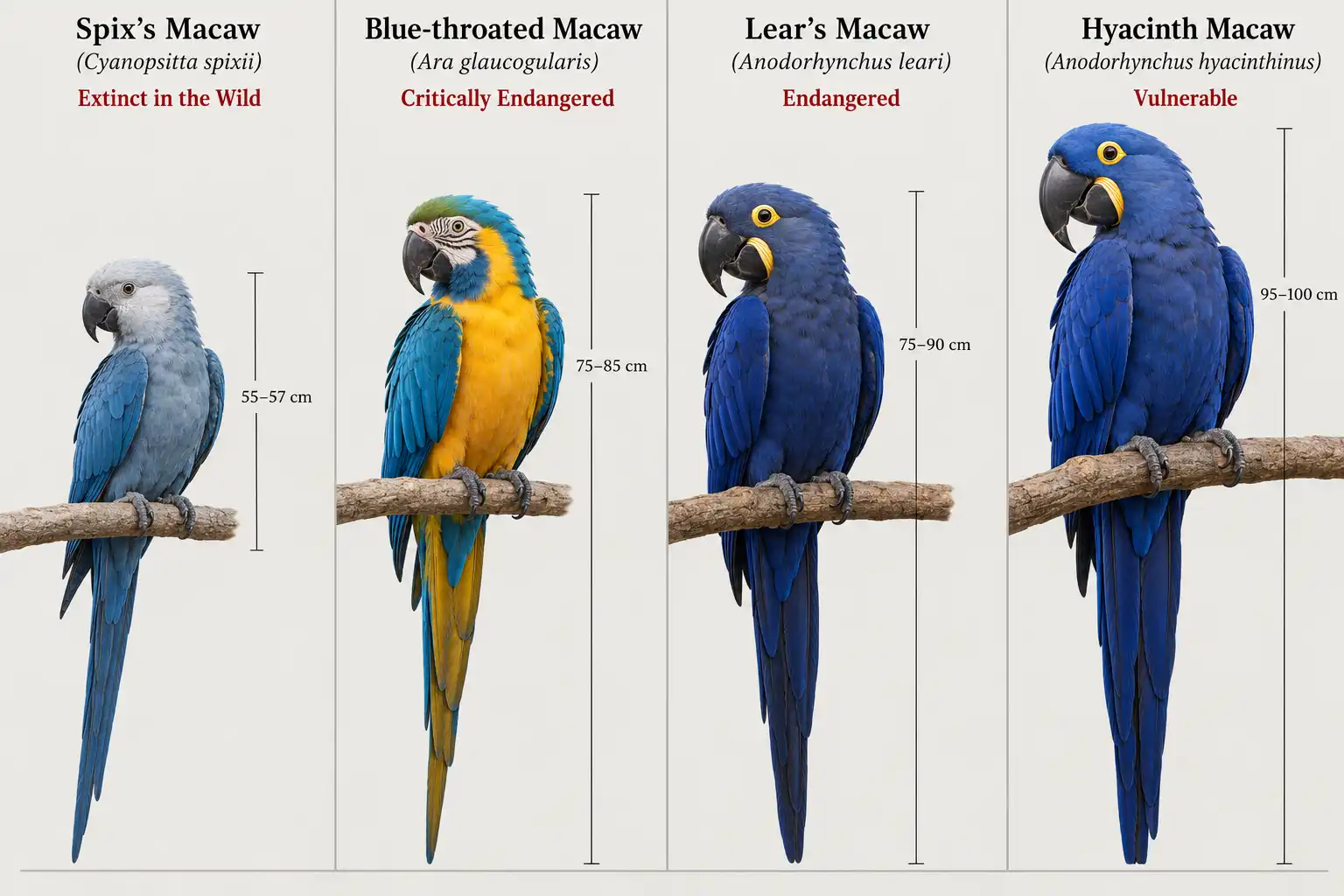
Blu and Jewel in the animated movie Rio represent Spix’s macaws (Cyanopsitta spixii). The real species survives in conservation breeding programs, but it is still classified as Extinct in the Wild.
Spix’s macaws once lived in Brazil’s dry Caatinga, near Curaçá in Bahia. They depended on native woodland for food and nesting. Their habitat was not the lush tropical rainforest often associated with the movie.
Brazil’s ICMBio conservation plan records the last known original wild Spix’s macaw in October 2000.
Spix’s macaws are also much smaller than hyacinth macaws. The World Parrot Trust lists an adult Spix’s macaw at around 360 g, compared with 1,200 to 1,450 g for a hyacinth macaw.
Are Spix’s Macaws Back in the Wild?
Spix’s macaws returned to Brazil through managed releases, but they have not yet established a confirmed self-sustaining wild population.
- 2000: The last known original wild Spix’s macaw disappeared.
- 2022: A study in Diversity documents the release of 20 captive-bred Spix’s macaws in two groups.
- 2023: The first young Spix’s macaws hatched in the wild after reintroduction, according to ICMBio.
- 2025: Circovirus was detected within the reintroduction program, including in a chick born in the wild.
- September 2026: ICMBio reported 34 circovirus-positive Spix’s macaws at one breeding facility. Another 69 had tested negative and were moved for quarantine and monitoring.
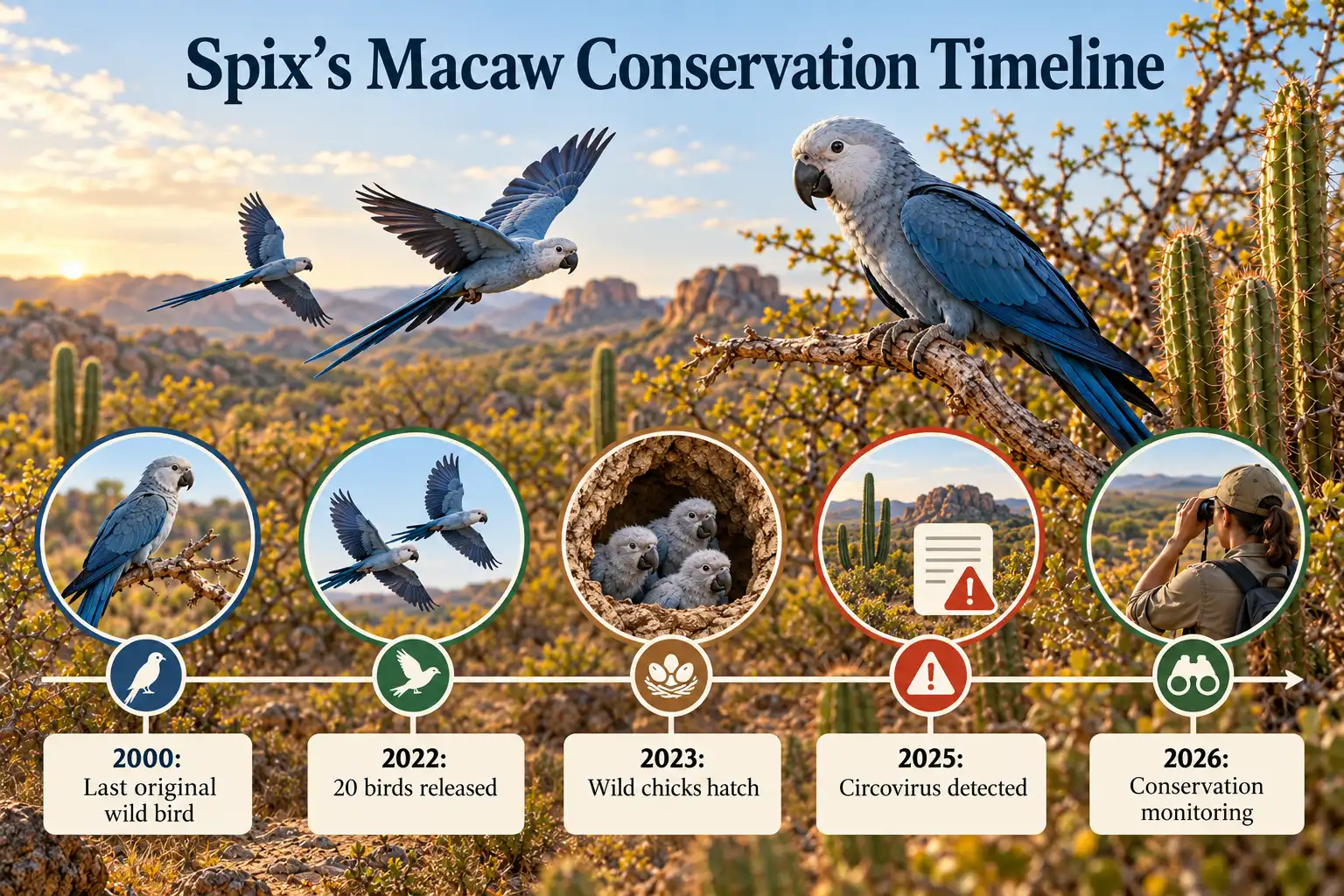
The 34 and 69 figures describe one facility, not the species’ total population. The disease response highlights the difficulty of establishing a healthy wild population.
As of October 2026, the World Parrot Trust still lists Spix’s macaw as Extinct in the Wild.
How Many Blue Macaws Are Left?
There is no reliable worldwide total for every blue macaw species combined. Population estimates count different species, age groups, and sometimes conservation facilities.
- Spix’s macaw: The World Parrot Trust reports more than 360 birds in captivity. ICMBio gives an approximate figure of 300 on its conservation-plan page. These are different snapshots, not a verified October 2026 global census.
- Hyacinth macaw: The World Parrot Trust estimates 4,700 to 11,000 mature wild individuals.
- Lear’s macaw: The World Parrot Trust lists 250 to 1,000 mature individuals. Its research overview also describes a broader population of nearly 1,700 birds, rather than a mature-only estimate.
- Blue-and-yellow macaw: It survives across a wide range, but a dependable worldwide head count is unavailable.
A count of mature birds cannot be compared directly with a count including juveniles. The blue-throated macaw also has several estimates that need separate explanation.
How Many Blue-Throated Macaws Are Left in the World?
Only a few hundred blue-throated macaws survive in Bolivia’s Llanos de Moxos. However, estimates use different dates and age categories.
The World Land Trust reported approximately 400 mature wild individuals in its September 2026 update.
The World Parrot Trust species profile lists 208 to 303 mature individuals, reflecting a different assessment. Meanwhile, Asociación Armonía estimated about 500 wild birds of all ages while preparing its 2025 national census.
These estimates should not be added together or averaged. They do not include a verified count of every blue-throated macaw in human care.
Despite improvements, the species remains Critically Endangered.
Why Are Blue Macaws Endangered?
The causes vary by species, but several threats appear repeatedly in conservation reports.
- Illegal trapping: Capture for wildlife trade helped eliminate Spix’s macaws from their original wild range. ICMBio identifies trafficking as a major cause.
- Habitat loss: Spix’s macaws lost Caatinga woodland. Lear’s macaws need licuri palms, while hyacinth macaws depend on palm-rich landscapes and suitable nest sites.
- Limited nesting space: Blue-throated macaws compete for suitable tree cavities in Bolivia’s palm savannas.
- Disease and small populations: The Spix’s macaw circovirus emergency shows how quickly a recovery program can face additional risks.
The World Parrot Trust’s species accounts document how these threats affect macaws differently. Protecting habitat helps, but species-specific problems also require targeted conservation work.
Can Conservation Save Blue Macaws?
Some programs already show measurable progress, although success does not mean a species is safe.
Asociación Armonía reported 19 blue-throated macaw chicks fledged in 2025. Its nest-box program had helped 164 chicks fledge since 2005, as reported in February 2026.
Those figures measure chicks that successfully left nests, not how many remain alive today. Protected reserves also preserve feeding and nesting habitat.
For Spix’s macaws, ICMBio’s work includes managed breeding, habitat protection, veterinary monitoring, and disease controls. A stable wild breeding population remains the goal.
Can You Keep a Blue Macaw as a Pet?
A wild macaw should never be captured or taken home. Spix’s macaws are part of conservation programs, not an ordinary pet market.
The U.S. Fish and Wildlife Service explains that CITES Appendix I places strict limits on international trade in species at risk of extinction. Requirements also depend on the species and applicable U.S. and state laws.
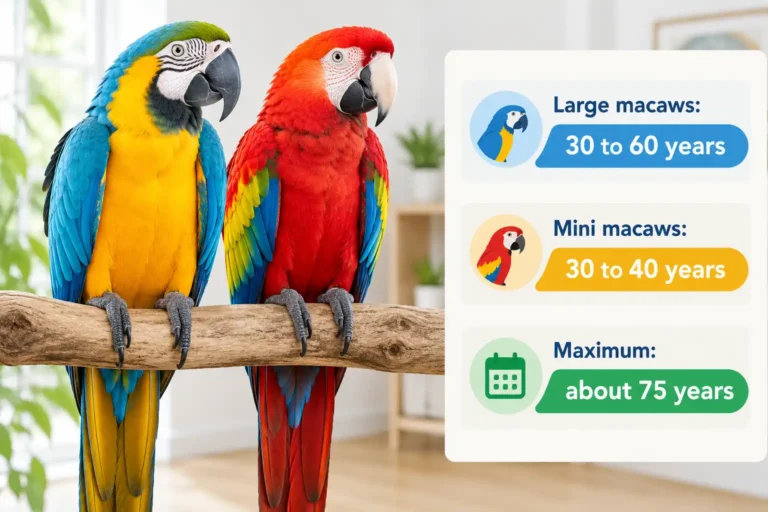
For legally captive-bred species, review bird ownership laws and permits before acquiring a macaw. Their long-term care also requires planning for the lifespans of different parrots.
Frequently Asked Questions
What Does Extinct in the Wild Mean?
It means a species no longer has a naturally established population in its former wild habitat. Birds may still live in managed facilities, and conservation teams may release individuals to rebuild a wild population.
Is a Hyacinth Macaw the Same Bird as Blu From Rio?
No, Blu is based on Spix’s macaw, a smaller gray-blue species from Brazil. Hyacinth macaws are much larger, have deep cobalt-blue feathers, and remain present in South American wild populations.
Is the Glaucous Macaw Definitely Extinct?
No, its official conservation category includes the qualifier “Possibly Extinct.” Researchers have not confirmed a surviving population for decades, but the evidence has not been considered sufficient to declare extinction without that qualification.
Are Blue-and-Yellow Macaws Endangered?
Blue-and-yellow macaws are currently classified as Least Concern, not Endangered. However, the World Parrot Trust notes that habitat loss and trapping continue to affect parts of their range, so protection remains relevant.
Does Releasing Spix’s Macaws End Their Extinct-in-the-Wild Status?
No, releases alone do not establish a stable wild population. Conservation assessments also consider survival, reproduction, and whether birds can persist in their habitat without continued intensive support.
How Can Readers Tell Whether a Blue Macaw Population Figure Is Current?
Check the species name, the publication date, and whether the count refers to mature wild birds or all ages. Facility numbers and released-bird totals are not automatically worldwide population estimates.
What to Remember About Blue Macaws
Blue macaws are not extinct as a group. Spix’s macaw remains Extinct in the Wild, while several other blue species survive in nature. For future updates, check named species and dated reports rather than general claims about “blue macaws.”