How Long Do Macaws Live? 30 to 60 Years, Species by Species
How long do macaws live? Longer than almost any other pet bird, and long enough to shape your plans for decades. The answer changes with species and size. Below are the figures for each macaw, where they come from, and what they mean for your own age.
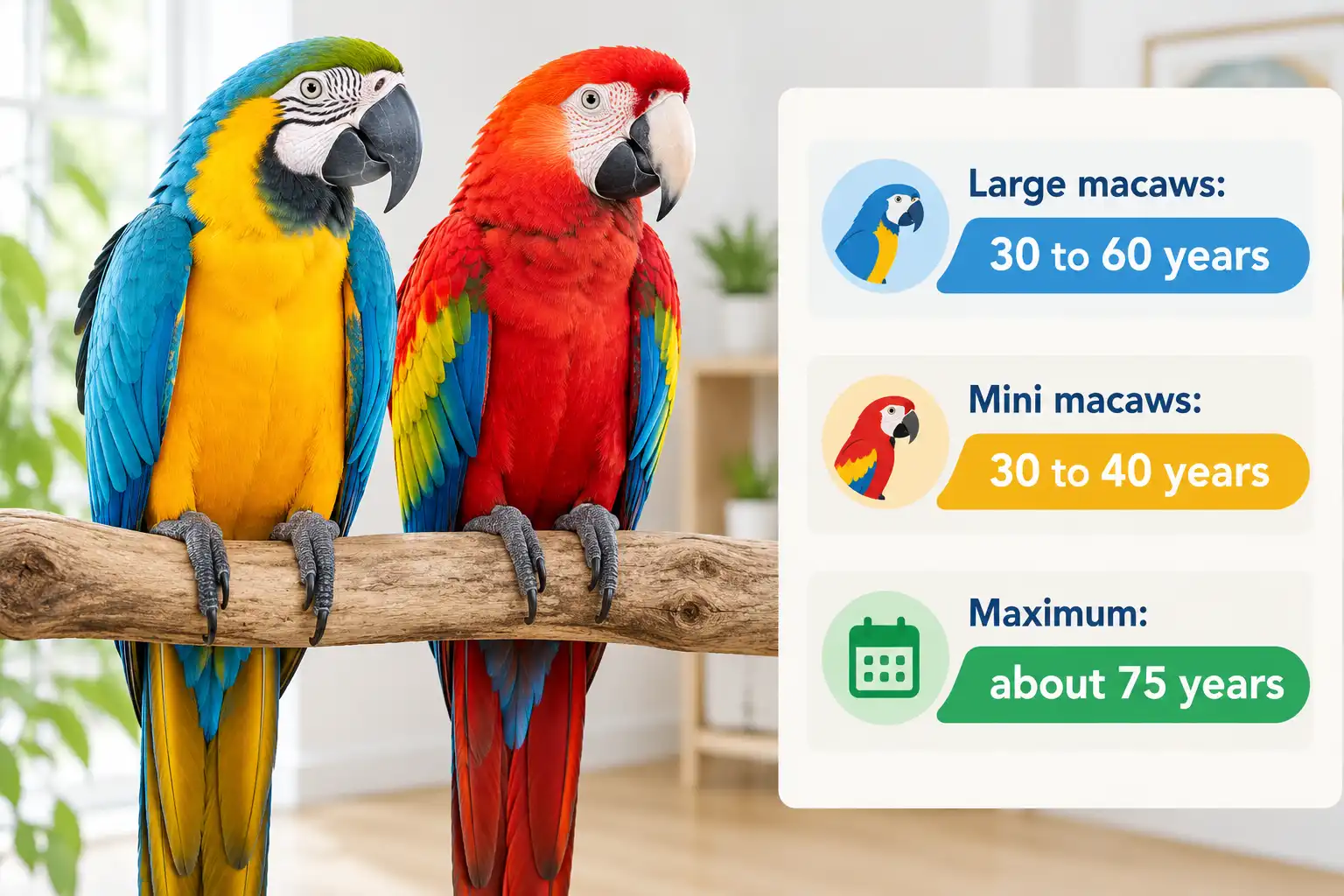
Large macaws live 30 to 60 years as pets, per the Merck Veterinary Manual. VCA Animal Hospitals gives large macaws 50 to 60 years, with a maximum near 75. Mini macaws, such as Hahn’s, live 30 to 40 years.
How Long Does a Macaw Live in Captivity?
A pet macaw usually lives 30 to 60 years, according to the Merck Veterinary Manual’s table of popular pet birds. Merck names the blue-and-gold, scarlet, green-winged, military, and hyacinth macaws in that group. It also calls macaws the largest of the parrots.
VCA Animal Hospitals splits the group by size instead. Its macaw care handout gives large macaws 50 to 60 years, with a maximum of about 75. Mini macaws, meanwhile, get 30 to 40 years. VCA names Hahn’s, yellow-collared, and severe macaws as minis.
So the two sources overlap but don’t match. For a large macaw, Merck’s range starts 20 years lower than VCA’s. However, both end at 60 years.
That shared top end is the number to plan around, because a well-kept large macaw can reach it.
How Long Do Macaws Live? Lifespan by Species
Neither Merck nor VCA gives a lifespan for each species. Instead, the best species-level figures come from zoo records. A 2022 study led by the Max Planck Institute of Animal Behavior used records of 133,818 zoo parrots. It appeared in Proceedings of the Royal Society B.
The table pairs the study’s estimates with the vet ranges. All figures are in years.
| Macaw species | Pet range from vet sources | Zoo life expectancy at birth |
|---|---|---|
| Scarlet macaw | 30 to 60 (Merck), 50 to 60 (VCA) | 35.5 |
| Lear’s macaw | Not listed | 30.8 |
| Green-winged macaw | 30 to 60 (Merck), 50 to 60 (VCA) | 29.8 |
| Blue-and-gold macaw | 30 to 60 (Merck), 50 to 60 (VCA) | 24.3 |
| Hyacinth macaw | 30 to 60 (Merck), 50 to 60 (VCA) | 23.2 |
| Military macaw | 30 to 60 (Merck) | No estimate |
| Yellow-collared macaw (mini) | 30 to 40 (VCA) | 17.7 |
| Red-shouldered (Hahn’s) macaw (mini) | 30 to 40 (VCA) | 14.0 |
| Severe macaw (mini) | 30 to 40 (VCA) | No estimate |
| Spix’s macaw | Not listed | No estimate |
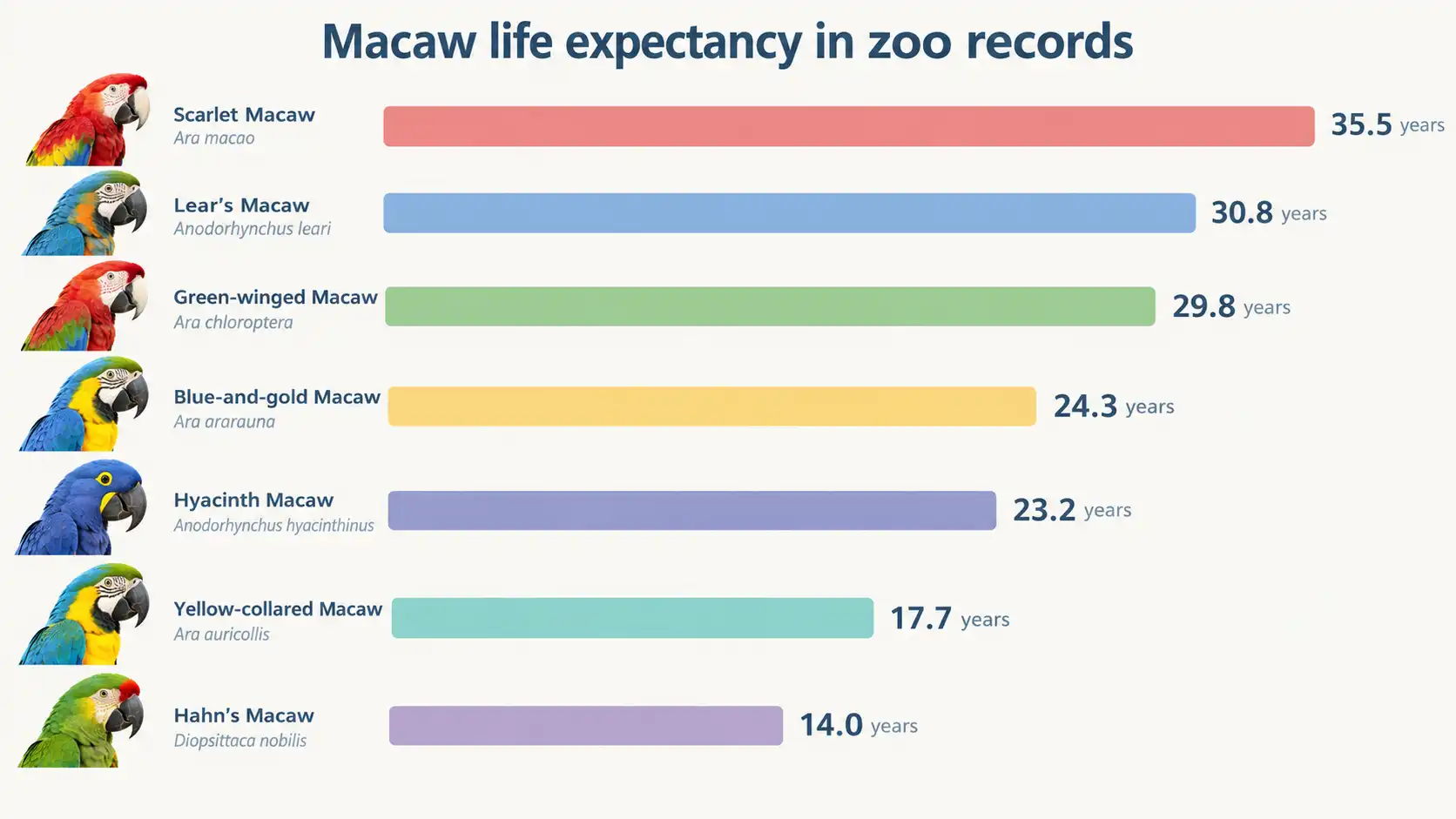
Zoo figures run lower for a simple reason. The study counts life expectancy from birth, so chicks that die young pull every average down. For that reason, a species with more chick deaths scores lower, even if its adults live just as long.
So treat the zoo column as a rough comparison between species. Then use the vet range to plan.
How Long Do Blue and Gold Macaws Live?
Blue-and-gold macaws live 30 to 60 years, per Merck, which also calls them blue-and-yellow macaws. VCA’s figure for large macaws, including this one, is 50 to 60 years.
In zoo records, blue-and-gold macaws averaged 24.3 years from birth. The blue-and-gold estimate is also the most precise of any macaw in the study: 23.6 to 25.0 years.
How Long Do Scarlet Macaws Live?
Scarlet macaws live 30 to 60 years as pets, per Merck, and 50 to 60 per VCA. They also top the zoo data. Scarlet macaws averaged 35.5 years from birth, the highest of any parrot species in the Max Planck results.
Still, that doesn’t prove a scarlet will outlive a blue-and-gold in your home. Both share the same vet ranges.
How Long Do Green-Winged and Military Macaws Live?
Green-winged macaws share the large macaw ranges: 30 to 60 years per Merck, 50 to 60 per VCA. Zoo records put green-winged macaws at 29.8 years from birth, third among macaws. Military macaws sit in Merck’s group at 30 to 60 years too. The zoo study, however, produced no estimate for them.
How Long Do Mini Macaws Live?
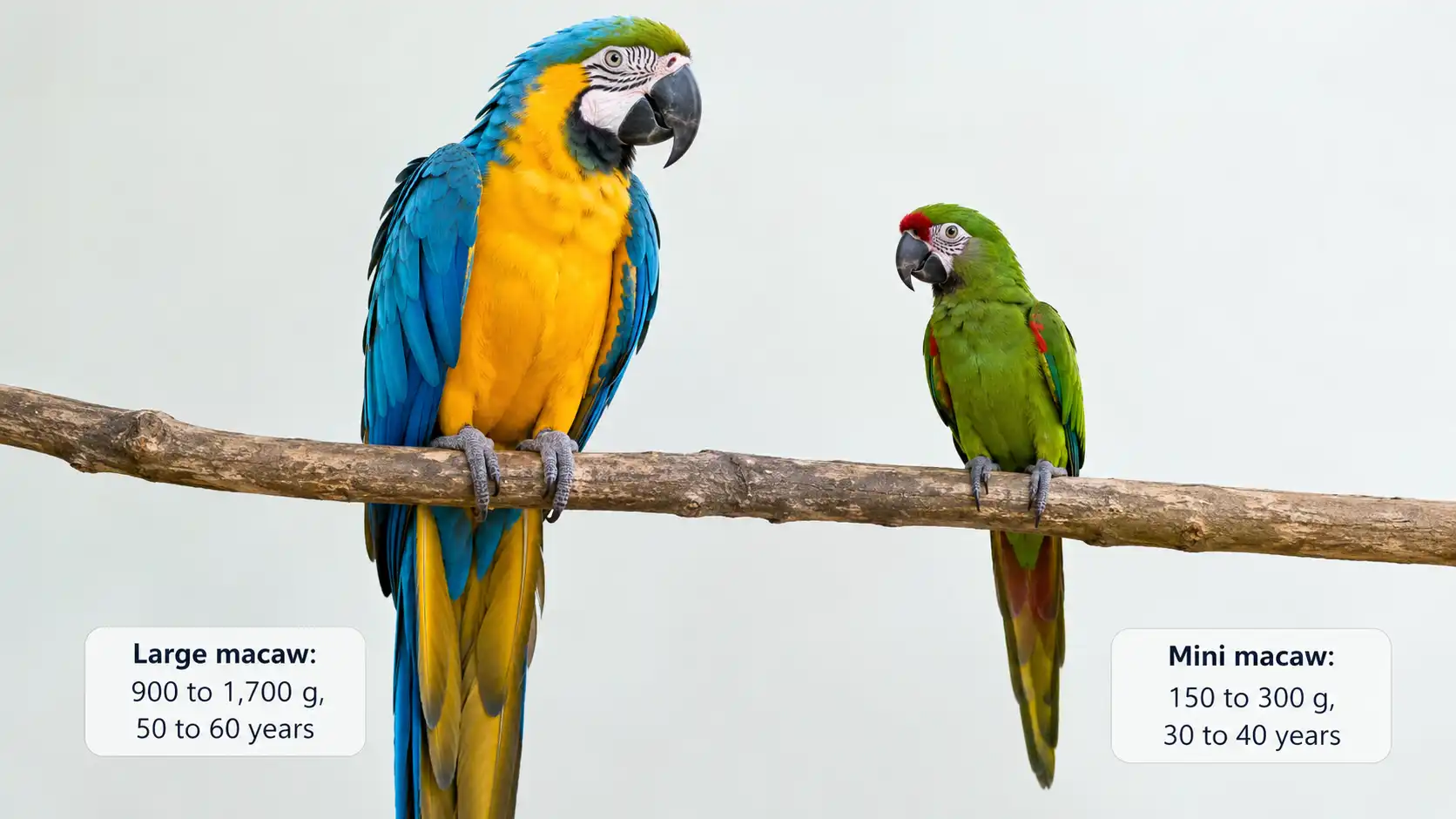
Mini macaws live 30 to 40 years, according to VCA. They also weigh far less. VCA puts mini macaws at 150 to 300 grams (about 5 to 11 ounces), against 900 to 1,700 grams for large macaws.
The zoo figures sit much lower here. Red-shouldered macaws, the species that includes Hahn’s, averaged 14.0 years from birth. Yellow-collared macaws averaged 17.7, while the study gave no estimate for severe macaws. Merck’s table has no mini macaw entry, so VCA’s 30 to 40 years is the only vet range.
How Long Do Blue Macaws Live?
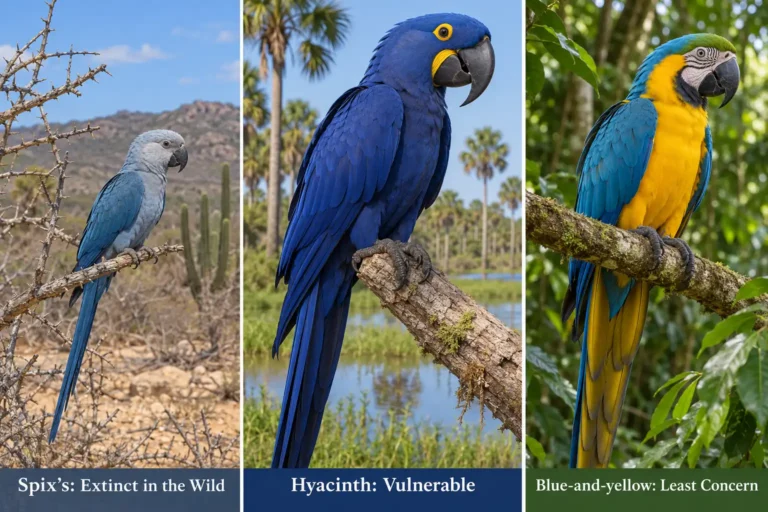
Blue macaw figures run from 30 to 60 years for the hyacinth, per Merck, to a rough 28 for Spix’s macaw. The data behind each figure varies a lot, though. The name usually covers three species: the hyacinth, Lear’s, and Spix’s macaw.
The hyacinth has the best data. Merck lists hyacinth macaws at 30 to 60 years with the other macaws. VCA counts the hyacinth as a large macaw, at 50 to 60. Zoo records give hyacinth macaws 23.2 years from birth.
The US Fish and Wildlife Service listed the hyacinth macaw as threatened in 2018. About 6,500 remained in the wild at the time. Even so, the rule doesn’t affect selling hyacinths across state lines. That holds as long as the trade complies with the Wild Bird Conservation Act or CITES.
Lear’s macaws averaged 30.8 years in zoo records. The Lear’s estimate is less certain, though, with a range of 25.9 to 36.6 years. Neither Merck nor VCA lists the species.
How Long Do Spix’s Macaws Live?
No reliable figure exists for Spix’s macaws. The University of Michigan’s Animal Diversity Web lists about 28 years for Spix’s macaws in captivity. That account gives a range of 20 to 33 years, but it dates from 2004.
It also explains why the figure is shaky. Illegal collectors took so many eggs, fledglings, and adults from the wild that an average became hard to pin down. The Max Planck study gave no estimate either. So treat 28 years as a rough marker, not a settled fact.
With so few Spix’s macaws left, whether blue macaws are extinct is a fair question. The answer differs by species.
How Long Can a Macaw Live?
A large macaw can live about 75 years, the maximum VCA gives. VCA also mentions reports of large macaws living past 90. Those reports sit outside its stated range, so treat them as possible but unconfirmed.
Record ages are shaky ground in general. The Max Planck study calls maximum recorded lifespan a problematic measure, because it depends so heavily on sample size. In other words, one exceptional bird can set a record that says little about a typical one.
How Long Do Macaws Live in the Wild?
No reliable figure exists for any macaw species in the wild. Neither Merck nor VCA publishes a wild lifespan, and the zoo study covers only captive birds. So the sources here can’t compare wild and pet macaws, and we won’t guess.
How Macaws Compare With Other Pet Parrots
Macaws have the highest top end of any group in Merck’s table of popular pet birds. Here’s how Merck’s average lifespans line up:
- Budgerigars (budgies): 5 to 10 years
- Cockatiels: up to 20 years
- Cockatoos: 25 to 50 years
- African gray parrots: 30 to 50 years
- Amazon parrots: 40 to 50 years
- Macaws: 30 to 60 years
Zoo records point the same way. Of the 218 parrot species with an estimate in the Max Planck results, half averaged under 10 years from birth. Macaws, meanwhile, took four of the top five places: scarlet, Lear’s, green-winged, and great green. By comparison, budgerigars averaged 4.6 years and Congo African grays 18.6.
If six decades feels like too long, lifespans across other pet parrot species show which birds fit a shorter horizon.
When Does a Macaw Count as Old?
A macaw counts as elderly from about 30 years. That threshold comes from a 2009 summary by the Zoo/Exotic Pathology Service, published on IVIS. It grouped macaws with Amazons, cockatoos, and African grays. By contrast, the same summary counted budgerigars as elderly at 6 years.
The summary’s table for macaws also shows what aging tends to bring. Tumors topped the list, ahead of lung disease from inhaled dust and body-wide inflammation. Heart problems came next.
So a 30-year-old macaw may still have decades left, but it needs closer watching. VCA recommends a yearly exam with an avian veterinarian for macaws. Ask your vet whether an older bird needs checkups more often.
What Shortens a Macaw’s Life?
Diet, weight loss, infectious disease, and household hazards all cut macaw lives short. First, though, know when to act fast. See an avian vet the same day if a macaw:
- Sits fluffed up on the cage floor
- Bobs its tail or breathes with its mouth open
- Stops eating
- Bleeds and the bleeding won’t stop
- Strains without passing an egg, in a hen
- Has had any contact with a cat’s teeth or claws
- May have breathed fumes
Birds hide illness, so by the time a macaw looks sick, it often is very sick. That’s why the early signs of illness in pet birds are worth learning before you need them.
A Seed-and-Nut Diet
Merck’s pet owner pages list macaws among the birds especially likely to become obese. Galahs, Amazon parrots, and Quaker parrots share that risk. In turn, obesity raises the risk of arthritis, fatty liver disease, atherosclerosis, and heart disease, per Merck.
Diet drives much of that. Merck describes the old seed-and-nut diets as high in fat and short on vitamins and minerals. Birds that eat mostly seeds and nuts also carry the highest risk of vitamin A deficiency.
Merck’s goal instead is a pelleted diet plus a smaller share of fresh vegetables and fruit. Your avian vet can set the proportions, and a pellet-based diet for pet birds is the place to start.
How to Catch Weight Loss Early
Large macaws weigh 900 to 1,700 grams, per VCA, so a normal weight covers a wide spread. What matters is your own bird’s usual weight. So weigh your macaw on a gram scale, log it, and run this check:
Weight change (%) = (this week’s grams minus usual grams) divided by usual grams, times 100
For example, take a blue-and-gold that usually weighs 1,000 grams and drops to 950. That bird has lost 5 percent. A steady drop like that is worth a call to your avian vet, even if the bird seems fine.
Disease and Household Hazards
Two more threats belong on your list. One is a disease that targets macaws, and the other sits in your kitchen and toy box.
Proventricular Dilatation Disease
Proventricular dilatation disease (PDD) shows up most often in macaws, according to VCA. African grays, Amazons, cockatoos, and conures get it too. VCA links PDD to avian bornavirus.
Affected birds may lose their appetite, regurgitate, and lose weight steadily. However, other illnesses cause the same signs, so only a vet’s testing can tell them apart. VCA notes there’s no cure, and the condition is often fatal.
A new macaw should also see an avian vet within its first 7 days home, per VCA’s macaw handout.
Fumes and Metal
Nonstick (PTFE) cookware is a household risk that can kill fast. VCA reports bird poisonings from PTFE products even at recommended temperatures. Sudden death often comes before or soon after any signs appear. Switching to cookware that’s safe around birds removes that source of fumes.
Lead and zinc matter too. VCA calls heavy metal poisoning life threatening and says it needs immediate veterinary care. So check toys and cage hardware for metal a macaw could chew off.
How Old Will You Be When Your Macaw Is Old?
Add the macaw’s remaining years to your age today:
Your age at the end = your age today + (the species’ lifespan minus the bird’s age now)
The table below assumes a young large macaw and uses three markers. Thirty years is Merck’s low end for macaws and the age the 2009 summary calls elderly. Sixty years is the top of both Merck’s and VCA’s ranges. And 75 years is VCA’s large macaw maximum.
| Your age when you bring home a young large macaw | When the macaw turns 30 | When it turns 60 | When it turns 75 |
|---|---|---|---|
| 25 | 55 | 85 | 100 |
| 35 | 65 | 95 | 110 |
| 45 | 75 | 105 | 120 |
| 55 | 85 | 115 | 130 |
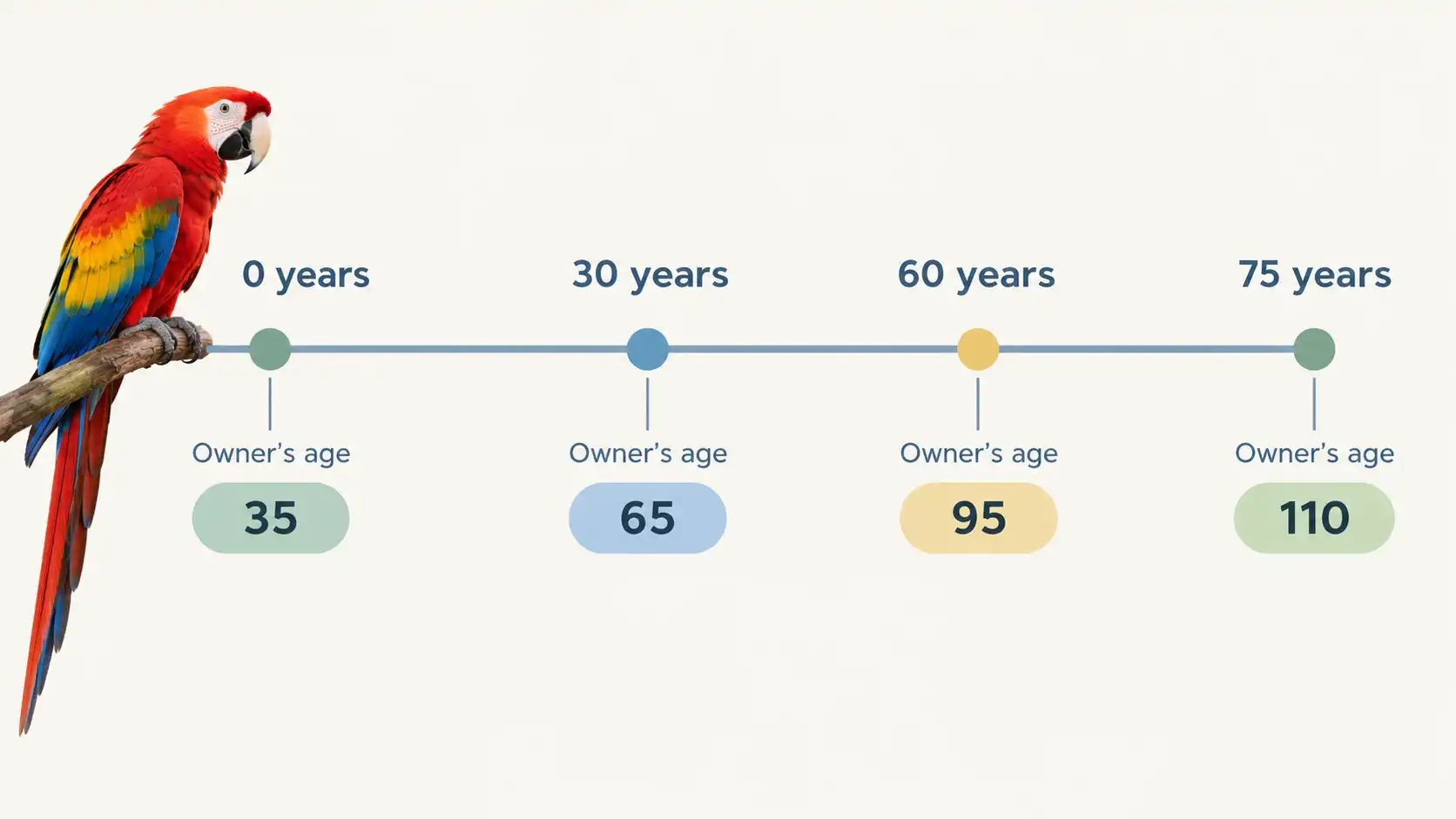
Adopting an adult changes the math. Say you’re 50 and adopt a 20-year-old blue-and-gold. Merck’s 30 to 60 years leaves that macaw 10 to 40 more years, so you’d be 60 to 90. VCA’s 50 to 60 years leaves it 30 to 40, so you’d be 80 to 90.
Mini macaws shorten the horizon but don’t remove it. VCA gives mini macaws 30 to 40 years. So a young Hahn’s macaw brought home at 45 could still need you at 75 to 85.
Planning for a Macaw That Outlives You
As the table shows, a large macaw bought in middle age can easily outlive its buyer. So the plan for its later years belongs in the decision, not after it. A workable plan covers four things:
- A named caregiver who has agreed, in writing, to take the bird
- Money set aside for food and avian vet care
- The bird’s vet records and diet notes, kept in one place
- A talk with an estate attorney about whether a pet trust suits your state
Rehoming a macaw later is not a failure, either. If your situation changes, a rescue that takes large parrots is a responsible choice.
The same logic works in reverse. Adopting an adult macaw from a rescue shortens the commitment by every year the bird has already lived.
FAQs about Macaw Lifespan
Do macaws live longer than African grays?
Usually, yes: Merck lists 30 to 60 years for macaws and 30 to 50 for African gray parrots. Zoo records agree, with scarlet macaws at 35.5 years from birth and Congo African grays at 18.6.
Can a macaw live to 100?
No verified record in these sources reaches 100, so plan for 60 years as the likely top end. VCA puts the large macaw maximum near 75 and only mentions reports past 90.
Do mini macaws live as long as large macaws?
No, mini macaws have shorter lives, at 30 to 40 years per VCA. Large macaws such as the scarlet and blue-and-gold get 50 to 60 years from the same source.
Is a 20-year-old macaw old?
No, it’s an adult with up to 40 years ahead, since Merck lists 30 to 60 years for macaws. The Zoo/Exotic Pathology Service counted macaws as elderly only from 30 years of age.
How long do macaws live in the wild?
No reliable figure exists for any macaw species living in the wild. Vet references cover pet macaws and the Max Planck study covers zoo birds, so no fair comparison exists yet.
Does a pellet diet help a macaw live longer?
No published source puts a number of extra years on it. However, Merck ties seed-and-nut diets to obesity and vitamin A deficiency, two risks that a pellet-based diet helps a macaw avoid.
Before You Bring a Macaw Home
Plan for 60 years with a large macaw and 40 with a mini. Then run those numbers against your own age. Find an avian vet first, through the Association of Avian Veterinarians directory, and book the first exam within 7 days. After that, feed pellets with fresh vegetables and fruit. Keep nonstick pans out of the kitchen, and weigh the bird on a gram scale. Those habits target the risks that cut macaw lives short.