Do Cockatiels Talk? What Males, Females, and Research Show
Cockatiels whistle tunes and copy household sounds with ease. Words are a different matter. So, do cockatiels talk? Some do, and the bird’s sex, age, and daily routine shape the odds.
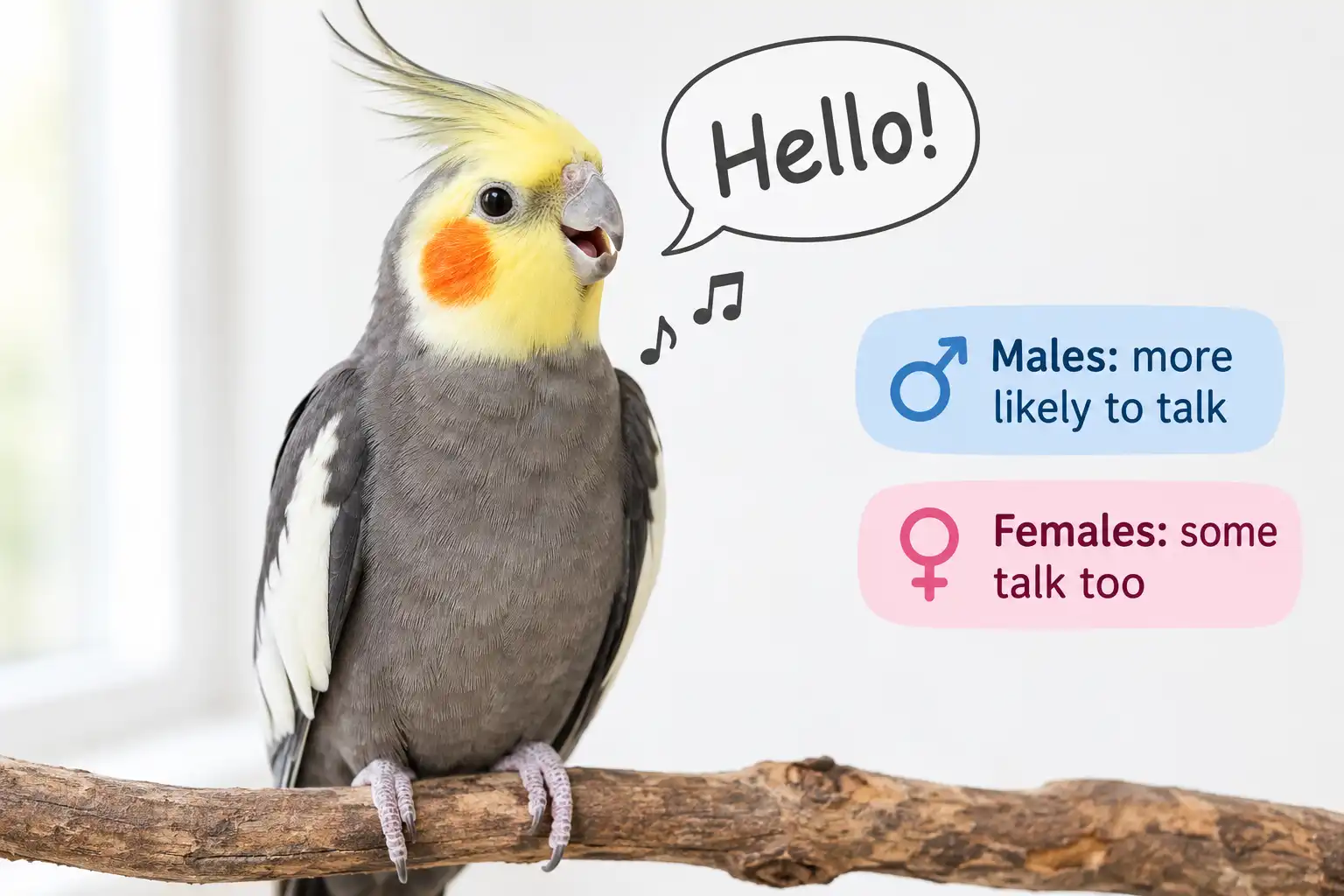
Yes, cockatiels can talk, though whistling comes easier to them than words. VCA Animal Hospitals calls their speech limited and whistle-like. Males talk more often, but females that do mimic learn about as much.
Do Cockatiels Talk Like Other Parrots?
Yes, but on a smaller scale than the famous talkers. VCA Animal Hospitals describes them as strong whistlers with a limited talking ability. Their voice also sounds whistle-like, so words often come out soft and high.
Research points the same way. In 2022, researchers at the University of Northern Colorado and the University of Pittsburgh at Johnstown surveyed parrot owners. Their study in Scientific Reports covered 877 companion parrots from 73 species. It counted each bird’s mimicked words, phrases, and household sounds.
For most species, household sounds made up the smallest share of what they copied. Cockatiels broke that pattern. Like Fischer’s lovebirds and Senegal parrots, they copied more sounds than phrases. The authors note this fits the cockatiel’s reputation as a whistler.
By comparison, African grays in the survey had the largest repertoires, averaging about 60 words. So a speaking cockatiel usually offers a short list, not sentences.
Cockatiels are small members of the cockatoo family. That means the basics of how parrots form human words apply to them as well.
Can Female Cockatiels Talk?
Yes, some female cockatiels talk, but fewer of them do. VCA notes that male cockatiels tend to be better talkers than females.
The 2022 survey backs this up. Male cockatiels far outnumbered females among the birds reported to mimic. That gap held even among the 17 cockatiels whose sex was confirmed by DNA testing or egg laying. As a result, the authors see a likely true tendency for males to mimic more.
Still, the same data hold good news for owners of hens. Female cockatiels that did mimic had vocabularies about as large as the males’ vocabularies. So a talking female is not a hidden male. She is simply less common.
The survey also caught a human habit. Owners often assume a talking parrot is male, so casual reports likely overcount males. The authors call their sex findings tentative and a starting point for more research.
Male vs Female Cockatiel Traits at a Glance
This table combines the survey’s speech findings with VCA’s plumage guide for adult wild-type gray cockatiels.
| Trait | Male cockatiel | Female cockatiel |
|---|---|---|
| Chance of mimicking speech | Higher | Lower |
| Vocabulary once mimicking | About the same as females | About the same as males |
| Adult face and cheeks | Bright yellow face, bright orange cheeks | Paler yellow face, duller orange cheeks |
| Underside of tail | Solid gray | Fine horizontal yellow barring |
| Underside of long wing feathers | Solid gray, no spots | Yellow spots |
| Before the first molt | Looks like an adult female | Looks like an adult female |

Why a Young Cockatiel’s Sex Is Hard to Call
Young cockatiels of both sexes look like adult females. According to VCA, adult colors arrive with the first molt, at around 9 to 12 months. So a quiet, female-looking bird at 4 months may still turn out to be male.
VCA’s plumage cues also describe the wild-type gray bird. Pet cockatiels come in lutino, pied, pearl, and cinnamon varieties too. For a certain answer at any age, ask your avian vet about a DNA sexing test.
When Do Cockatiels Start Talking?
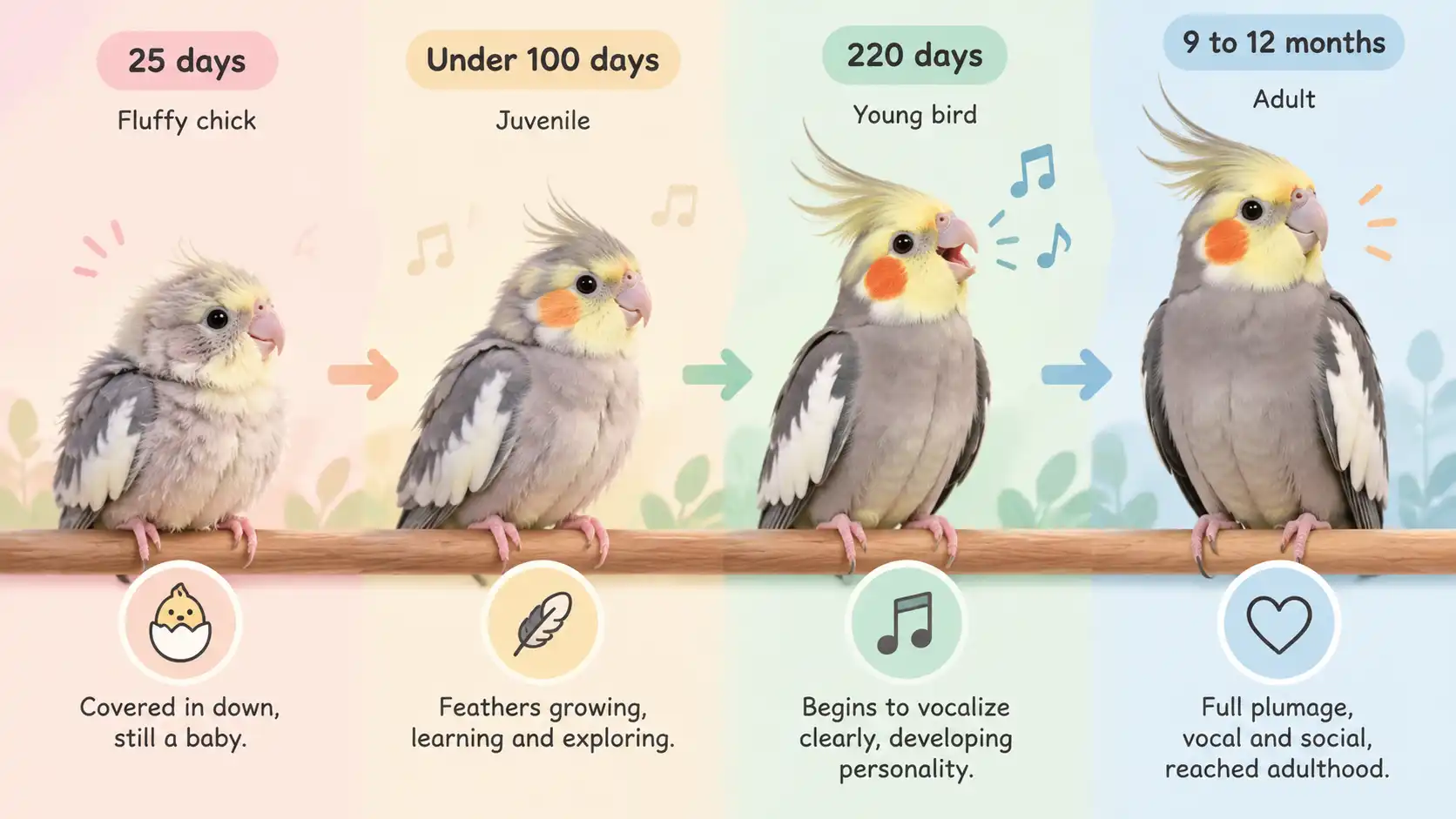
In an Aichi University study published in PLOS ONE, male cockatiels began copying a whistled tune before 100 days old. By about 220 days, or roughly 7 months, people could clearly recognize the tune.
The Japanese study followed three hand-raised males. They arrived at about 25 days old and then heard the tune daily, live or recorded. Each bird also spent about an hour out of its cage every day, playing with caregivers. Along the way, the birds picked up several words, often their own names.
That pace takes patience. Up to 30 hearings a day for roughly 195 days gave these male cockatiels as many as 5,850 repetitions. Plan on months, not weeks.
A rough timeline for a male cockatiel, based on that study and VCA:
- About 25 days old: the Aichi chicks began hearing the tune daily
- Under 100 days: first sound sequences that resembled the tune
- By about 220 days: a tune people could clearly recognize
- 9 to 12 months: first molt and adult colors, per VCA
The evidence here is thin. Three males in one lab is a small sample. We also found no comparable study on females or first words. Treat these ages as a guide, not a deadline.
How to Teach a Cockatiel to Speak
Pair one short word with one daily moment, then repeat it often and praise every attempt. These steps draw on the Aichi study and the 2022 survey.
- Build trust first. The Aichi caregivers spent much of each day with their birds. They did this on purpose, to strengthen the social bond behind mimicry.
- Pick one short word. Start with your cockatiel’s name or “hello.” The study birds often said their own names.
- Tie the word to a moment. Say “good morning” each time you uncover the cage. Most cockatiels in the 2022 survey used mimicked sounds at fitting times. So a steady cue gives the word a place.
- Repeat it through the day. The male cockatiels in the study heard their tune up to 30 times daily. Fold the repetitions into normal routines.
- Use your own voice, then a recording. The birds responded to live and recorded whistles in similar ways. Still, the study paired recordings with daily social time.
- Praise instead of bribing. The researchers used no food rewards. Instead, caregivers simply praised the birds out loud.
- Stop before your bird does. End the lesson if your cockatiel turns away or seems uneasy, and try again later.
Above all, expect whistles first. A whistled “hello” still counts as progress.
Will Teaching Whistles Stop a Cockatiel From Talking?
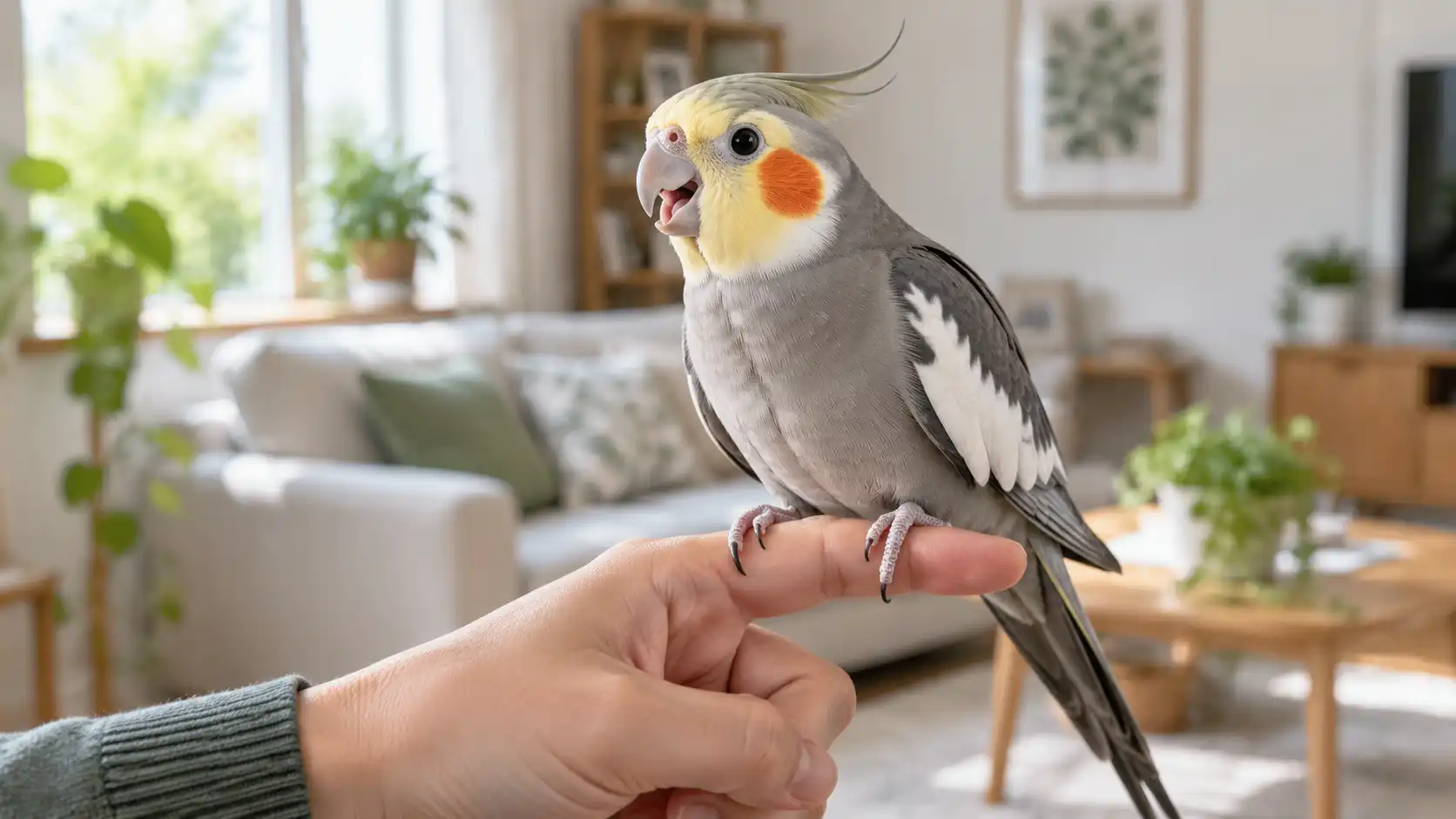
Probably not, and we found no published study showing that it does. In fact, the male cockatiels in the Aichi study learned a whistled tune and also picked up several words.
The study did note one preference. When singing along with a person, the birds stuck to whistled music. The author never saw them join in with speech, and he suggests they may favor the higher pitch of whistles.
So if words matter to you, give them equal airtime. A home that whistles all day offers far more whistles than words to copy.
Why Isn’t My Cockatiel Talking?
Usually, nothing is wrong. Your bird may be female, still young, or simply more drawn to sounds than words. Also, the 2022 survey can’t say how many cockatiels never mimic at all, because it focused on birds that did.
| What you notice | Likely reason | What to try |
|---|---|---|
| Whistles but no words | Cockatiels copy more sounds than phrases, per the 2022 survey | Keep pairing one word with one daily moment |
| Copies beeps and ringtones | It copies what it hears often | Stay neutral so the sound earns no extra attention |
| Calls out as you leave the room | The Aichi researcher saw cockatiels sing or speak as caregivers left, possibly for attention | Say one calm word as you go |
| Words sound blurred or whistly | VCA describes a whistle-like talking voice | Nothing, since this is normal for the species |
| A hen stays quiet | Females mimic less often, per VCA and the survey | Enjoy her other calls |
| Sudden silence | Merck lists reduced vocalizing as an early illness sign | Call an avian vet (see the next section) |
When a Quiet Cockatiel Needs an Avian Vet
A cockatiel that suddenly goes quiet needs an avian vet exam soon. Silence can be an early sign of illness. The Merck Veterinary Manual notes that less talking may be one of the first changes owners spot in a sick parrot. It lists decreased or changed vocalization alongside fluffed feathers and extra sleeping. Since birds hide weakness, a quiet bird can be sicker than it looks.
Book a prompt exam for a quieter voice or a hoarse, changed call. Then seek same-day care if your cockatiel shows any of these:
- Sitting fluffed up on the cage floor
- Tail bobbing or open-mouth breathing
- Not eating
- Bleeding that won’t stop
- A hen straining without passing an egg
- Any contact with a cat’s teeth or claws
- Possible exposure to fumes
Only a vet can find the cause, so skip home remedies. The Association of Avian Veterinarians runs a Find-a-Vet tool for locating bird vets. It also helps to know the early warning signs in pet birds before anything goes wrong.
Is a Cockatiel the Right Bird If You Want a Talker?
It can be, as long as whistling and gentle company matter more to you than a vocabulary. VCA calls the cockatiel an excellent first bird for a family. Still, speech is a bonus that may never come, especially from a hen.
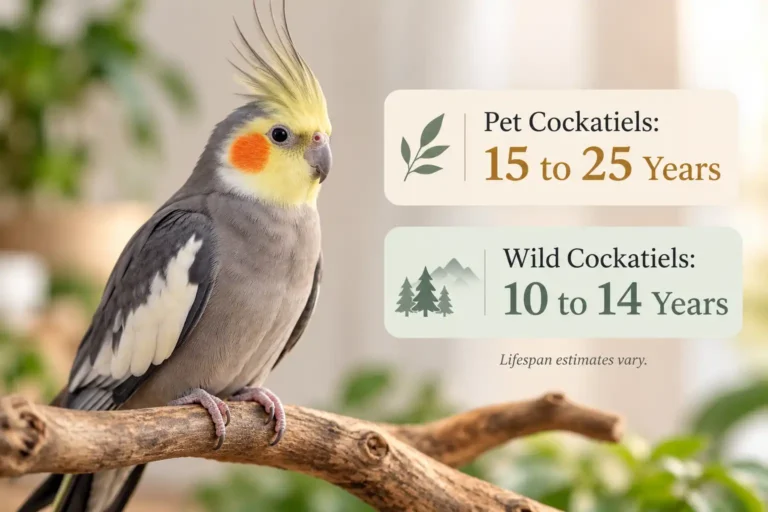
The commitment is long, too. VCA lists a cockatiel lifespan of 10 to 14 years, with a maximum of 24. Someone who brings one home at 30 could still care for it at 40 to 44, or at 54 at that maximum. So weigh the lifespan range for cockatiels before you decide.
If talking tops your list, compare species first. African grays had the largest vocabularies in the 2022 survey. Even so, a single African gray there could know anywhere from 0 to 600 words, so no species guarantees speech.
If a smaller budgerigar (budgie) suits your home better, weighing a budgie against a cockatiel is a sensible next step.
FAQs
Is my cockatiel female if it doesn’t talk?
Not necessarily, because silence alone says little about a cockatiel’s sex. A DNA test through your avian vet, or an egg, settles it, since young cockatiels of both sexes look female until their first molt.
How many words can a cockatiel learn?
It varies widely between birds, and cockatiels as a group copy more sounds than phrases. The 2022 survey of 877 companion parrots found a median of 11 words, but that figure mixes 73 species.
Do cockatiels understand what they say?
Not the way people do, though many link words to moments. In the 2022 survey, 23% of mimicking cockatiels never used their sounds in a fitting context, a higher share than most species showed.
Can an older cockatiel learn to talk?
It can, though we found no study measuring how often adult cockatiels learn a first word. The 2022 survey authors note that parrots keep the ability to learn new sounds throughout life.
Will a second cockatiel stop mine from talking?
Probably not, though the evidence is not specific to cockatiels. In the 2022 survey, parrots that regularly spent time with other parrots mimicked about as much as parrots without any bird companions.
Can a cockatiel learn to say its own name?
Yes, and a name is a smart first word because the bird hears it constantly. In an Aichi University study, hand-raised male cockatiels learned a whistled tune and often said their own names too.
Key Points for Your Cockatiel
Cockatiels can talk, but whistles usually come first and words arrive as a bonus. Males mimic more often, while hens that mimic learn about as much. Start young, repeat one short word at the same daily moment, and praise each attempt. Most important, treat sudden silence as a reason to call an avian vet.