
How Long Do Cockatiels Live? Pet vs. Wild Lifespan
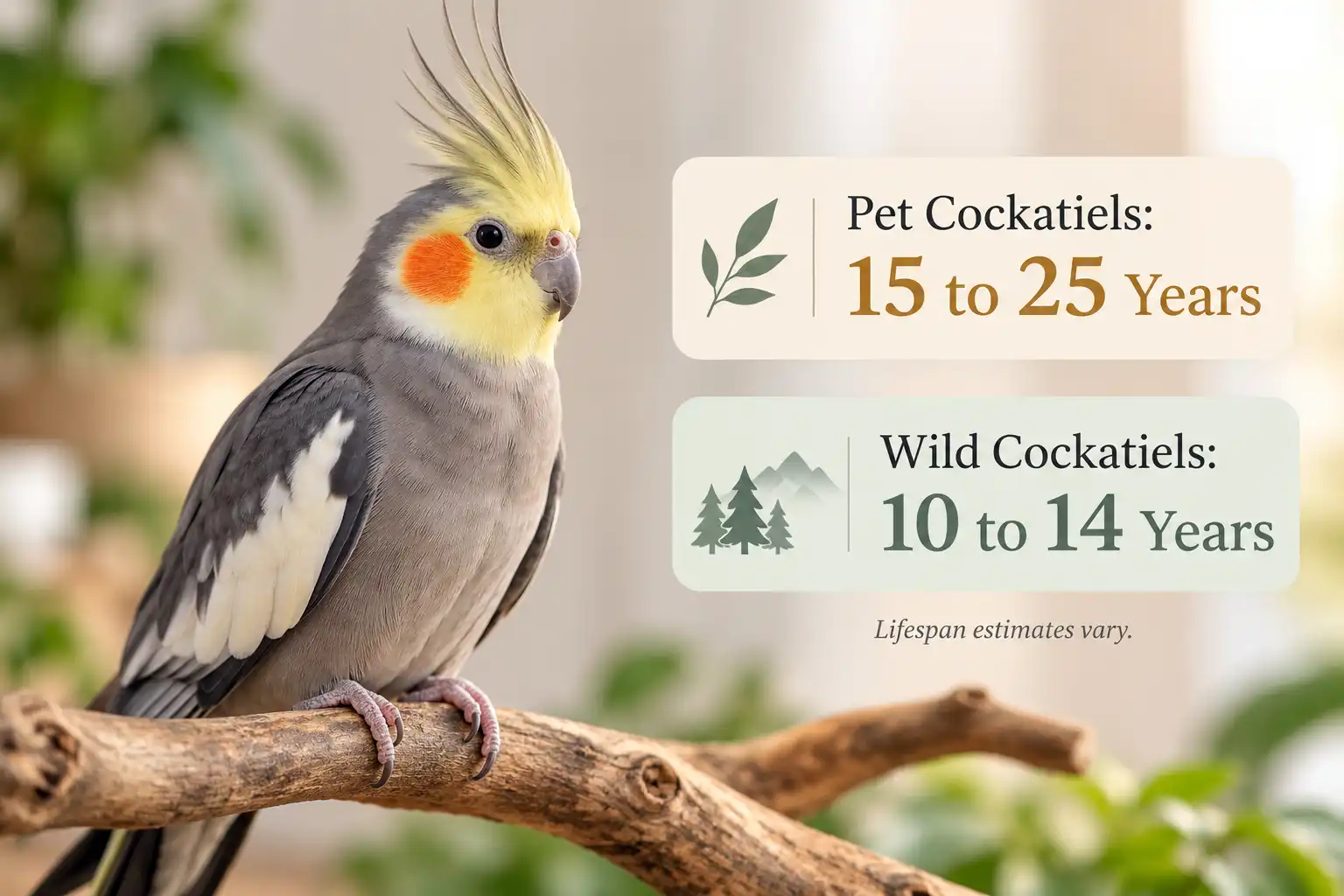
How long do cockatiels live? Some pet cockatiels reach their 20s or beyond, but shorter lives are also common. Understanding their lifespan helps you plan for proper nutrition, veterinary care, safe housing, and a potentially decades-long commitment.
Pet cockatiels can live 15 to 25 years, although some veterinary references report shorter lifespans. Wild cockatiels have an estimated lifespan of 10 to 14 years. Genetics, nutrition, veterinary care, exercise, and household safety influence longevity.
How Long Do Cockatiels Live as Pets?
Pet cockatiels can live well into their 20s, but published lifespan estimates differ. According to PetMD, pet cockatiels live approximately 15 to 25 years on average in captivity.
However, VCA Animal Hospitals lists a shorter lifespan of 10 to 14 years, with a reported maximum of 24 years. The Merck Veterinary Manual lists cockatiel lifespan as up to 20 years. These sources describe different lifespan estimates. No single figure can predict how long an individual cockatiel will live.
A cockatiel’s longevity depends partly on inherited health characteristics. However, diet, living conditions, and access to veterinary care also matter. For long-term planning, prepare for the possibility that your cockatiel could live beyond 20 years.
How Long Do Cockatiels Live in the Wild?
Wild cockatiels have an estimated lifespan of 10 to 14 years. The World Wildlife Fund (WWF) reports this range for wild cockatiels, compared with 15 to 25 years for captive birds.
Wild cockatiels face challenges that pet birds generally avoid. These include predators, drought, food shortages, and changing weather conditions. Wild birds must also travel to locate suitable feeding areas and reliable water sources.
By comparison, pet cockatiels can receive regular food, shelter, veterinary treatment, and protection from predators.
However, captivity does not guarantee a longer life. Poor nutrition, unsafe environments, and preventable illnesses can shorten a pet cockatiel’s lifespan.
Cockatiel Lifespan Comparison
| Environment or source | Lifespan estimate |
|---|---|
| Wild cockatiels, WWF | 10 to 14 years |
| Pet cockatiels, VCA | 10 to 14 years |
| Pet cockatiels, Merck | Up to 20 years |
| Pet cockatiels, PetMD | 15 to 25 years |
| Exceptional captive cockatiels | Beyond 30 years |
The published estimates differ, and exceptional ages should not be treated as normal life expectancy.
Where Are Cockatiels From?
Cockatiels (Nymphicus hollandicus) are native to Australia. They are the smallest members of the cockatoo family, Cacatuidae.
According to the World Wildlife Fund, wild cockatiels inhabit Australian grasslands, savannas, shrublands, and forests. They commonly occupy open landscapes where they can forage for seeds and other natural foods.
Cockatiels are social birds that form flocks. They often move together while searching for food and water. Their natural lifestyle involves regular flight, social communication, and active feeding.
Understanding these behaviors helps explain why pet cockatiels need sufficient movement, enrichment, and social interaction.
However, their natural adaptation to dry Australian environments does not mean pet cockatiels can safely tolerate extreme temperatures or poor nutrition.
What Is the Longest a Cockatiel Has Lived?
Some cockatiels have lived for more than 30 years, although this is exceptional. Guinness World Records verified a cockatiel named Sonny at 32 years and 292 days old on October 29, 2025. Sonny subsequently celebrated his 33rd birthday in January 2026.
PetMD also mentions a reported cockatiel lifespan of 36 years. However, that historical report is not equivalent to a separately verified Guinness record.
These cases demonstrate that cockatiels can survive well beyond the usual published estimates. Nevertheless, 30 years should not be considered a standard cockatiel lifespan.
What Factors Affect a Cockatiel’s Lifespan?
A cockatiel’s longevity depends on genetics, nutrition, exercise, environmental safety, and healthcare. Not every factor is controllable. However, consistent care can reduce several preventable health risks.
1. Proper Diet and Nutrition
Good nutrition supports a cockatiel’s long-term health. An exclusively seed-based diet can lead to nutritional imbalances. Many commercial seed mixtures contain excessive fat and lack essential nutrients.
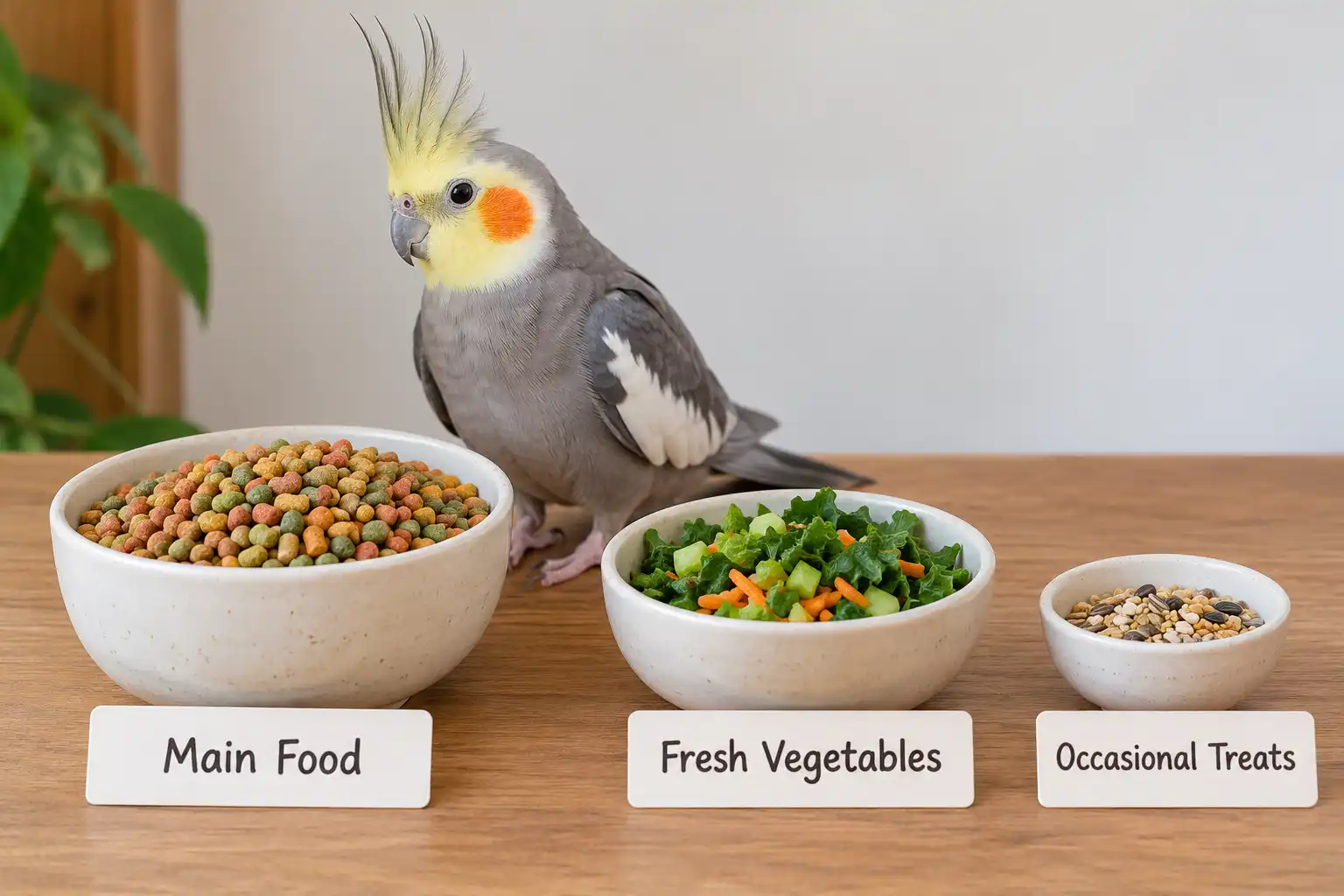
VCA Animal Hospitals recommends that formulated pellets represent approximately 75 to 80% of a cockatiel’s diet. PetMD recommends at least 60 to 70% pellets for cockatiels.
Although these percentages differ, both sources support pellets as the main dietary component, alongside suitable vegetables and limited treats. A species-appropriate pet bird feeding plan helps you understand appropriate food choices.
Avoid giving cockatiels avocado, chocolate, caffeine, or alcohol. The ASPCA specifically warns that avocado can cause severe poisoning in birds.
If your cockatiel currently eats mostly seeds, consult an avian veterinarian before changing its diet. Sudden dietary changes can be dangerous if the bird refuses unfamiliar food.
2. Cage Size and Exercise
Adequate housing and regular physical activity help support a cockatiel’s health. PetMD recommends a minimum enclosure measuring 24 inches long, 24 inches wide, and 30 inches high for one cockatiel. For cockatiels, bar spacing should be 1/2 inch or smaller to reduce escape and injury risks.
These measurements represent minimum guidance, not an ideal maximum. Larger enclosures provide more opportunities for movement.
Cockatiels also benefit from supervised exercise outside their cages in a secure indoor room. Provide natural-wood perches of suitable sizes, safe toys, and opportunities to climb and forage.
Before allowing a cockatiel outside its cage, turn off ceiling fans and secure windows and doors. Never leave a cockatiel flying freely in a room with accessible cats or dogs.
3. Sleep and Social Interaction
Consistent sleep and social interaction support a cockatiel’s daily well-being. Cockatiels benefit from a predictable nighttime routine and a quiet, dark sleeping environment.
PetMD’s general parrot care guidance suggests approximately 10 to 12 hours of nighttime sleep. However, individual needs can vary.
Cockatiels also require opportunities to interact, play, and engage in natural behaviors. Foraging toys, gentle training, and regular supervised activity can help prevent boredom.
Some cockatiels benefit from compatible bird companionship. However, introducing another bird is not automatically the right solution for every individual.
Poor compatibility can create stress or conflict. Consider temperament, available space, and safe introduction procedures before pairing cockatiels.
4. Household Safety
A safe home can protect cockatiels from preventable injuries and toxic exposures. One serious hazard involves polytetrafluoroethylene (PTFE), commonly used in some nonstick cookware and heated appliances.
VCA Animal Hospitals explains that heated PTFE can release dangerous airborne particles and gases.
These fumes can cause severe poisoning or sudden death in birds, sometimes even outside the room containing the appliance.
Avoid PTFE-containing appliances, cigarette smoke, aerosol sprays, and strong chemical fumes in bird households.
The bird-safe cookware guide covers alternatives and common household risks.
Also prevent cockatiels from accessing lead, zinc, electrical cords, unsafe toys, and open water containers.
Suspected PTFE exposure requires immediate veterinary attention. A cat bite or scratch also warrants same-day veterinary care, even without an obvious injury.
5. Preventive Veterinary Care
Routine veterinary examinations can identify health concerns before they become advanced. PetMD recommends annual veterinary checkups for cockatiels. An avian veterinarian can assess weight, body condition, nutrition, physical health, and behavior.
Regular visits also provide opportunities to discuss age-related changes and reproductive concerns. Female cockatiels may develop problems associated with excessive egg laying, including egg binding.
A cockatiel that strains to pass an egg requires urgent veterinary attention.
Preventive care cannot guarantee a particular lifespan. However, it can help identify treatable conditions that might otherwise go unnoticed.
How Can You Tell Whether a Cockatiel Is Aging Well?
A cockatiel’s appetite, body condition, weight, and behavior provide more useful health information than age alone.
However, older cockatiels can develop medical conditions that resemble ordinary aging. An avian veterinarian should assess unexplained changes rather than assuming they are normal.
Monitor Body Weight
Regular weight monitoring can help reveal changes that are difficult to see beneath feathers. VCA Animal Hospitals lists the average adult cockatiel weight at approximately 80 to 95 grams.
However, a healthy weight depends on the individual cockatiel’s body size and condition. A small digital gram scale can help you track changes from your cockatiel’s usual weight.
For example, consider a cockatiel with these measurements:
- Usual weight: 90 grams
- New weight: 85 grams
- Difference: 5 grams lost
- Percentage change: (85 – 90) / 90 × 100 = -5.6%
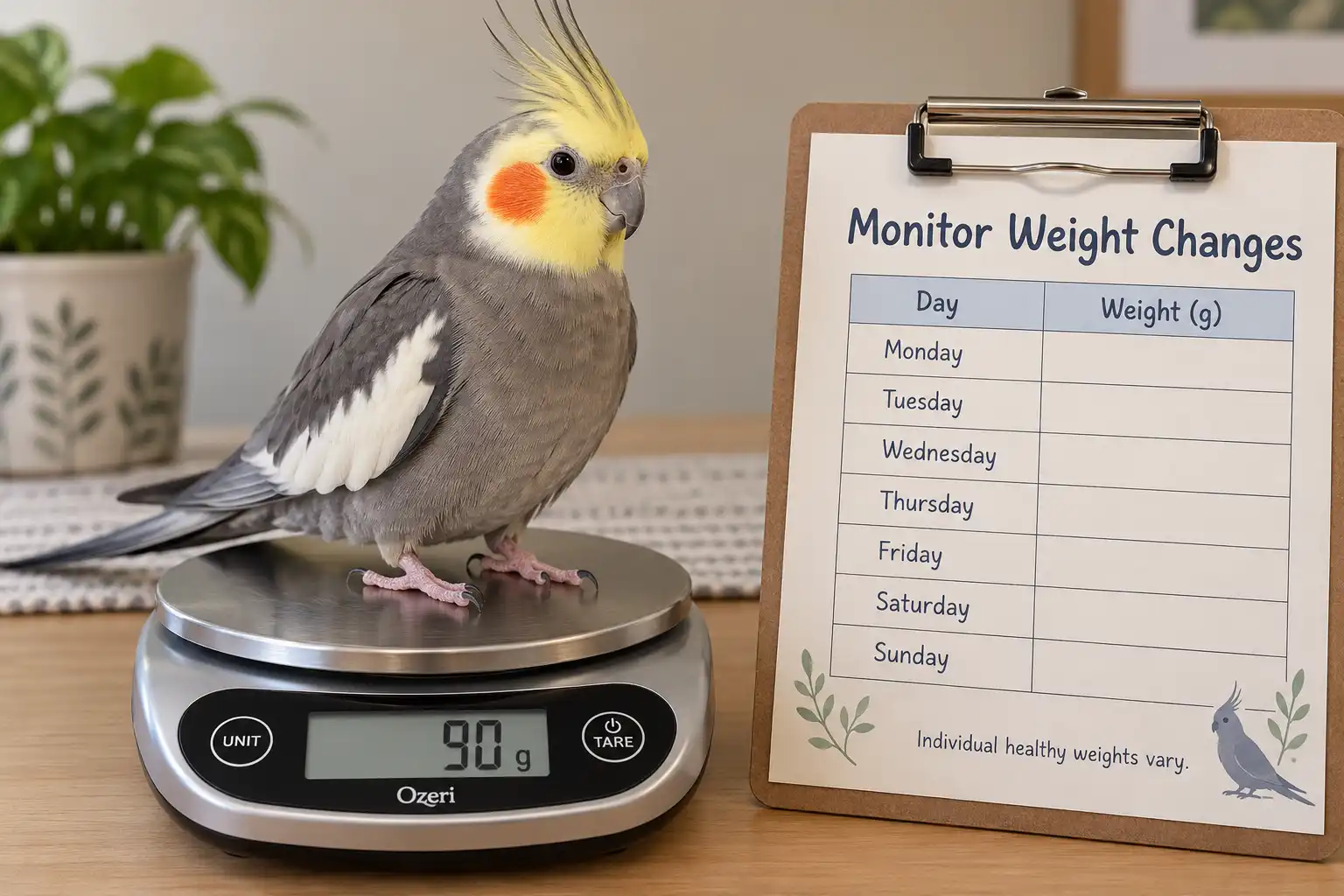
This example shows why weight trends matter, even when both readings fall within a published average range.
An unexplained decline deserves veterinary assessment. Weight changes alone cannot establish a diagnosis.
Watch for Behavior Changes
Older cockatiels may show changes in mobility, activity, or behavior. However, these changes are not always caused by aging. Reduced appetite, weakness, changes in droppings, or difficulty perching can indicate illness.
A cockatiel that becomes unusually quiet, inactive, or reluctant to move should receive veterinary attention.
Birds often hide illness until a condition becomes advanced. Therefore, recognizing changes from your cockatiel’s normal routine is particularly useful.
When Should You Take a Cockatiel to the Vet?
Contact an avian veterinarian promptly if your cockatiel develops unexpected changes in appetite, activity, breathing, or droppings.
According to VCA Animal Hospitals, birds naturally conceal signs of weakness. Visible symptoms may appear only after an illness has progressed.
Seek same-day emergency veterinary care if your cockatiel:
- Sits fluffed up on the cage floor or becomes extremely weak.
- Breathes with an open mouth or shows pronounced tail bobbing.
- Stops eating.
- Experiences persistent bleeding.
- Strains to pass an egg.
- Is bitten or scratched by a cat.
- Has suspected exposure to PTFE fumes or other toxic airborne chemicals.
These symptoms require attention regardless of your cockatiel’s age.
The guide to recognizing bird illness provides additional warning signs.
Never attempt to treat serious symptoms with unprescribed medicines, supplements, or home remedies.
How Can You Tell How Old a Cockatiel Is?
You usually cannot determine an adult cockatiel’s exact age from appearance alone. According to VCA Animal Hospitals, normal gray cockatiels develop mature plumage after their first molt, typically around 9 to 12 months of age.
Young normal-gray males and females often display similar feather patterns before this molt.
However, adult feather coloration varies with sex and color mutation. A mature-looking cockatiel could be two years old or substantially older.
Common assumptions about age based on feet, crest length, singing ability, or facial coloration are unreliable. Hatch records and documented ownership histories provide better evidence.
An avian veterinarian can assess physical maturity and health, but cannot reliably establish an unknown hatch date from examination alone.
How Long Should You Plan to Care for a Cockatiel?
Anyone adopting a cockatiel should prepare for a commitment that may exceed 20 years. Consider a simple example involving a healthy 4-year-old cockatiel. If that cockatiel lives to 20 years, it may need another 16 years of care. If it reaches 25 years, the remaining commitment could be 21 years.
These examples illustrate planning scenarios rather than predicted survival.
Long-term cockatiel care includes nutritious food, appropriate housing, enrichment, routine veterinary appointments, and potential emergency treatment. You should also consider who can care for your cockatiel if your circumstances change.
For perspective, parrot lifespan comparisons show how longevity varies among companion bird species.
Planning ahead can make long-term ownership more manageable while supporting consistent care throughout the cockatiel’s life.
FAQs about Cockatiel Lifespan
Is 10 years old for a cockatiel?
A 10-year-old cockatiel is mature, but it is not necessarily near the end of its life. Some cockatiels remain healthy into their 20s, so individual health matters more than age alone.
Can cockatiels live for 30 years?
Yes, cockatiels can live beyond 30 years, although this is unusual. Guinness World Records verified Sonny at more than 32 years old in 2025, demonstrating exceptional longevity rather than typical life expectancy.
Do male or female cockatiels live longer?
There is no well-established evidence that male cockatiels consistently outlive females. Female cockatiels face additional reproductive health risks, including egg binding, but sex alone cannot reliably predict an individual bird’s lifespan.
Do different cockatiel color mutations affect lifespan?
Reliable lifespan averages are not established separately for lutino, pearl, cinnamon, and whiteface cockatiels. Merck notes that rarer mutations may be more fragile, but feather coloration alone does not establish life expectancy.
Do cockatiels live longer than budgies?
Cockatiels generally have greater potential longevity than budgerigars (budgies), commonly called parakeets. Merck lists budgerigar lifespan at 5 to 10 years and cockatiel lifespan at up to 20 years; this budgie and cockatiel comparison explains other differences.
Can a cockatiel live longer with another cockatiel?
Companionship can provide valuable social interaction, but pairing does not guarantee a longer lifespan. Cockatiels differ in temperament, and incompatible birds may experience stress, so introductions and housing arrangements require care.
Helping Your Cockatiel Live a Healthy Life
Cockatiels can live for many years, and some reach their 20s or beyond. However, no care routine can guarantee a specific lifespan.
Focus on suitable nutrition, adequate exercise, a safe home, regular veterinary checkups, and consistent social interaction.
Most importantly, watch for changes in your cockatiel’s normal behavior. Early veterinary attention can help address health problems before they become more serious.

