What Do Parrots Eat? 20 Fruits Rated, Plus Foods to Never Feed
What do parrots eat? Two answers apply: what wild parrots forage, and what keeps a pet parrot healthy indoors. Below are both, plus 20 fruits checked against veterinary sources and the foods that can poison a parrot.
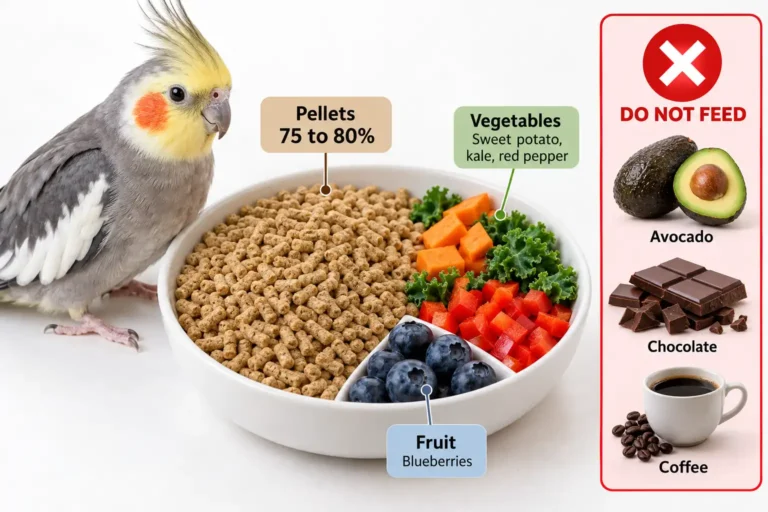
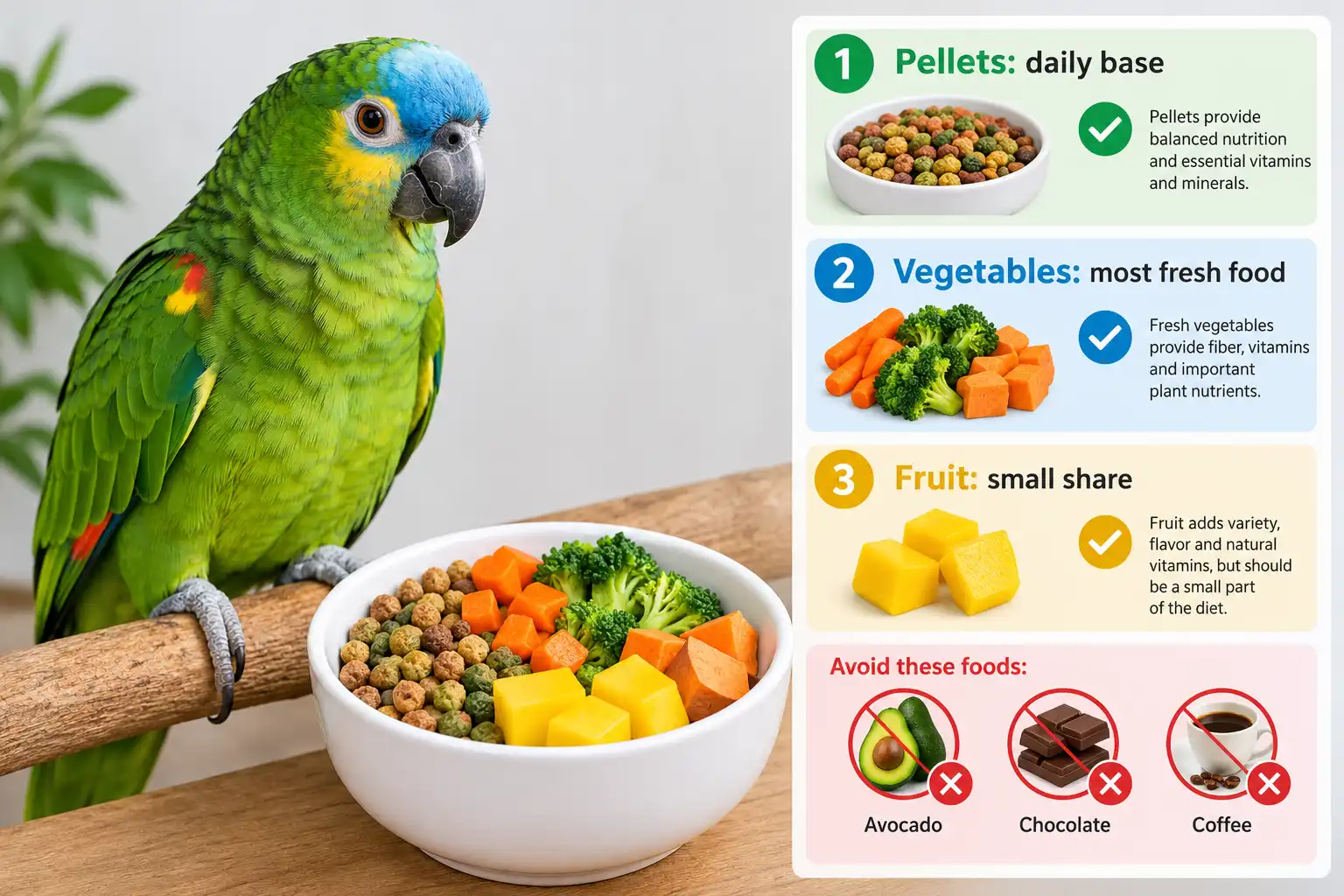
What parrots eat at home should be mostly pellets and vegetables, with a little fruit and seeds or nuts as treats. Most fruits are safe once pits and apple seeds come out. Avocado, chocolate, caffeine, and alcohol are off-limits.
What Do Parrots Eat in the Wild?
Wild parrots eat mostly plants. The Merck Veterinary Manual classes parrots as florivorous, or plant and flower eaters. It adds that the mix of fruit, nectar, and seeds varies by species. Some species also eat insects.
A few diets are narrow. Hyacinth macaws live mainly on high-fat palm nuts, Merck notes. Lories and lorikeets need specialized diets as pets, according to VCA Animal Hospitals. So the fruit advice below doesn’t fit them without a vet’s input.
A bag of seed mix is not a wild diet, though. Merck’s chapter on parrot nutrition says strictly seed diets fall short, even with supplements. Most species fed that way end up low in vitamin A, protein, and calcium.
What Should a Pet Parrot Eat Every Day?
A pet parrot should eat pellets as its base, vegetables every day, and fruit in small amounts. VCA Animal Hospitals recommends a complete pellet base, a variety of vegetables, and a small offering of tropical fruit daily. The Merck Veterinary Manual sets the same goal.
Sources set different limits, and both are general bird figures rather than species figures. VCA caps fresh produce at 20 to 40 percent of a pet bird’s diet. UC Davis School of Veterinary Medicine keeps fruit under 10 percent of the diet for pet birds as a group.
The split also shifts from budgerigars (budgies) to macaws. So check the pellet and produce split for your species, then let your avian vet fine-tune it.
A typical day looks like this:
- Pellets sized for your parrot, in their own dish
- Washed, chopped vegetables in a second dish
- A few pieces of fruit, smaller than the vegetable portion
- Fresh water, changed daily
- Seeds or nuts saved for treats and training
How Much of the Fresh Dish Should Be Fruit?
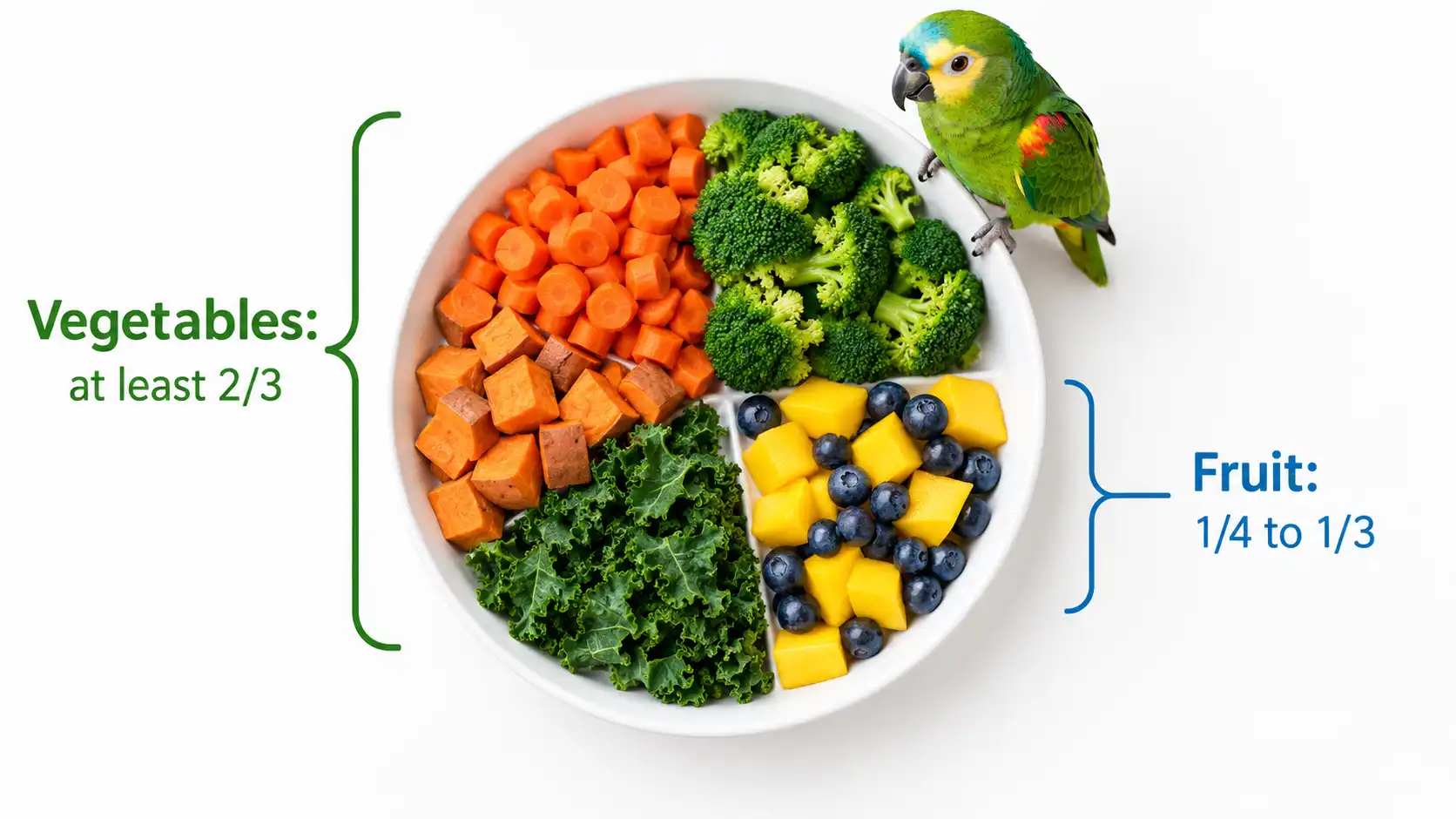
For an Amazon parrot, a quarter to a third of the fresh dish at most. VCA’s Amazon parrot feeding handout puts fruits, vegetables, and greens at 30 to 40 percent of an Amazon’s daily intake. It also caps fruit at 10 percent. Here’s the math:
Fruit share of the fresh dish = fruit limit / fresh-food share
At 30% fresh food:  10 / 30 = about one third
At 40% fresh food:  10 / 40 = one quarter
So at least two thirds of an Amazon’s fresh dish should be vegetables. In practice, if you chop four spoonfuls of produce, make one fruit and three vegetables. That split stays inside both ends of VCA’s range.
What Fruits Can Parrots Eat?
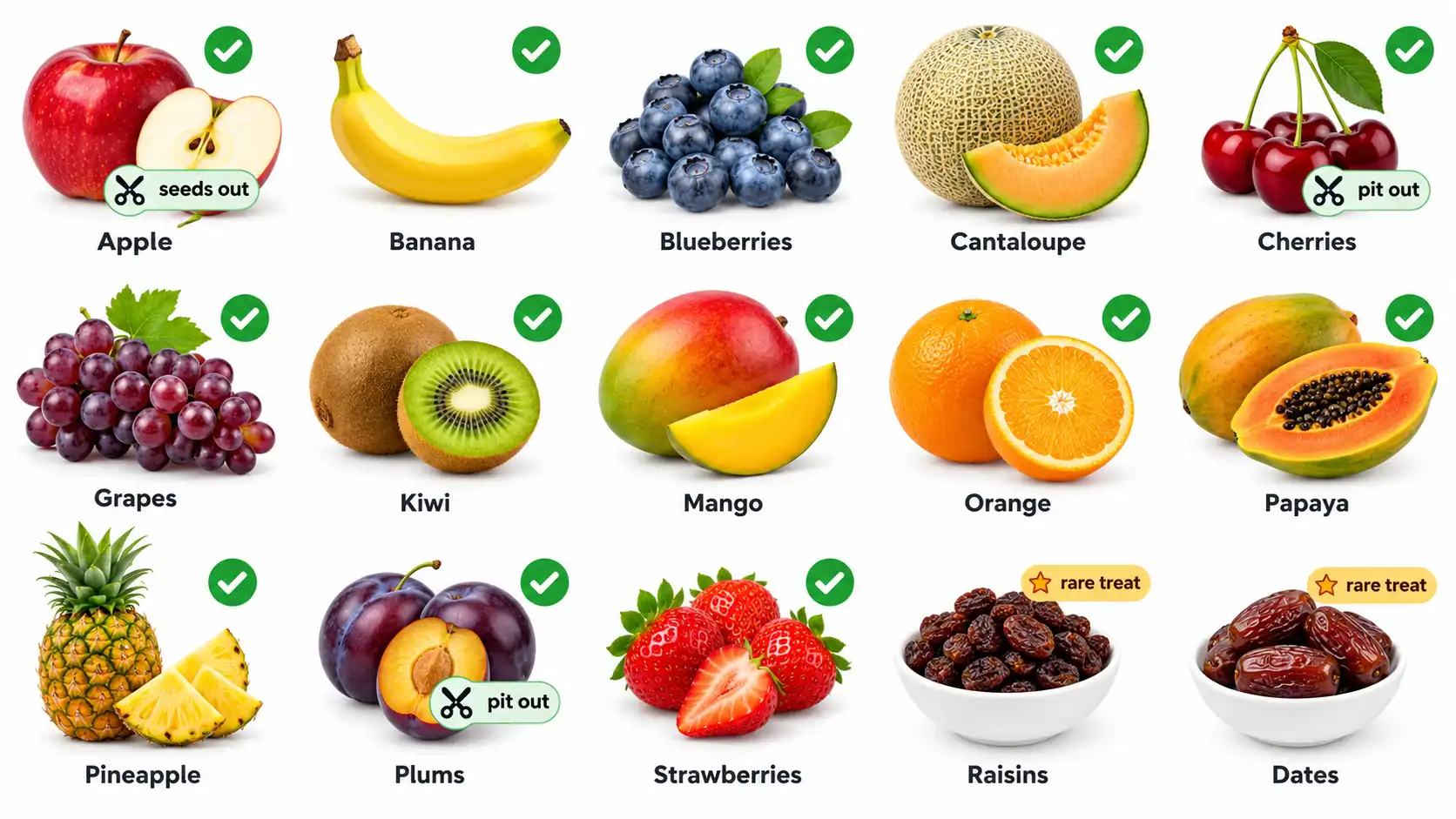
Most common fruits are safe for parrots once they’re washed and the pits and apple seeds are out. VCA’s list of recommended foods for birds includes apples, bananas, blueberries, cherries without the pit, and figs. It also lists grapes, kiwi, mango, melon, oranges, papaya, pineapple, plums, and strawberries.
Orange-fleshed fruit does extra work. VCA notes that mango, papaya, and cantaloupe carry a great deal of vitamin A. Merck adds that seed-heavy diets run low in that vitamin.
Four fruits people ask about aren’t on VCA’s list: cranberries, dates, dragon fruit, and persimmons. Published guidance on those is thin, and the table says so.
| Fruit | Safe for parrots? | How to serve |
|---|---|---|
| Apples | Yes | Core it and remove every seed |
| Bananas | Yes | Peeled and sliced |
| Blueberries | Yes | Washed; halved for small parrots |
| Cantaloupe | Yes | Cubed flesh; rich in vitamin A |
| Cherries | Yes, pit removed | Halved and pitted; no stems or leaves |
| Cranberries | Fresh: little guidance | Skip sweetened dried cranberries |
| Dates | Rare treat | Pitted sliver; very sugary |
| Dragon fruit | Little guidance | Ask your avian vet first |
| Figs | Yes, fresh | Dried figs only as a rare treat |
| Grapes | Yes, a few | Washed and halved |
| Kiwi fruit | Yes | Sliced; ask first for lories |
| Mango | Yes | Flesh only; rich in vitamin A |
| Oranges | Yes | Flesh only; never for lories |
| Papaya | Yes | Peeled cubes; rich in vitamin A |
| Persimmons | Little guidance | Ask your avian vet first |
| Pineapple | Yes | Skin and core removed |
| Plums | Yes, pit removed | Flesh cut away from the pit |
| Raisins | Rare treat | About four times the sugar of grapes by weight |
| Strawberries | Yes | Washed well |
| Watermelon | Yes | Cubed flesh; mostly water |
Fruits That Need Extra Care
Several fruits on the list come with a catch: a pit, a sugar load, or a species exception.
Can Parrots Eat Grapes and Raisins?
Yes to a few fresh grapes, but raisins only as a rare treat. VCA lists grapes among recommended fruits for birds. The ASPCA, however, lists grapes and raisins among foods to keep from pets. Its explanation centers on dogs: tartaric acid is the suspected toxin, and dogs can’t process it.
Published research on grapes in parrots is thin, so we give both positions instead of guessing. If you feed grapes, halve them and count them inside the fruit share.
Raisins raise a separate problem. USDA FoodData Central lists about 15.5 grams of sugar per 100 grams of fresh grapes. Raisins carry close to four times that. Drying removes the water, not the sugar. So a raisin works as an occasional training reward at most.
Can Parrots Eat Cherries, Plums, and Apples?
Yes, once the pits and seeds are out. VCA lists cherries (not the pit), plums, and apples as foods for birds. Also, UC Davis tells owners to remove pits and apple seeds before serving fruit.
The reason sits in the plant itself. The Merck Veterinary Manual’s table of plants with cyanide-forming compounds includes cherry, peach, and apricot plants. Plums belong to the same plant group, Prunus. So cut the flesh away from every pit, and keep cherry stems and leaves out of the dish too.
For apples, cut out the core, then check each slice for stray seeds. If your parrot chews a pit or a mouthful of seeds, call your avian vet.
Can Parrots Eat Oranges and Kiwi Fruit?
Most parrots can, as long as you serve the flesh only. VCA lists oranges, grapefruit, and kiwi among fruits for birds. The ASPCA says citrus peels, seeds, and leaves contain citric acid and essential oils. Eating the fruit itself, though, rarely causes more than minor stomach upset in pets. So peel the orange and pick out the seeds.
Lories and lorikeets are the exception. The Merck Veterinary Manual says these species are prone to iron storage disease. They should not get citrus, because vitamin C increases iron uptake. Kiwi is also rich in vitamin C, so ask your avian vet before offering it to a lory. Instead, Merck names peaches, plums, honeydew melon, and peeled apples as low-iron fruits for these birds.
Can Parrots Eat Dates, Figs, and Cranberries?
Fresh figs, yes. Dates and dried fruit, only as a rare treat. VCA lists fresh figs for birds but no dried fruit at all. It also warns that canned fruit can carry large amounts of sugar. Freeze-dried produce, VCA adds, is less nutritious than fresh or frozen.
Drying concentrates sugar, as the raisin math shows. Sweetened dried cranberries then add more on top. Fresh cranberries sit on neither VCA’s recommended list nor the ASPCA’s avoid list, and published guidance for parrots is thin. If you offer a date, pit it and give a sliver.
Can Parrots Eat Persimmons and Dragon Fruit?
Possibly, but no veterinary reference used here covers either one. Neither fruit appears on VCA’s recommended list or on the ASPCA’s list of foods to avoid. That gap means the answer is unknown, not that it’s yes.
If you want to try either fruit, ask your avian vet first. Then remove persimmon seeds, offer a small piece inside the fruit share, and watch for any change in droppings or appetite.
What Vegetables Can Parrots Eat?
Most common vegetables, and they should fill more of the dish than fruit does. VCA’s list includes broccoli, carrots, carrot tops, cooked beans, cucumber, kale, and peas. Peppers (hot ones too), spinach, squash, sweet potato, and zucchini make the list as well. Merck adds collards, dandelion greens, endive, and turnip greens as vitamin A sources.
Can parrots eat carrots? Yes. VCA counts carrots among the orange vegetables rich in vitamin A, the nutrient Merck says seed-heavy diets lack. Serve them raw, shredded, or lightly cooked. VCA notes that cooking can strip some nutrients, so raw makes a good default.
Can parrots eat cucumbers? Yes, cucumber is on VCA’s list. It’s mostly water, though, so offer it as a crunchy extra next to denser vegetables.
Skip onions and garlic, which VCA says may harm a bird’s blood cells. VCA also rates iceberg lettuce as low value and suggests celery only sparingly, since both are mostly water.
Bread and Mushrooms
Can Parrots Eat Bread?
A crumb of plain baked bread won’t poison a parrot, but it adds little nutrition. Bread isn’t on the ASPCA’s list of foods to avoid. Raw yeast dough is, because it can rise in the stomach and produce alcohol.
Most bread also carries salt. The ASPCA warns that too much salt can cause tremors, seizures, and even death in pets. So if you share, offer a crumb of plain whole-grain toast. Skip garlic bread, sweet breads, and anything buttered. Throw out stale or moldy bread too, since Merck links mold in stored seeds and peanuts to liver damage in birds.
Can Parrots Eat Mushrooms?
Skip them unless your avian vet says otherwise. Mushrooms aren’t on VCA’s recommended list, and published veterinary guidance on store-bought mushrooms for parrots is thin. Wild-picked mushrooms are a firm no, since some wild species are toxic and many look alike. Plenty of better-studied vegetables can fill that spot in the dish.
Foods That Can Poison a Parrot
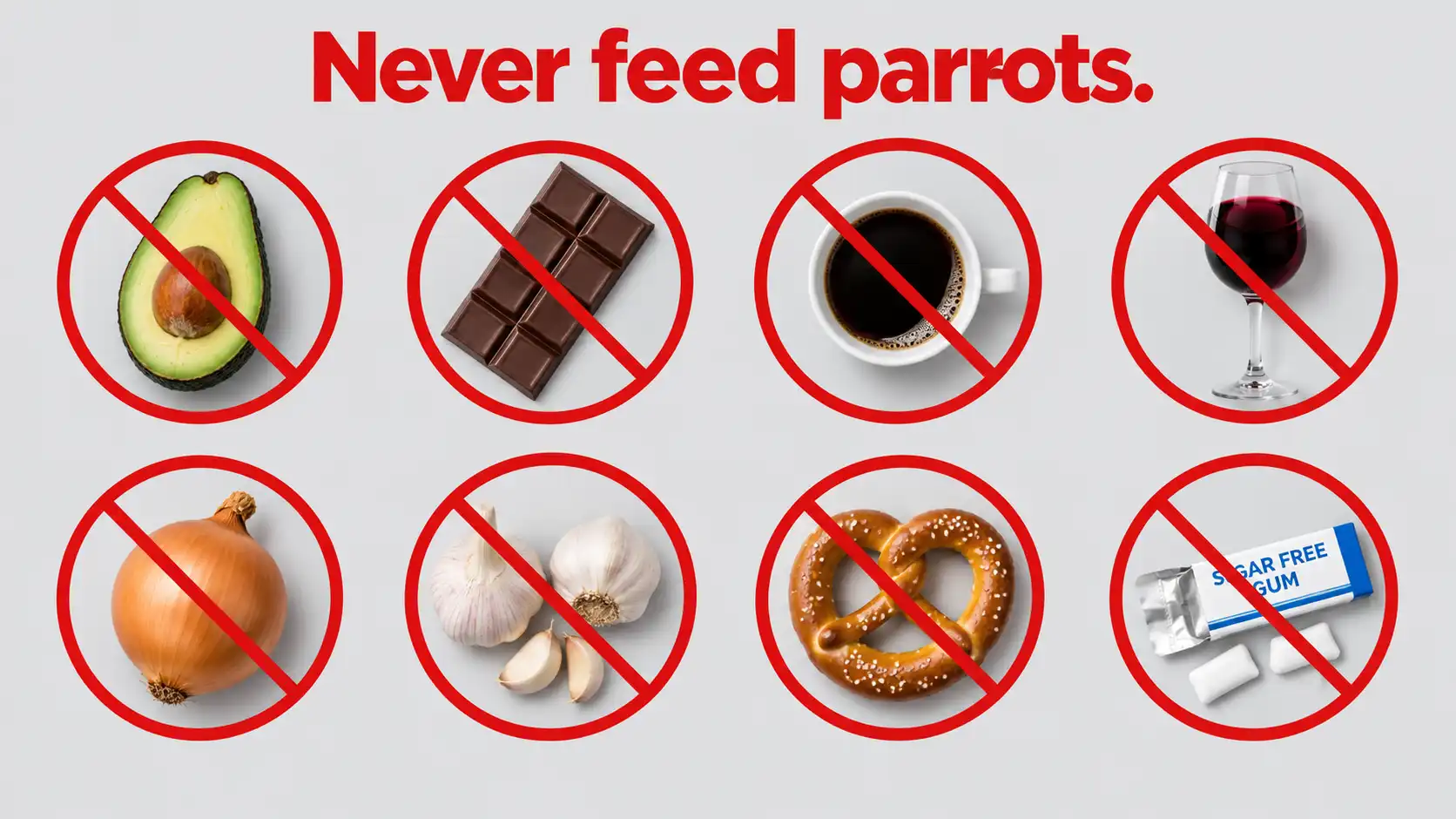
Avocado, chocolate, caffeine, alcohol, onions, garlic, and salty snacks top the never-feed list. Avocado needs special mention. The ASPCA names birds among the animals most at risk, citing heart damage and death. The Merck Veterinary Manual reports that budgies fed 1 gram of avocado became agitated and pulled feathers. Merck adds that 8.7 grams of mashed avocado killed budgies within 48 hours.
Keep these away from your parrot entirely:
- Avocado, including guacamole
- Chocolate, coffee, tea, soda, and other caffeine sources
- Alcohol and raw yeast dough
- Onions, garlic, and chives
- Salty snacks such as chips and pretzels
- Xylitol, the sweetener in sugar-free gum and candy
- Fruit pits, apple seeds, and cherry stems
- Moldy seeds or peanuts in the shell
If your parrot eats any of these, call your avian vet right away. The ASPCA Animal Poison Control Center at (888) 426-4435 can also help. Call even if the bird seems fine, and note what it ate and roughly how much. See an avian vet the same day if your bird sits fluffed on the cage floor or stops eating. The same goes for a bobbing tail or open-beak breathing. Those are warning signs that can’t wait for a routine visit.
No avian vet yet? Finding one before an emergency saves time. Also, a printed list of foods that harm birds on the fridge helps everyone at home.
What Do Parrots Like to Eat?
Most parrots like seeds and nuts best, which is why they can’t set the menu. Merck says birds given a pellet and seed mix typically eat the seeds and nuts and ignore the pellets. Many parrots prefer sunflower seeds, which Merck describes as low in calcium and protein and high in fat.
That preference shows up on the scale. Merck counts a pet bird as obese at 20 percent over its ideal weight and names galah cockatoos, macaws, Amazon parrots, and Quaker parrots as especially prone. Ask your avian vet for your bird’s ideal weight, then run this:
Obesity line (grams) = ideal weight in grams x 1.2Say a vet sets an Amazon parrot’s ideal weight at 400 grams (about 14 ounces). That Amazon’s obesity line then falls at 480 grams (about 17 ounces). Weigh your bird weekly on a gram scale, so a slow climb shows up early.
Seeds and nuts still have a job as training rewards and foraging treats. Some species need more, too. Merck says hyacinth macaws need extra dietary fat. African gray (grey) parrots on all-seed diets, Merck adds, run a higher risk of sudden low blood calcium. Since Merck also links liver, kidney, and bone disease to poor nutrition, diet shapes how long a parrot lives.
How to Serve Fresh Food to a Parrot
Wash it, cut it to size, and serve it in its own dish. These steps come from VCA’s bird nutrition handout:
- Wash all produce well, and buy organic when you can. Birds are very sensitive to pesticides.
- Cut pieces to suit your bird’s size. Larger pieces that need chewing double as enrichment.
- Offer small pieces of many foods rather than one big piece of a single food.
- Never put food on the cage floor, where droppings land.
- Use fresh or frozen produce, not canned.
- Clean food and water dishes daily, and give fresh water every day.
After that, remove uneaten fresh food before it spoils, and sooner in warm weather.
When a Parrot Refuses Fresh Food
Expect refusals at first, and keep offering. VCA suggests serving the same fruit or vegetable daily for 3 to 5 days before giving up on it. If your bird fills up on dry food, VCA suggests cutting pellets or seeds back to a quarter of the bowl. That way, fresh food gets a turn. Weigh your bird while you do this, and call your avian vet if its weight drops.
Watery droppings after a fruit day are usually extra urine, not diarrhea. VCA calls this polyuria and says it can be normal when a bird eats more produce. But if your bird hasn’t eaten more produce and the droppings turn watery, call your vet.
Frequently Asked Questions
Can parrots eat fruit every day?
Yes, in small amounts. VCA recommends vegetables every day plus a small offering of tropical fruit, so fruit stays the smaller share of the fresh dish and vegetables fill the rest.
Can parrots eat frozen or canned fruit?
Frozen, yes; canned, no. VCA says frozen or thawed produce is acceptable and fresh is most nutritious, but canned fruit can carry large amounts of sugar, so VCA advises against it for birds.
Can parrots eat peanuts?
Only with care, and never moldy ones. The Merck Veterinary Manual warns that badly stored peanuts in the shell can grow liver-damaging mold, and it lists nuts among the high-fat foods behind bird obesity.
Can parrots eat cooked vegetables?
Yes, though raw is often better. VCA notes that cooking can strip some nutritive value from foods, but cooked beans and brown rice both appear on its list of recommended foods for birds.
What should I do if my parrot ate avocado?
Call your avian vet or the ASPCA Animal Poison Control Center at (888) 426-4435 now, even if your bird looks fine. Merck lists lethargy, labored breathing, and loss of appetite among the signs in birds poisoned by avocado.
Key Points for Your Bird
Build the bowl around pellets and vegetables. For an Amazon parrot, keep fruit to no more than a quarter to a third of the fresh dish. Pit cherries and plums, core apples, and save raisins and dates for rare rewards. Keep avocado, chocolate, caffeine, alcohol, onion, and garlic out of reach. Then let your avian vet set the exact split for your species.