What Do Doves Eat? Seeds, Feeders, and Foods to Skip
Doves swallow seeds whole and do most of their eating on the ground. So what do doves eat, and what should you put out at a feeder or in a pet dove’s dish? The answer shifts a little with the species.
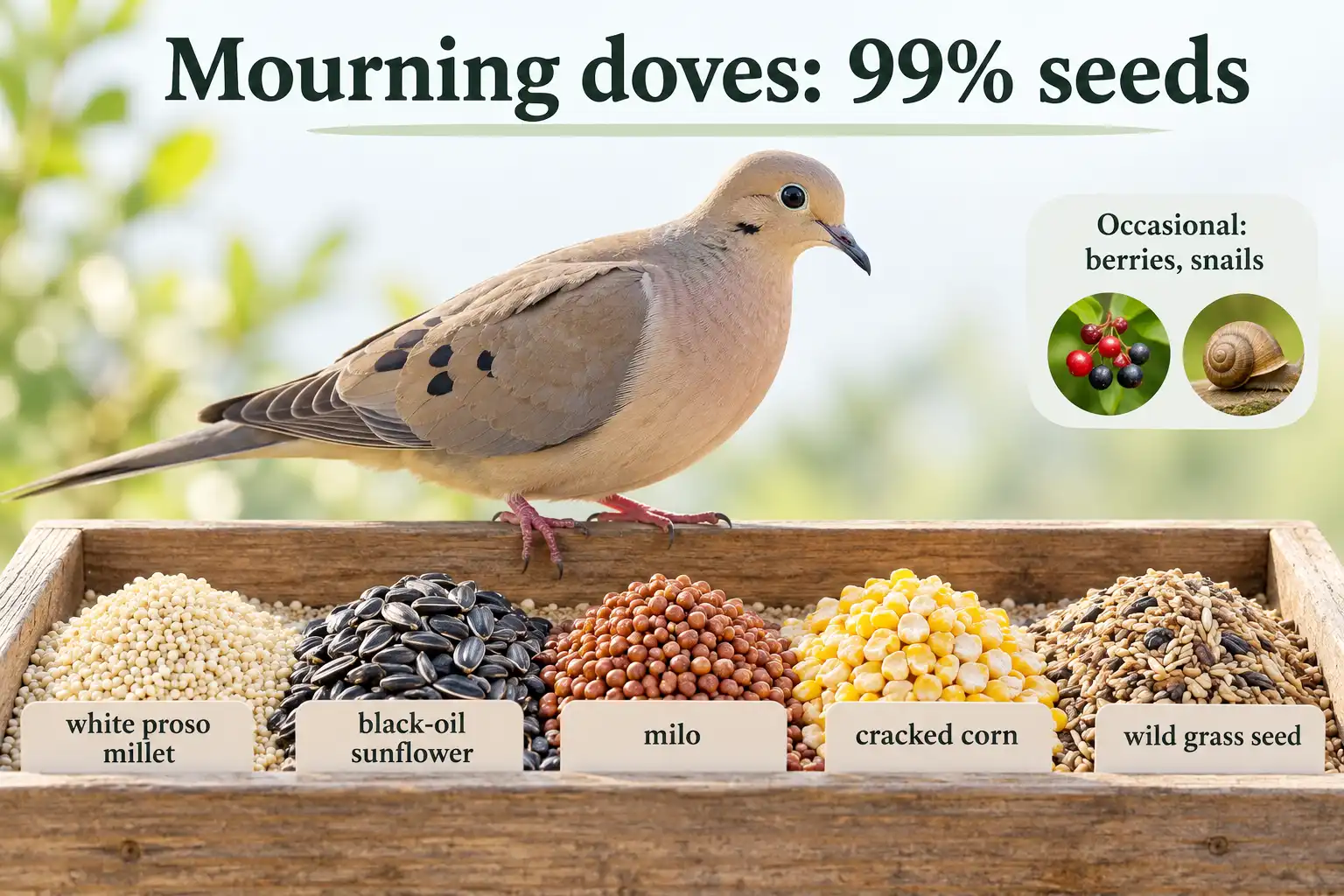
What doves eat comes down to seeds. The Cornell Lab of Ornithology says seeds make up 99 percent of a mourning dove’s diet. That includes cultivated grains, peanuts, and wild grass seeds. Berries and snails are occasional extras.
What Do Doves Eat in the Wild?
Wild doves eat mostly seeds they find on open ground. The Cornell Lab of Ornithology says mourning doves feed in grasslands, farm fields, backyards, and along roadsides. Their diet includes cultivated grains and peanuts, plus seeds from wild grasses, weeds, and herbs.
Doves feed busily, then rest. A mourning dove swallows seeds whole and stores them in its crop, a pouch in the esophagus. Once the crop is full, the bird flies to a safe perch to digest. Cornell also notes that mourning doves peck or push aside ground litter, but they don’t scratch for food.
Wild doves also pick at greens, berries, and fruit, according to VCA veterinarians.
What Seeds Do Doves Eat?
Doves eat small seeds and grains, with white proso millet and black-oil sunflower first on the feeder list. A 1980 US Fish and Wildlife Service feeder study of 179,000 observations named nine favorites for mourning doves.
| Seed | What the sources report | Feeding tip |
|---|---|---|
| White proso millet | On the USFWS dove list; Cornell singles it out for doves | Scatter on a tray or bare ground |
| Black-oil sunflower | Mourning doves preferred it to larger striped sunflower (USFWS) | Small seeds suit a bird that swallows them whole |
| Milo (grain sorghum) | On the USFWS dove list | Builds aflatoxin more slowly than corn (OSU Extension) |
| Cracked corn | On the USFWS dove list | Buy fresh and offer small, dry batches |
| Wheat, hulled oats, buckwheat, canary seed, nyjer (thistle) | On the USFWS dove list | Common in seed mixes |
| Peanuts | Cornell includes them in the diet | Plain, unsalted pieces only |
| Flax, rapeseed | Birds in the USFWS study rarely ate them | Skip mixes heavy in them |
One result stands out. In that study, birds rarely chose milo, wheat, oats, cracked corn, or rice when sunflower or millet was available. Yet four of those five made the mourning dove’s list, so the grains other birds leave behind still draw doves.
Do Doves Eat Sunflower Seeds?
Yes, and small black-oil seeds work best. In the USFWS study, mourning doves much preferred black-oil sunflower to the larger striped kinds. Cornell also lists sunflower among the grains white-winged doves and Eurasian collared-doves eat.
Seed size matters because doves don’t hull their food. VCA veterinarians explain that pigeons and doves swallow seeds whole, unlike parrots, which remove the hull first.
Do Doves Eat Corn?
Yes. Cracked corn made the mourning dove list in the USFWS study. Cornell also lists corn in the diets of Eurasian collared-doves and white-winged doves.
Corn needs care, though. Oklahoma State University Extension warns that aflatoxin, a mold toxin, builds up fast in cracked corn and damaged grain. It also says to discard any grain that shows mold or starts clumping.
So buy cracked corn fresh, keep it dry, and put out only what doves finish in a day. Milo makes a lower-risk staple, since OSU Extension says sorghum builds aflatoxin more slowly than corn.
Do Doves Eat Peanuts?
Yes. Cornell lists peanuts in the mourning dove diet alongside cultivated grains.
Offer plain, unsalted pieces small enough to swallow whole, never peanuts in the shell. Skip mixes heavy in peanut hearts, too. The USFWS study found peanut hearts especially attractive to starlings and advised against using them.
Do Doves Eat Bugs, Worms, or Mealworms?
Sometimes, but bugs and worms are a small extra, not a staple. VCA veterinarians say wild pigeons and doves occasionally eat insects, snails, and earthworms. For mourning doves, Cornell mentions only snails, and only sometimes.
A few species add more animal food. Cornell says common ground doves eat insects along with seeds, and Eurasian collared-doves eat some invertebrates. White-winged doves may also eat snails and bone fragments for calcium.
Mealworms are another matter. They don’t appear in Cornell’s mourning dove diet or on the dove list from the USFWS study. So a mealworm dish mainly serves insect-eating birds, while doves stick to seed.
Do Doves Eat Fruit?
Some do, but fruit is a small part of most US doves’ diets. Cornell says mourning doves eat berries only occasionally, and common ground doves and Eurasian collared-doves eat some berries too.
White-winged doves eat more than berries. Cornell lists saguaro among the fruits and large seeds they take. Unlike mourning doves, they also feed above the ground on berries and seedheads.
Worldwide, the menu widens. The Merck Veterinary Manual says most pigeons and doves eat mainly seeds or mainly fruit. The doves at US feeders sit firmly on the seed side, so a backyard feeder needs no fruit for them.
Do Doves Need Grit?
Wild doves eat grit, while pet doves may not need it. Cornell describes mourning doves gathering on bare ground to stock up on seeds and grit. It also notes that white-winged doves swallow small stones to help grind food in the gizzard.
For pet doves, the answer is less settled. VCA veterinarians call the need for grit controversial. They note that pigeons and doves swallow seeds whole and seem to do fine without it. Instead, VCA suggests a small amount of crushed eggshell or digestible oyster shell, which also adds calcium.
Too much grit can cause gut problems, VCA warns. So skip the unlimited grit dish, and ask your avian vet whether your dove needs any.
Which Gray Dove Is at Your Feeder?
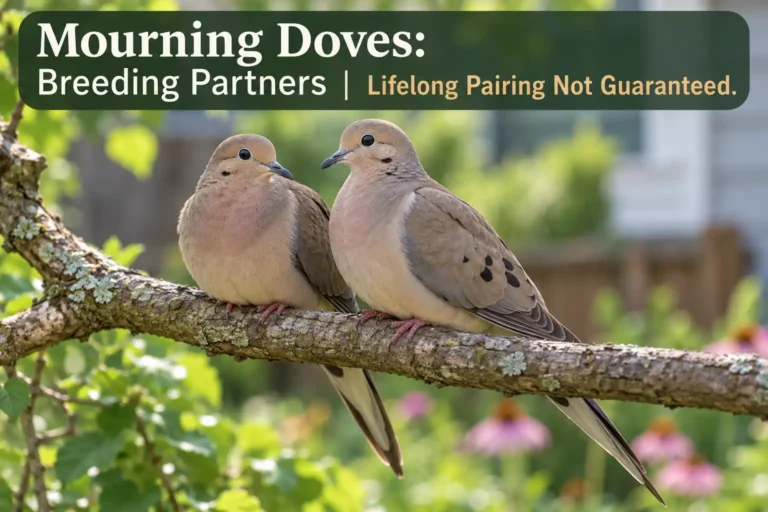
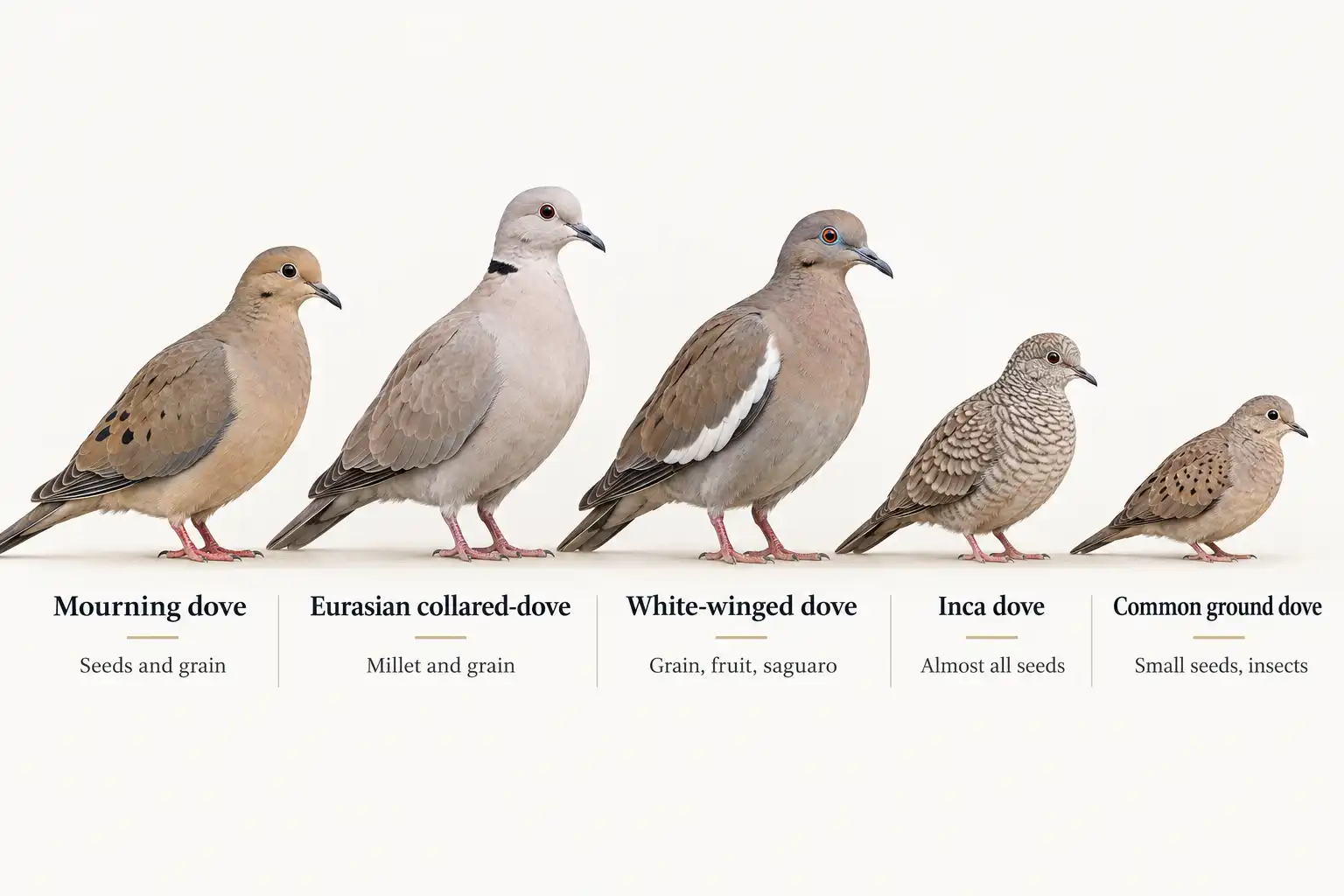
It’s most likely a mourning dove. Cornell estimates 350 million mourning doves in the US, one of the country’s most abundant birds. Four other gray-brown doves also visit US feeders, and what a dove bird eats shifts a little with each species.
| Dove | How to spot it | Where in the US | What it eats, per Cornell |
|---|---|---|---|
| Mourning dove | Slim, long pointed tail, black spots on the wings | Nationwide | Seeds and grains, peanuts; berries and snails now and then |
| Eurasian collared-dove | Black crescent on the back of the neck, square tail | Much of the US, not the Northeast | Millet, sunflower, milo, wheat, corn; some berries, greens, invertebrates |
| White-winged dove | White stripe along the folded wing | South and Southwest, spreading north | Wheat, sunflower, milo, corn, safflower; fruit and large seeds, including saguaro |
| Inca dove | Small, scaly all over, long tail | Southwest | Almost entirely seeds from grasses, flowers, and shrubs |
| Common ground dove | Sparrow-sized, short tail | Southern edge, California to Florida | Small grass and weed seeds, small berries, insects |
All five eat mainly seeds, so one feeder can serve them all. The differences show up in where they feed and what they add to the seed.
How to Set Up a Mourning Dove Feeder
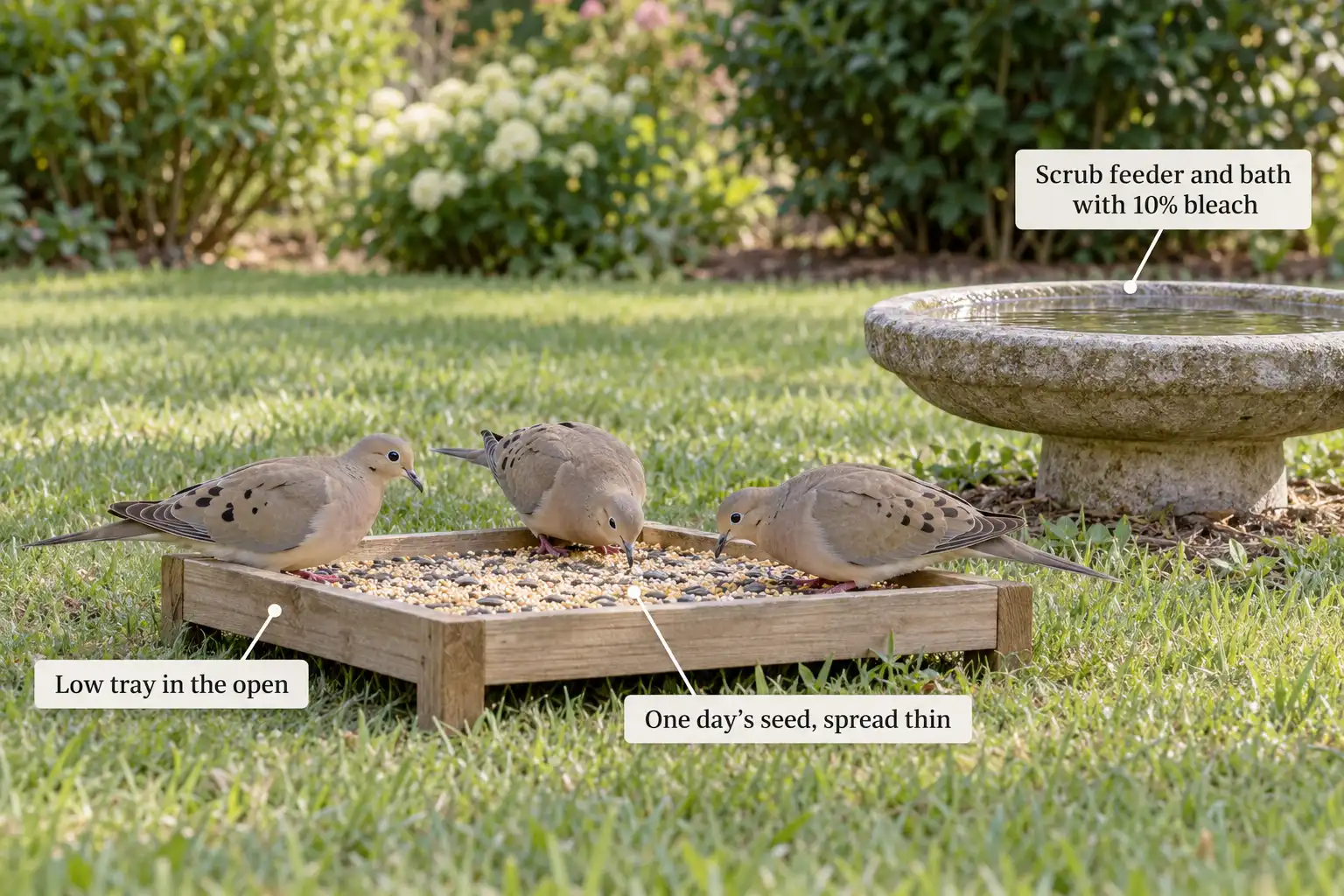
Keep a mourning dove feeder low and open. Cornell’s advice is simple: scatter seed, especially millet, on the ground or on a platform feeder.
- Choose a tray, not a tube. Mourning doves feed on the ground in the open. A low tray or a patch of bare ground keeps every seed in view.
- Fill it with dove seeds. Start with white proso millet and black-oil sunflower, then add milo, wheat, or small batches of fresh cracked corn.
- Put out one day’s worth. OSU Extension advises limiting how much grain sits out, clearing leftovers promptly, and spreading grain thin, since piles hold moisture.
- Add a shallow birdbath. Scrub it on the same schedule as the feeder.
- Keep cats inside. Cornell warns that birds feeding on the ground are especially vulnerable to prowling cats.
- Clean with dilute bleach. Cornell’s Wildlife Health Lab says regular cleaning with 10 percent bleach kills the parasite behind trichomonosis. That disease mainly strikes doves and pigeons. Let everything dry fully before refilling.
How Much Seed Do Mourning Doves Eat?
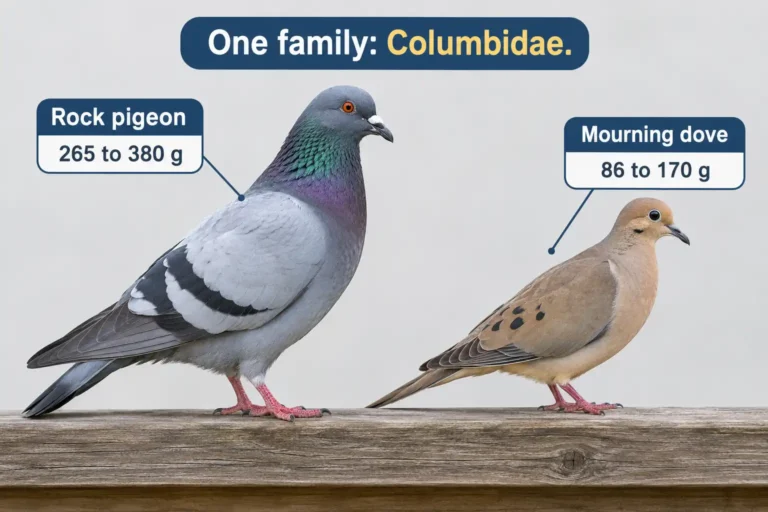
Each mourning dove eats roughly 10 to 34 grams of seed a day. Cornell puts a mourning dove’s daily intake at 12 to 20 percent of its body weight. Its measurements list adult mourning doves at 86 to 170 grams (3.0 to 6.0 ounces).
Daily seed per mourning dove = body weight x 12 to 20 percent
86 grams x 0.12 = about 10 grams, and 170 grams x 0.20 = 34 grams.
Weekly seed for a flock = number of doves x daily seed x 7
10 mourning doves x 10 to 34 grams x 7 = 700 to 2,380 grams, or about 1.5 to 5.2 pounds.
Wild doves also feed in fields and lawns, so treat that total as a ceiling, not a target. Count the doves at your tray, then swap in your own number.
Fixing Common Dove Feeder Problems
Most trouble at a dove feeder comes from damp seed, disease, or crowding. Match what you see to the fix.
| What you see | What it can point to | What to do |
|---|---|---|
| Seed clumps or shows mold | Mold, which can carry aflatoxin (OSU Extension) | Throw it out and refill with a day’s worth |
| Doves sit fluffed, drool, or struggle to swallow | Trichomonosis, a parasite that spreads at feeders and baths (Cornell) | Take the feeder and bath down, disinfect with 10% bleach, and dry fully |
| Mourning doves get chased off | Eurasian collared-doves, which chase other birds (Cornell) | Scatter seed in two or three spots |
| Starlings crowd the tray | Peanut hearts in the mix (USFWS) | Switch to a mix without peanut hearts |
Cornell’s Wildlife Health Lab notes that trichomonosis doesn’t infect people or other mammals. Other illnesses can look the same, though. So report clusters of sick or dead doves to your state wildlife agency. For a single sick wild dove, call a licensed wildlife rehabilitator.
What Do Pet Doves Eat?
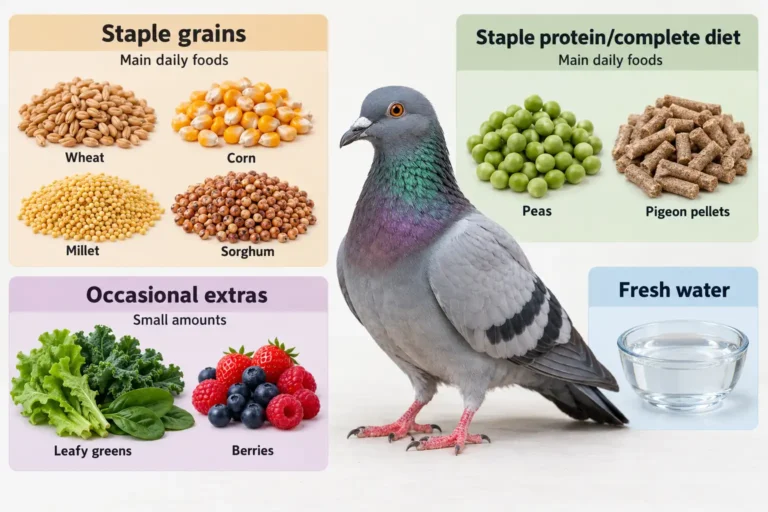
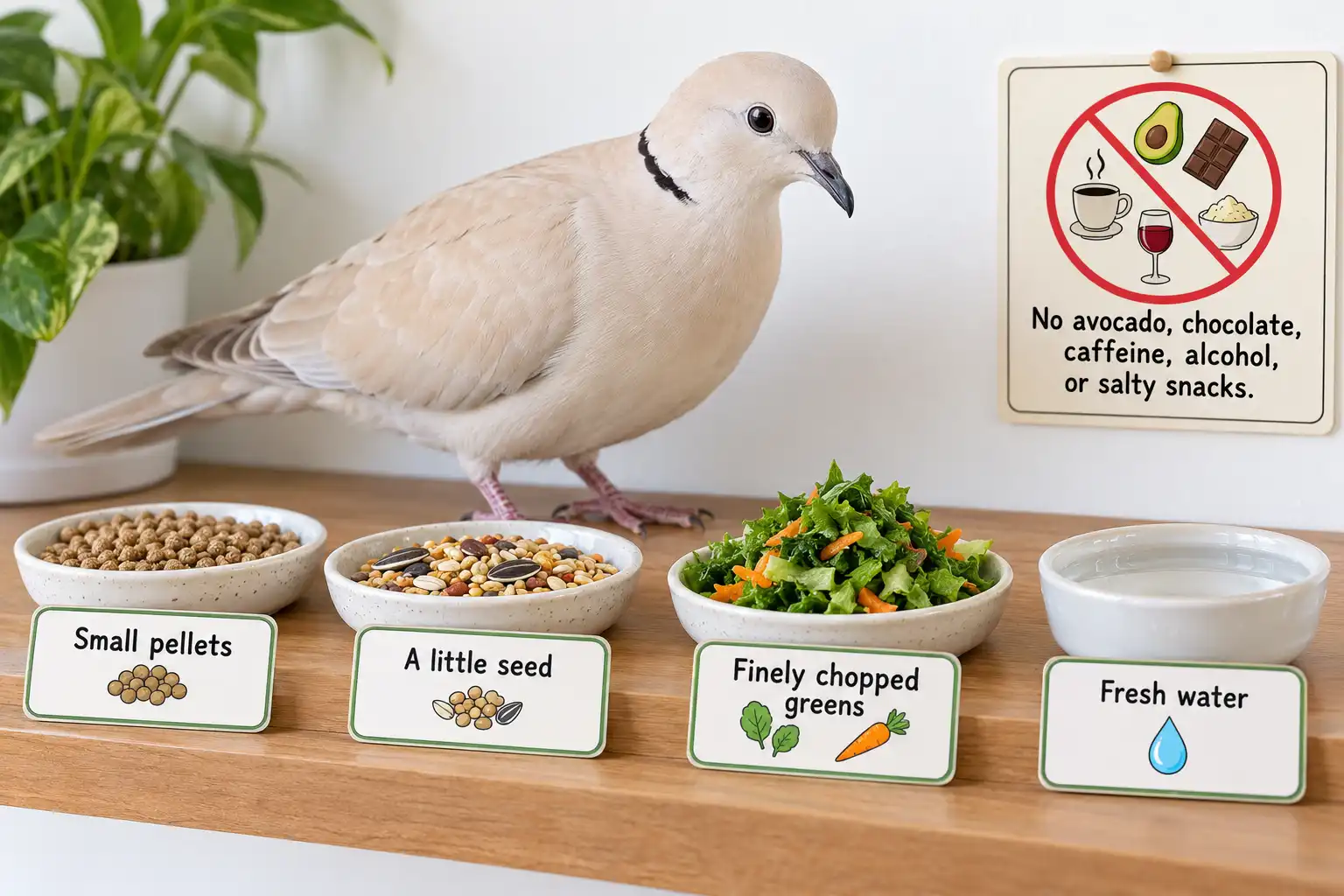
Pet doves do best on small pellets, a little seed, and fresh produce. For ring-necked and diamond doves and other pet species, VCA veterinarians warn that an all-seed diet leads to poor health.
Seeds run high in fat and short on calcium and vitamin A, VCA explains. Its guidance puts pellets at about half of a pigeon’s diet. Doves have very small beaks, so VCA recommends small pellets. Merck adds that seed-eating pigeons and doves can eat 2 mm pigeon pellets. Most also accept small parrot pellets, though some formulas need supplementing.
Watch what each dove actually eats. VCA notes that pigeons and doves offered a pellet and seed mix tend to eat only the seeds. If your dove eats only seed now, switch slowly. Weigh it often, as with moving any bird from seed to pellets.
Dove-specific nutrition data is thin. Merck benchmarks pigeon pellets against nutrient needs published for growing chickens. So ask your avian vet which pellet suits your dove.
Fresh Food and Water for Pet Doves
Offer finely chopped vegetables and greens every day, plus smaller amounts of fruit. VCA advises serving produce in its own dish, cut into tiny pieces. It also says to skip iceberg lettuce and celery, which add water but little nutrition.
Fresh water should be available at all times, and dishes need a daily wash with soap and water. Hens laying eggs need extra calcium, so work out the source and amount with your avian vet.
Foods to Keep Away From Doves
Keep avocado, chocolate, caffeine, alcohol, and salty snacks away from any dove. VCA lists all five among foods that may be toxic to birds, naming chips, pretzels, and popcorn as salty examples.
At a wild feeder, add moldy or clumped grain to that list.
If a pet dove eats something on this list, call your avian vet. Not eating and sitting fluffed on the cage floor are same-day warning signs in any pet bird.
What Do Baby Doves Eat?
Baby doves eat crop milk, not seeds. Both parents make it in their crops, Cornell notes. Merck describes crop milk as rich in fat and protein, with no carbohydrates.
Seed arrives quickly. Merck says seed-eating pigeons shift their young from crop milk to mostly regurgitated seed over 4 to 7 days. Mourning dove chicks then leave the nest at 12 to 15 days old, per Cornell.
If you find a baby dove, don’t try to feed it. Call a licensed wildlife rehabilitator or your state wildlife agency instead, since feeding a chick takes training and special formula. The US Fish and Wildlife Service notes that the Migratory Bird Treaty Act protects mourning doves. Under that law, keeping a wild mourning dove without a permit is illegal. State wildlife rules can add more limits.
Frequently Asked Questions
Do doves eat grass seed?
Yes, grass seed is natural dove food, and a freshly seeded lawn can draw a crowd. Cornell lists wild grasses in the mourning dove diet and records 17,200 bluegrass seeds in one crop.
Do doves eat rice?
Rarely at feeders, since rice never made the mourning dove list in the USFWS feeder study. Offer white proso millet and black-oil sunflower instead, the two seeds at the top of that list.
Will doves eat from a hanging feeder?
Mourning doves prefer not to, since Cornell describes them as ground feeders that forage in the open. White-winged doves are the exception, and Cornell notes they commonly use raised bird feeders.
Is it safe to feed doves in summer?
Yes, but summer calls for small batches and frequent cleaning. Trichomonosis peaks from late spring to fall, per Cornell, while OSU Extension flags March through October as peak aflatoxin season.
Can pet doves eat wild bird seed?
It’s safer to use seed packed for pet birds and to keep seed a small part of the diet. OSU Extension warns that wildlife grain may go untested for aflatoxin, and VCA says seeds lack calcium.
Putting This Into Practice
For wild doves, scatter white proso millet and black-oil sunflower on a low tray. Add milo or fresh cracked corn in small, dry batches, and clean the feeder and birdbath with 10 percent bleach.
For a pet dove, build meals on small pellets and finely chopped greens, with seed as a side. Let your avian vet guide calcium and grit. A baby dove belongs with a licensed wildlife rehabilitator.