Do Pigeons Mate for Life? Pair Bonds, Nesting, and Lifespan
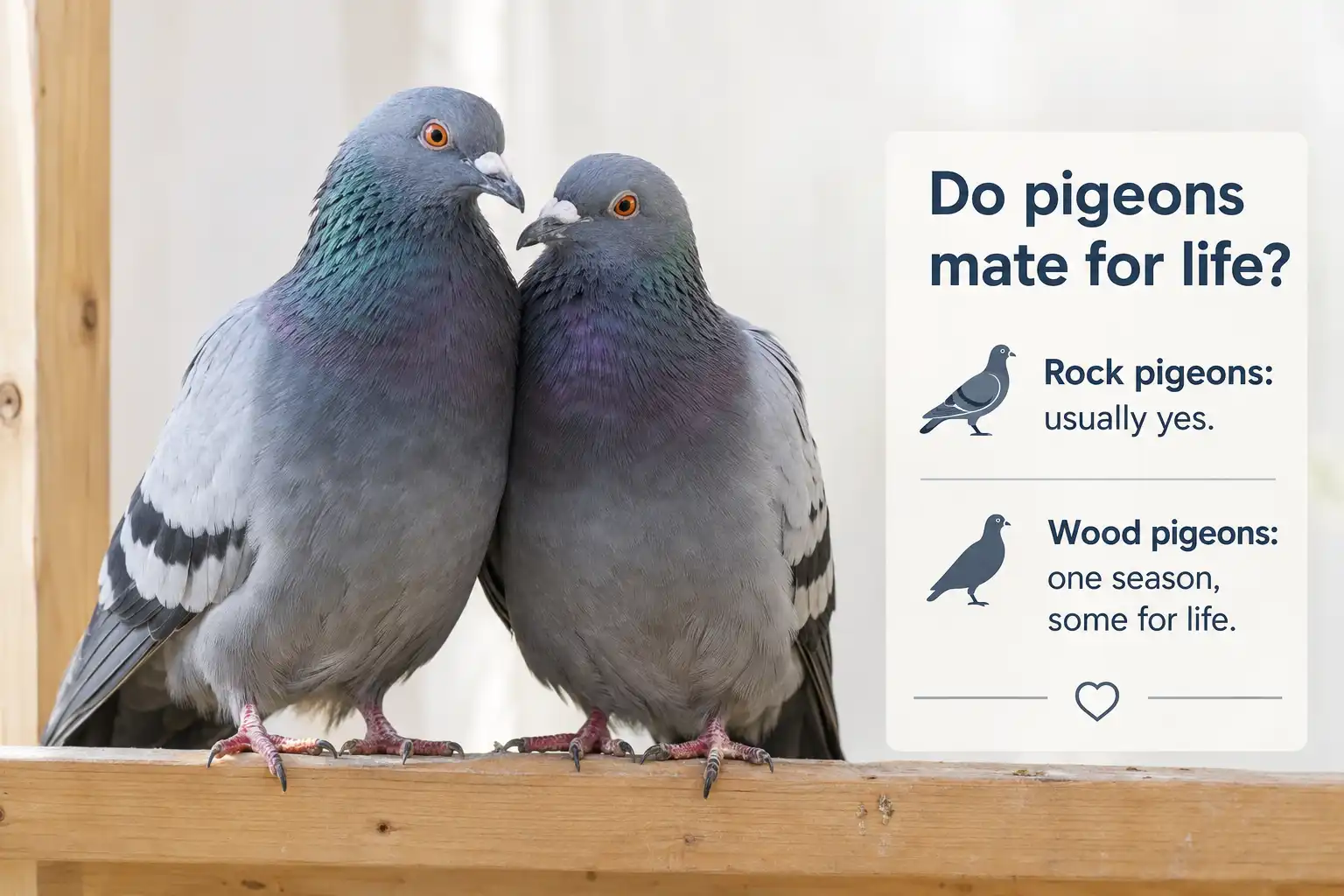
City pigeons, racing homers, and fancy breeds all belong to one species, the rock pigeon. That species has a strong reputation for loyalty. Still, whether pigeons mate for life depends on the species and on what happens to the pair. Here’s how rock, feral, and wood pigeons pair up.
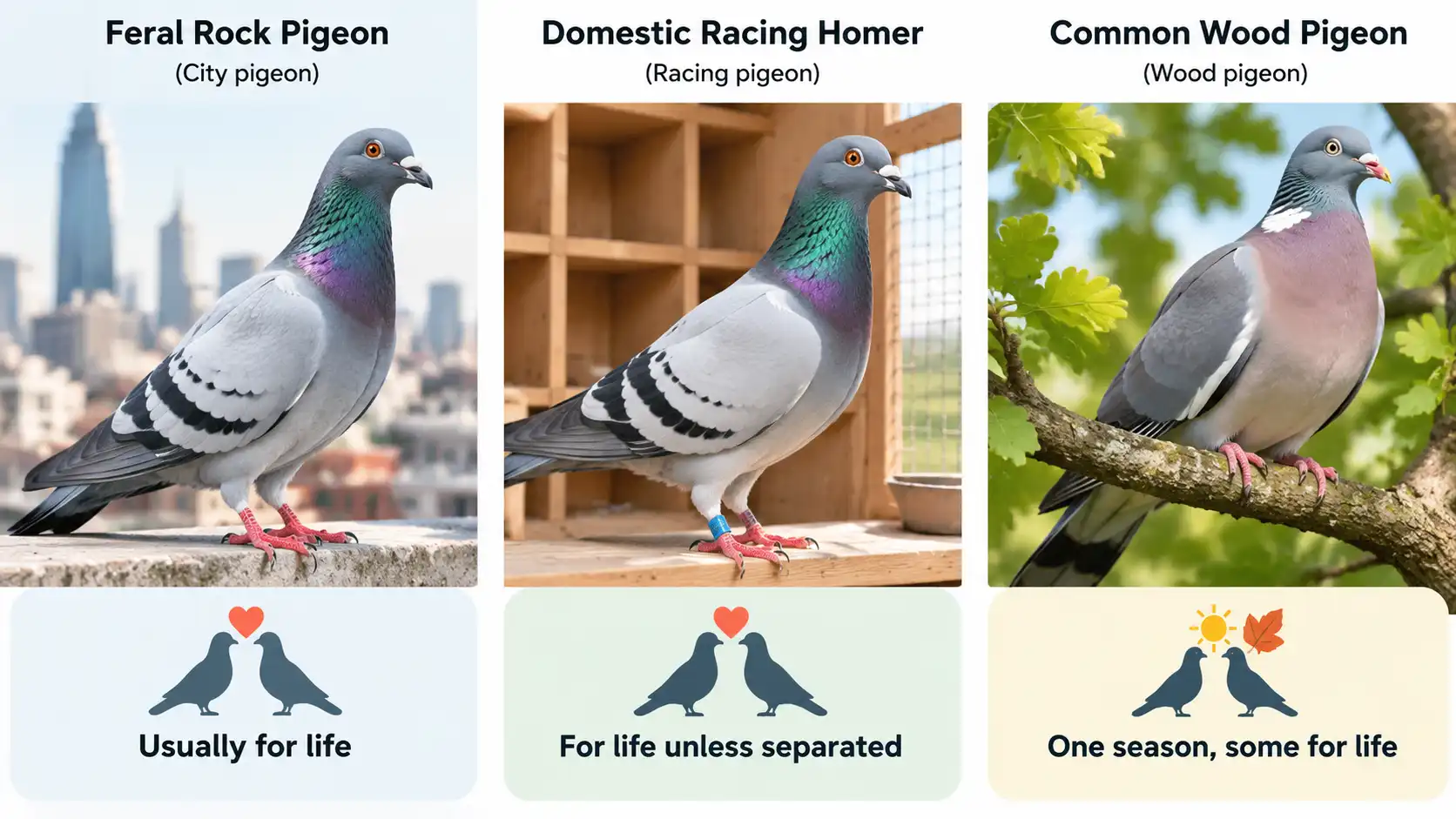
Yes, most pigeons mate for life. Rock pigeons, both feral and domestic, keep one mate until death or forced separation, then pair again. Common wood pigeons pair by season, though some urban pairs may stay for life.
Do Rock Pigeons Mate for Life?
Yes. A rock pigeon usually keeps the same mate for as long as both birds live. VCA veterinarians describe pigeons as faithful birds that mate for life. They also note that a pigeon will defend its mate and territory aggressively.
This answer covers more birds than you might expect. VCA traces every domestic breed, from racing homers to fantails, back to the rock dove. That’s the species’ older name, and a reminder of how closely pigeons and doves are related.
Guides written for pigeon keepers agree. Oregon State University Extension’s 4-H pigeon and dove guide says pairs generally stay constant for life. In fact, a pair stays together until one bird dies or a keeper forcibly separates them.
Do Feral Pigeons Mate for Life?
Yes, feral pigeons pair the same way, because they are rock pigeons living free. The Cornell Lab of Ornithology describes how a pair forms. First, the male picks a ledge or nook and coos there to attract a mate. Then the pair preen each other, and he brings her nest material one stick at a time.
On the street, though, “for life” is short. Cornell puts the average feral rock pigeon’s life at 2.4 years. Its account also gives no figure for how often feral pairs split. So the firmest statements on lifelong pairing come from extension guides for loft keepers, who band each bird.
Do Domestic Pigeons Mate for Life?
Yes, unless a keeper splits them. University of Wisconsin Extension’s 4-H pigeon guide says pairs rarely break their bond, even in large flocks. Mated pairs can even travel long distances without separating.
Still, the same guide notes that a move, or unmated birds sharing the pen, occasionally breaks a pair. For that reason, it tells buyers to insist on a mated pair. Some sellers offer two pigeons as a pair without saying whether the birds have mated.
Do Wood Pigeons Mate for Life?
Not always. The Cornell Lab says common wood pigeon pairs are monogamous within a breeding season. It adds that some urban wood pigeons that don’t migrate may mate for life. So the bond holds for a season, while a lifelong pair is possible but unproven.
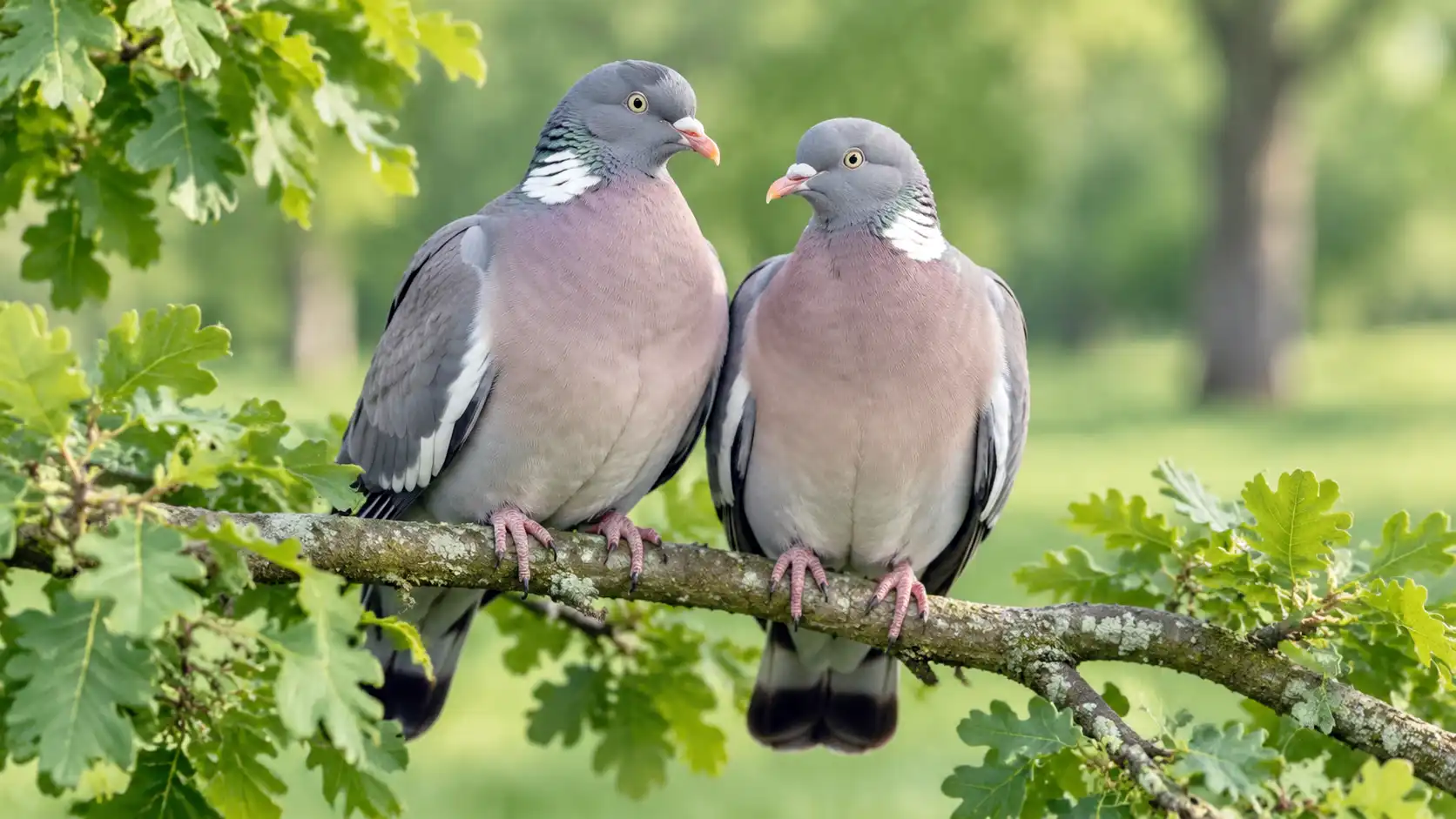
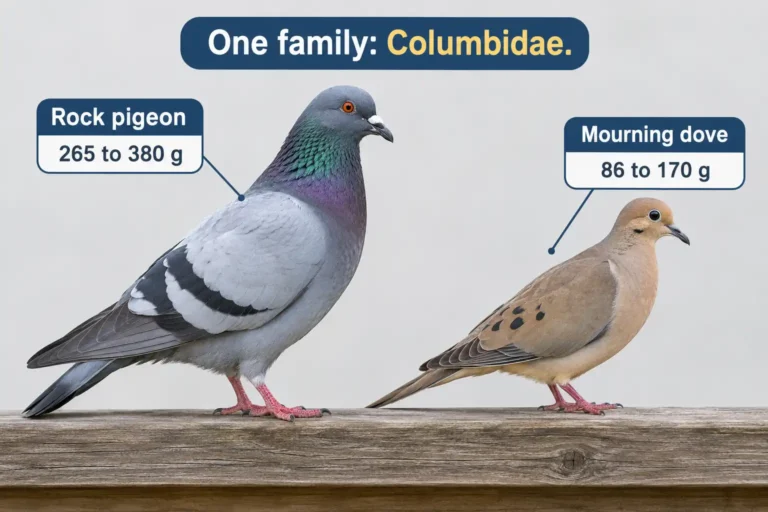
The common wood pigeon is a separate species from the rock pigeon. Cornell notes it nests along woodland edges and in parks and gardens. In the UK, it breeds from February to September, and it keeps spreading into new European cities.
Within a season, the pair shares the work. Both parents incubate the eggs and feed the young. After the chicks fledge, the male provides most of their care, per Cornell. However, a wood pigeon pair raises only 1 to 2 broods, compared with 1 to 6 for the rock pigeon.
Rock Pigeon vs Wood Pigeon: Pair Bonds Compared
The table sets the three side by side. Cornell gives the feral and wood pigeon figures, while the Oregon State and Wisconsin extension guides cover loft pigeons.
| Feral rock pigeon | Domestic pigeon | Common wood pigeon | |
|---|---|---|---|
| Pair bond | Usually for life | For life unless the keeper splits them | One breeding season, possibly life for some urban pairs |
| What ends a pair | A mate’s death | Death, forced separation, or rarely a move | End of the season, or a mate’s death |
| Broods a year | 1 to 6 | Can breed year-round unless the keeper pauses it | 1 to 2 |
| Eggs per clutch | 1 to 3 | 2 | 1 to 3 |
| Incubation | 17 to 18 days | 17 to 18 days | 16 to 17 days |
| Where it lives | US cities, farms, bridges, and cliffs | Lofts and homes | European woods, parks, and gardens |
The rock pigeon incubation range comes from two sources. Cornell gives 18 days, while Oregon State gives about 17. Since feral and domestic pigeons are one species, expect hatching in that window for both.
What Happens When a Pigeon’s Mate Dies?
The surviving pigeon pairs again. When death or forced separation breaks a pair, each bird takes a new mate. Both the Oregon State and Wisconsin extension guides say so.
How long that takes is less clear. Neither guide gives a timeline, and the veterinary references don’t cover grief in pigeons. So treat any fixed waiting period you read about with caution.
For a keeper, a widowed bird needs a plan. Wisconsin Extension warns that a single cock or hen in a loft of pairs brings “family troubles without end.” The fights that follow can break eggs and kill squabs, and Oregon State gives the same warning. So give the widowed bird a new mate or a pen of its own.
To pair a new mate, Wisconsin Extension suggests a box with a wire partition between the two birds. Once they know each other, they usually mate. Oregon State adds that new pairs kept apart from the flock usually bond within 1 to 2 weeks.
A pet pigeon living alone with people is a different case. VCA veterinarians suggest the same loyalty may explain a pigeon’s bond with its owner and its home.
Do Pigeons Ever Split Up?
Rarely, but it happens. Wisconsin Extension names two causes: moving the pair to a new place, and unmated birds sharing their pen.
Keepers also split pairs on purpose. Oregon State notes that many breeders separate cocks and hens in October and re-mate them in April. That way, the birds don’t raise squabs through the cold months. Breeders also break up pairs to choose which birds breed together.
Keepers may also split a pair that never raises young. Wisconsin Extension says one bird may be barren, and it suggests giving each bird a new mate. Age matters too. Oregon State warns that some mated pairs are too old to produce fertile eggs. Before you split a pair that won’t breed, have an avian vet check both birds.
How a Pigeon Pair Raises Young
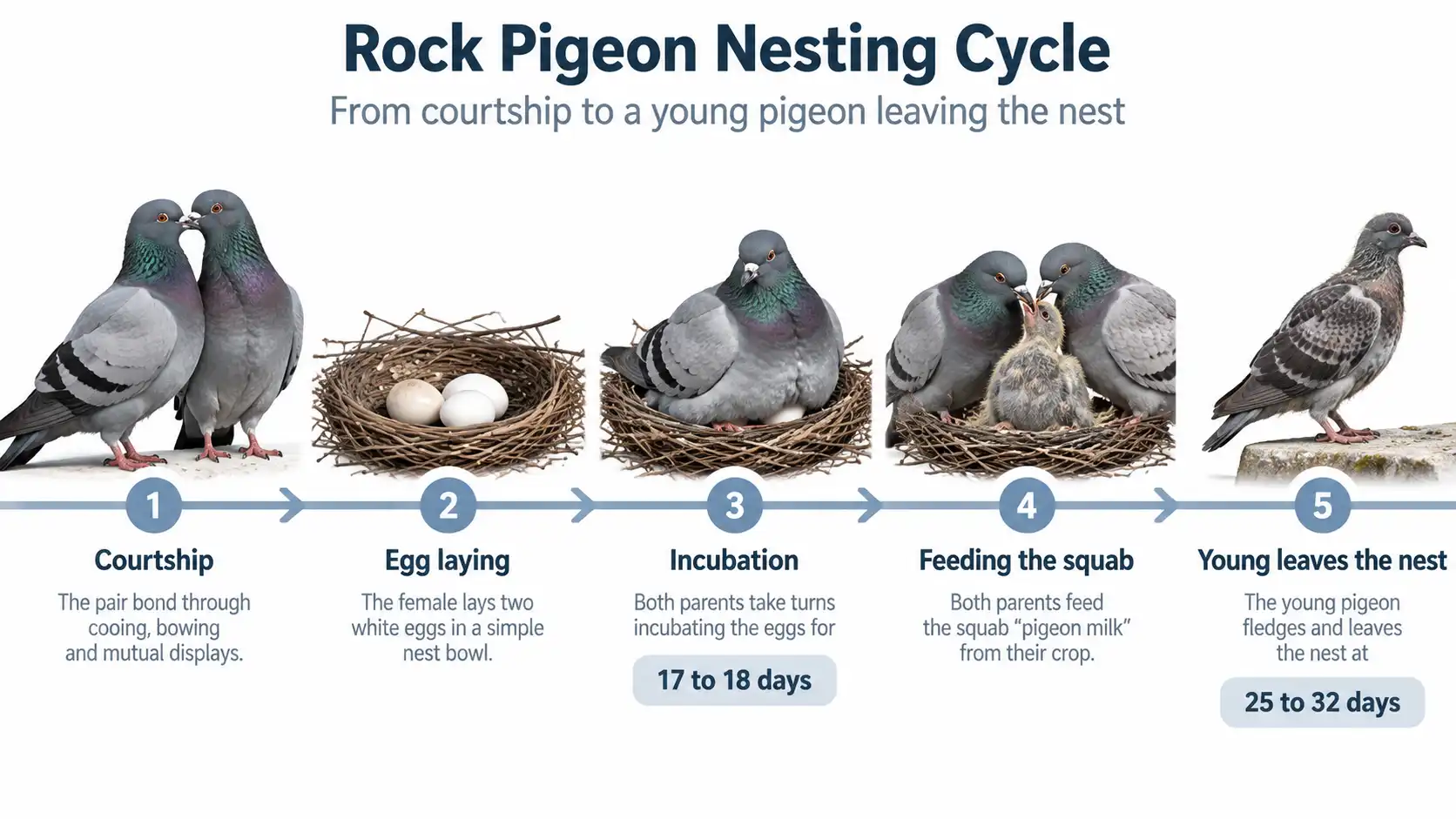
Pigeon pairs split nearly every job, from building the nest to feeding the young. Here is one nesting cycle for rock pigeons, feral or domestic, drawn from Cornell and Oregon State.
| Stage | What the pair does | Timing |
|---|---|---|
| Courtship | The male bows, coos, puffs his throat, and struts around the hen. The pair preen each other. | Before nesting |
| Nest building | The male picks the site and brings material one piece at a time. The hen builds. | Several days |
| Eggs | The hen lays one egg, then a second two days later. | 2 eggs per nesting |
| Incubation | The male sits from mid-morning to late afternoon. The hen sits overnight. | 17 to 18 days |
| Feeding | Both parents feed the squabs crop milk made in their crops. | From hatching |
| Next clutch | The hen lays again while the first squabs are still in the nest. | About a week after hatching |
| Leaving the nest | The young leave the nest. | 25 to 32 days |
That overlap means a busy pair often has eggs in one nest and squabs in another. So both extension guides call for at least two nest boxes per pair.
If a hen strains without passing an egg, she needs an avian vet the same day.
How Many Eggs Can a Pigeon Pair Lay in a Year?
Up to 12. Cornell lists 1 to 6 broods a year for rock pigeons. Oregon State says a hen lays two eggs per nesting. Carry that through:
Eggs per year = broods a year x 2 eggs = up to 6 x 2 = 12 eggs
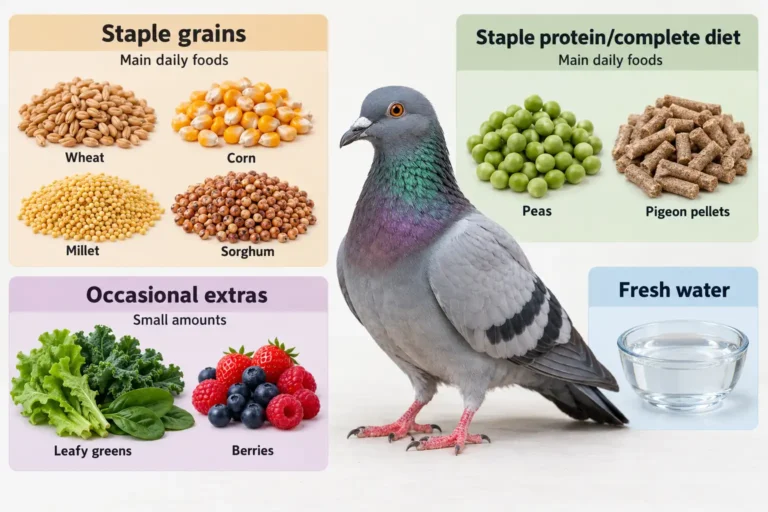
That’s the output to plan for before you house a mated pair. Wisconsin Extension notes that many keepers remove the nests in winter so the birds can rest. Oregon State also stresses extra protein, such as peas, for breeding birds. Build that into a pet pigeon’s daily menu.
Pigeon Lifespan: How Long a Pair Can Last
A pair lasts only as long as its shorter-lived bird. So the average lifespan of a pigeon shapes what “for life” means. Cornell puts feral rock pigeons at an average of 2.4 years. By contrast, the Merck Veterinary Manual lists up to 20 years for pet pigeons.
Some pigeons get much older. Cornell notes that Levi, a retired US Army Signal Corps homing pigeon, lived to 31.
That 2.4-year figure reflects how long feral pigeons last on city streets, not the species’ limit. In a safe loft, both birds can live far longer, so the pair can stay together far longer too.
For a keeper, that’s a long promise:
Your age at the end = your age today + up to 20 years (Merck’s figure for pet pigeons)
Take on a young mated pair at 35, and you could still be caring for them at 55.
Fun Facts About Pigeons and Their Pairs
Pigeon pairs have a few habits that surprise most people:
- Two hens can pair up. With no males around, two females may bond and both lay infertile eggs in one nest, per Oregon State Extension.
- The cock hurries the hen. If she’s slow to start laying, he drives her to the nest and strikes her with his wings, per Wisconsin Extension.
- Pigeons drink like they’re using a straw. Cornell says they place the bill in water and draw it up. Wisconsin Extension contrasts this with chickens, which drink by dipping the beak.
- The partnership with people is ancient. Cornell cites Mesopotamian tablets and Egyptian hieroglyphics suggesting pigeons were domesticated more than 5,000 years ago.
- Homers find their way back from far away. Wisconsin Extension says racing homers can return from as far as 600 miles.
- City flocks are shrinking. Cornell reports that North American rock pigeon numbers fell 46% between 1966 and 2015.
Frequently Asked Questions
Do pigeons have one mate for life?
One at a time, per Oregon State Extension, but not always one for life. A pigeon that loses its mate to death or separation pairs again, so it can have several partners in its life.
Do mourning doves mate for life like pigeons?
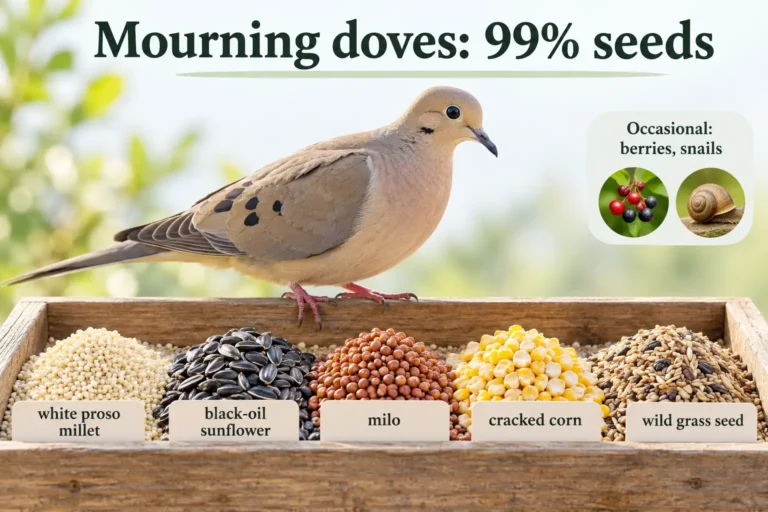
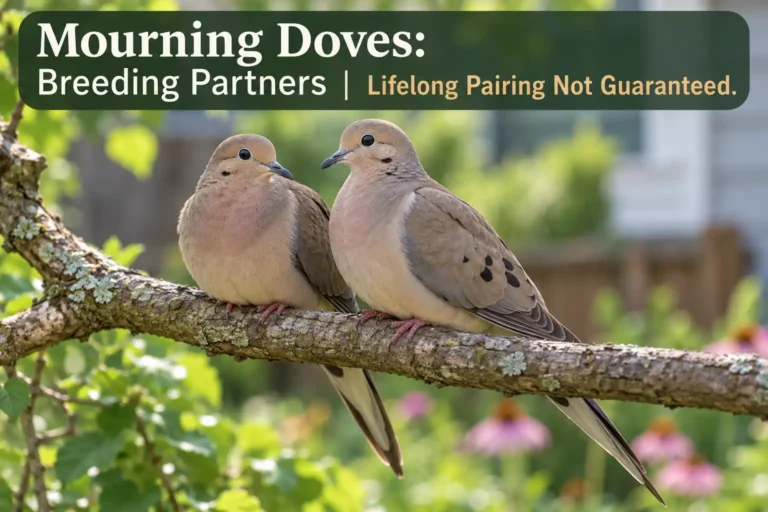
Usually for one breeding season, per University of Missouri Extension, which calls mourning doves strongly monogamous. Mourning dove pairs stay together through that season, while rock pigeon pairs usually last until one bird dies.
Do male and female pigeons look different?
Usually not by much, since Oregon State Extension notes that cocks and hens look somewhat alike in most pigeon breeds. That’s why it advises beginners to buy a mated pair from the breeder rather than guess.
Will a pigeon pair keep using the same nest?
Usually yes, since Cornell notes that rock pigeons reuse their nests many times. A pair that nests on your ledge or balcony will likely raise brood after brood right there.
What the Research Supports
Rock pigeons, feral or domestic, usually keep one mate for life. They pair again after a death or a forced split. Wood pigeons commit for a season, and some city pairs may stay together longer.
If you keep pigeons, buy a mated pair and give each pair two nest boxes. Keep single birds out of the breeding pen. Plan for up to 12 eggs a year per pair and up to 20 years of care. VCA also advises a vet exam within 2 weeks of bringing a new pigeon home. If you’re still choosing, compare other pigeons and doves kept as pets first.